
Tag Archives: Knowing God

Praying with Purpose: Standing in the Need of Prayer

Standing in the Need of Prayer

Standing in need

Last week you were invited to join us in a Season of Christian Reboot.  This invitation was based on the importance of doing those things that help us to strengthen our faith.  This is critical especially in these tumultuous and uncertain times.

As we move forward, we must accept the obvious.  Our ability to accurately predict our future is a challenge.  Health pandemics, polarization and division, and economic uncertainty plague our nation.  These are but a few of the areas that affect our personal lifestyles and habits.    The good old days are gone never to return.

Living in this new era of change and challenge, we must do more than “fan the flame” of our spiritual gifts.  We must be intentional and strategic in using our spiritual disciplines as we embark on this new way of living.  The best place to begin being both intentional and strategic is standing in prayer.

It’s me

The song writer wrote, “It’s me…it’s me oh Lord standing in the need of prayer…not my mother…father…sister…brother but it’s me standing in the need of prayer.

I love this song.  It truly communicates my need for prayer.  However, for our prayer life to be strategic and intentional, we need to think of prayer with a broader outlook than our own personal needs.  If we as believers are change agents for God, we need to look beyond ourselves in our prayers.

Since the introduction of WordBytes, the teachings receiving the most attention are those that deal with prayer.   We are told to pray without ceasing (1 Thess. 5:17).  Why?  Because our needs are so great.

Are we serious about prayer?

At the beginning of this health pandemic, we launched prayer calls focusing our attention on the epicenters of the disease.  We prayed for healthcare workers and those battling the disease on the front line.  God answered our prayers, and the numbers began to decline.

People boldly asked the nation to pray that a vaccine would be discovered that would end the ravages of this disease.  We have four vaccines today and numerous opportunities to receive this preventative solution.

We have witnessed the extraordinary power of prayer in the situations we face as a nation.  Are we still praying?  The needs are greater than ever.  There are many more battles to be won on our knees.  And what are we praying for?  Wisdom, grace, patience, deliverance?  Who are we praying for?  Ourselves, our family, our enemies?

We need the presence of the Holy Spirit to guide our prayers (Rom. 8:26-27).  With God’s Spirit as our Helper, we are able to move the agenda of God forward in this world and care for the needs of His people.

Praying strategically

God’s Word tells us to pray for EVERYBODY!  Why?  So that “we may live quiet and peaceable lives” (1 Tim. 2:1-3).  Jesus stressed the importance of being in right relationship with all people (Matt. 5:44).  Imagine the potential of prayer for our divided nation?

We need prayer for EVERYTHING!  Why?  Because prayer changes things.  (James 5:16)  Now is the time to pray not only for our immediate sphere of influence but also for our world.

Imagine the potential of prayer!  Do we have the courage to connect to the awesome power of our God? (Ps. 19:1-3)

ABC’s of intentional prayer

How do we begin to pray intentionally?  By praying…

 According to God’s will.   

 And this is the confidence which we have in him, that if we ask anything according to His will he hears us.    And if we know that he hears us in whatever we ask, we know that we have obtained the requests made. (1 John 5:14-15)

Believing in God’s ability.  

  And Jesus answered and said to them, “Truly I say to you, if you have faith and do not doubt, you will not only do what was done to the fig tree, but even if you say to this mountain, ‘Be taken up and cast into the sea,’ it will happen. And all things you ask in prayer, believing, you will receive.”  (Matt 21:21-22)

Committing to God’s outcome.

Though the fig tree does not blossom, and no fruit is on the vines; though the produce of the olive fails, and the fields yield no food; though the flock is cut off from the fold, and there is no herd in the stalls, yet I will rejoice in the LORD; I will exult in the God of my salvation. GOD, the Lord, is my strength; he makes my feet like the feet of a deer and makes me tread upon the heights.  (Habakkuk 3:17-19)

When we pray intentionally and strategically, we trust in God’s love, His faithfulness, and His sovereignty.    God will answer our prayers in a way that glorifies Him AND is good for us.

A New Song

Perhaps pursuit of our spiritual disciplines—prayer, Bible reading, and worship—have “cooled” because of COVID-19.   Has our inability to “gather together” darkened our ability to see God (Heb. 10:24-25)?  Has our identity in Christ been clouded by the challenges we face today?  Have we forgotten that we are the Church?  Wherever we are, God is!

If ever there was a need for intentional and strategic prayer, it is now.  Not self-focused, self-promoting prayers (God hears those, too) but prayer that changes hearts, minds, and circumstances.

We need prayer that calls down the power of God expecting Him to respond mightily to our requests (2 Chron. 16:9).

God Speaks through Circumstances

God speaks through Circumstances

Under our circumstances

In our culture, it is not unusual for people to greet one another with the inquiry, “How are you?”  In response, a multitude of replies are available.  However, my favorite is, “I’m doing fairly well under the circumstances.”

This is my opportunity to respond, “Why are you under your circumstances and what are you doing to get back on top?”  Circumstances are conditions or facts that affect a situation.  These can be either positive or negative.  They define a state in which an individual, group, or even a nation may find itself.

As we daily face “tumultuous” circumstances—pandemics, social strive, economic uncertainty—it is important to remember that God sees.  Even in our worst of circumstances, God is present (Ps. 139:7-10).   God sees, God cares, and God speaks.

Circumstances for all times

There are many biblical examples that illustrate how God used circumstances to speak to His people.  Circumstances dictated that Moses would be set adrift in the Nile.  It was there that he would be found by the king’s daughter and adopted into the royal household by the ruling Pharaoh (Exod. 2:1-10).

God later spoke to Moses after his “40-year circumstance” of working for his father-in-law Jethro the priest of Midian (Exod. 3:1).  God then re-directed him to deliver His people Israel, who were dealing with their circumstance of bondage.

In the book of Acts, God speaks to the early church by using the political and social circumstances around them.  Jesus had clearly articulated the scope of the church’s ministry:  “and you shall be witnesses to Me in Jerusalem, and in all Judea and Samaria, and to the end of the earth” (Acts 1:8).

While it was within their “comfort zone” to stay in Jerusalem, God spoke through the circumstance of persecution to move the gospel to a larger audience.   Throughout the Bible we find God speaking to people through special favor (1 Sam. 1:20), through personal loss (Ruth 1:3-5), or through miraculous deliverance (Acts 23:30-31).  God spoke to them through their circumstances.

Circumstances today

God still speaks today through circumstances.  He will use conditions and situations from our everyday life to place us in a position to hear His voice.

Does God create circumstances to make us do His will?  No, God has created us as freewill agents and desires that we choose to live within His divine plan. But God will allow circumstances to flow into our life to accomplish His glory and our good (Rom. 8:24).

Conforming circumstances

God permits circumstances in our lives that will mature us and grow our faith (1 Pet. 1:5-7).  What may appear at first to be a “stumbling block” may, in actuality, turn out to be “steppingstones”.

God also speaks through closed doors as well as opened doors, this includes delayed prayers. While the Apostle Paul wanted to share the gospel in Asia, he repeatedly found the way blocked by the Holy Spirit (Acts 16:6-10).

What our passage suggests to me is that God may close one door of ministry in order to open a better one. Paul was thinking locally—Asia and Bithynia. God was thinking more globally—cross the Aegean Sea into modern-day Europe. Divine redirection demands that we trust divine omniscience: we would have made the same choice if we knew what God knew. Through God’s providential redirection, Paul was able to plant churches in Philippi, Thessalonica, Berea, and Corinth. What a great open door![1]

As we proceed in this Christian walk, we must remember that the intent of our life is to glorify God and to accomplish His purpose on earth (2 Cor. 5:15). That is why it is important to be intentional in prayer and reading God’s Word especially during difficult and challenging times, regardless of the circumstance (Phil. 4:6-13).

As we develop our personal relationship with God, we will understand that He loves us and can be trusted with every aspect of our life.  Sometimes our circumstances will take us out of our comfort zone, but we can be assured we are not in them alone (1 John 4:4).

Next time you feel “under your circumstances”, ask God what He is saying to you.   

[1]   “Live with a Mission”, Timothy Berrey with the Gospel Fellowship Association.


What keeps me from hearing God?

What Keeps me from hearing God?

Is God speaking to me?

God speaks.  For many people this is hard to understand and even more difficult for others to believe.  I’m often asked, “How do I know if God is speaking to me?”   Perhaps the more appropriate question is, “are you listening?”

Wrong tapes in our head

Many people, even people of God,  do not believe that God speaks to them.  Their disbelief in God’s speaking is sometimes tied to “false narratives” (wrong tapes playing in our head) about Who God is.

Some see God as an indifferent creator looking down on us ready to punish us for doing wrong.  Others see God as a benevolent grandfather patiently waiting to indulge our every need.  Unfortunately,  both views are incorrect.   Who is God and why does God want to speak to us?

Why would God speak to me?

First, God wants to be in relationship (not religion) with us (Isa. 49:15-16).  When we spend time with Him, we begin to understand the love He has for us.  During those intimate moments together, we discover His ways (how He operates in the world) and His paths (how He operates in our individual lives).  (Ps. 25:4-5)

Secondly, God desires that we live free from the bondage of sin (Heb. 2:14-15).  Satan and the world want to keep us in darkness through lies.  These lies result in guilt, shame, and fear.   God, however, wants us to know the truth—His truth concerning our identity (heirs of God and children of light) and our destiny (eternity with Him).  It is this truth that sets us free (John 8:32).

Lastly, God longs for us to walk in the purpose He has ordained for our lives (Jer. 29:11).   We are God’s workmanship (Eph. 2:10) created for “good works” which include service to others.   True joy in the Christian life is found in discovering the plans that God has for our lives.  All things are possible with God (Mar. 10:27).

What keeps us from hearing?

Although God desires to speak to believers, we have, unfortunately, developed “habits of behavior” that often hinder our ability to hear Him clearly.  As we move through life, we have, metaphorically, “gotten on the wrong BUS”—a bus that frequently takes us away from God and toward the things of the world.    

Busyness robs us of both energy and our ability to hear.  Busyness most often is the result of wrong priorities.  As a rule, we place importance on the things we value.  Hearing from God deserves first priority. It’s hard to hear God when you’re multitasking; He gets caught between our thoughts and His voice becomes “muted”.

Unbelief houses all the lies we hold about ourselves and about God.  We believe that God speaks to others but not us.  We attribute this excuse to “being humble” but in reality we don’t believe that God is (His existence) or God can (His power) or God will (His promises)—so why talk to Him?  There is always a “lie” in unbelief.

Self (sin, too) keep us from hearing from God.  This happens when “self” (versus God) rules our life—self-righteousness, self-esteem, self-sufficiency, self-promotion.  When self is on the “throne of our heart”, God finds no place for Him to sit (except on the outside).  Sin separates us from a holy God.  When sin dominates our life, God won’t talk or listen (Gen. 17:1).  This condition, however, can be corrected (1 John 1:9).

How much do we want to hear God?

Bob Sorge offers these thoughts concerning hearing God’s in his book, Secret of the Secret Places.

Hearing the voice of God is largely a matter of the will.  We must choose to hear Him.  We must make the choice of setting aside time to listen quietly.  This hearing is a today thing that we do.  Hearing His (God’s) voice is conditional—built upon the condition of quieting our hearts to listen.

Want to hear God speak?   Have the courage to get off the BUS!

Memorial Day Gratitude: Throwback Wednesday

Memorial Day Gratitude


Time for gratitude

While preparing for the next WordBytes series, I was stopped by this thought, “It’s time to thank God.  Before moving on to the next “thing”, stop and express gratitude for today!”

If you’re reading this WordBytes, guess what?  God has blessed you with life. Who could have imagined?  After 604,000+ COVID deaths, we are still standing.  God has kept us during this global pandemic.  Yes, we’ve loss friends and family but for some reason God has extended  mercy to us (once again).  2020 and 2021 have been challenging years never before imagined.

But God

Jeremiah wrote these words as he lamented the tragic destruction of Jerusalem by the Babylonian armies (Lamentations 3:18-23, New Living Translation).

I cry out, “My splendor is gone! Everything I had hoped for from the LORD is lost!”  The thought of my suffering and homelessness is bitter beyond words. I will never forget this awful time, as I grieve over my loss.  Yet I still dare to hope when I remember this:  The unfailing love of the LORD never ends! By his mercies we have been kept from complete destruction. Great is his faithfulness; his mercies begin afresh each day. 

But God.   In tragedy and loss, God was faithful.  Guess what?  God is still faithful!  In the aftermath of the COVID pandemic, in the midst of economic uncertainty, in the quagmire of social injustice, in the throes of food insecurity and homelessness, in the fallout of global warming, God is faithful.  Therefore, we will have hope.

Throwback Wednesday

To express our gratitude this Memorial Day, we’d like to do “Throwback Wednesday”.  The WordBytes we’ve chosen is Discovering God in the Psalms:  Forget Not God.  I invite you to formulate your personal Memorial Day gratitude. As we celebrate our loved ones from the past let us, also, “forget not God” for all He is doing for us right now.

Resurrection Understanding, Part 2

Resurrection Understanding, Part 2

The Reason for our hope

If someone were to ask us about Jesus’ resurrection, what would we say?  Could we give a good reason as to why we believe in the resurrection?  But more importantly, are we able to witness to an unbelieving world why we follow Jesus?

It is not my intent to teach apologetics.  However, as followers of Christ, it is important that we “be ready to always give an answer to the reason for our hope” (1 Pet. 3:15).  Understanding the resurrection will inform our life—our identity, our power, and our purpose. To do this, like the disciples, we need to clearly understand the “what and why” of resurrection.  The Gospel of Luke captures Jesus’ teaching this truth as He prepared the Disciples for their commissioning.

After the resurrection

The gospel of Luke gives us insight into Jesus’ teaching of the resurrection to the disciples.  Written to a Greek audience, this gospel was written to convince readers of the truth of the things they had heard of Jesus (Luke 1:4). The most controversial event being Christ’s resurrection.  In Luke 24, we see how Jesus deals with the unbelief of His disciples.  He then seeks to reverse that unbelief by broadening their understanding.  Within this chapter are two (2) accounts for our learning.

On the road to Emmaus (vv. 13-33), two disciples of Jesus (Cleopas and one unnamed) were walking from Jerusalem to Emmaus on resurrection Sunday.  Joined by Jesus (whom they didn’t recognize) they proceeded to tell of the crucifixion and the recent report of Jesus’ empty tomb.  Jesus would use this time with the disciples as a “teachable moment.” He gave a lesson on the prophecies of the Old Testament which were fulfilled in His death and resurrection. “And beginning at Moses and all the Prophets, He expounded to them in all the Scriptures the things concerning Himself.” (Luke 24:27) After Jesus’ departure, the disciples then understood because Jesus “opened” the scriptures to them.

Likewise, when Christ appeared to the ten disciples (vv. 36-49), a similar understanding was needed.  After several proofs that He was alive, Jesus “opened” their minds to understand the Scriptures.” (Luke 24:45).   Opened in these two (2) encounters means to rouse in one the faculty of understanding.  While the disciples may have heard this teaching before in the synagogue or through other teachers, Jesus caused them to make the connections from Scripture and the events they had recently experienced.   In addition, they had Holy Scripture and prophetic proof that the resurrection of Jesus was a reality ordained and empowered by God Himself (Eph. 1:19-20).

The essentials of the resurrection

It was critical that Jesus solidify with the disciples their understanding of the resurrection.  The resurrection was more than an historical or miraculous event.  It was the promise of new life and a blessed hope. (Luke 4:18-21)

Unfortunately, we have allowed the busyness of our calendars and distractions of the world, to reduce the resurrection to a “one and done” attitude.  We celebrate Easter Sunday, acknowledge the resurrection, eat the eggs, and then go back to our daily routine on Monday.

We have reduced the resurrection to a “transaction”—an event that occurred thousands of years ago.   “Jesus rose from the dead therefore I am free from sin.”  To think of resurrection this way limits the impact it can make in our daily life.

Resurrection is not transactional.  It is transformational and relational.  Resurrection for believers is the beginning of a life changing, intimate relationship with God the Father, Jesus our Lord, and the Holy Spirit.

Resurrection understanding in 2021

Why is this important for us today?  Because with Christ’s resurrection, we have an opportunity to “new life” that is found by our faith in Jesus Christ (Gal. 2:20).  It is in the resurrection that victorious living begins.

This season of Easter (Eastertide) affords believers the opportunity to celebrate more than the grace and mercy of God on Good Friday.  As important, we can depend on God’s power and Jesus’ victory beginning on Resurrection Sunday AND extending through out eternity.

Spend time during this season learning more about the resurrection and the extraordinary blessings that are now ours.  Let the Bible and the Holy Spirit (as your Teacher) “open” your mind to the resurrection.  Begin with the synoptic gospels (Matthew, Mark, and Luke).  Then explore the prophetic proofs found in the Old Testament.  These will expand your understanding and help you answer the questions that begin with “why”.

Resurrection Understanding, Part 1

Resurrection Understanding

Resurrection hope

The resurrection of Jesus Christ is one of the foundational tenets of our Christian faith.  If Christ had remained in that darkened tomb, preaching the message of the gospel would have been in vain.  (Imagine all the revivals you could have skipped).  Our faith would be in vain (1 Cor. 15:14).  Worst of all, we would still be dead in our sins (1 Cor.15:17).  Just imagine!  Guilt, shame, bondage, spiritual death—all these would still be at play in our lives.

The crucifixion had dashed the hopes of the disciples.  They had imagined how life would be as part of the promised Messiah’s entourage.  Plus, they would finally be delivered from the tyranny of Rome.  But what happened?  Jesus was dead.  They scattered and hid for fear of the Jewish leaders (John 20:19).  They returned to their old homes and their old lives–disappointed, disillusioned, and disheartened.

But God.  The Creator of heaven and earth, the Great Deliverer of Israel from Egypt, raised Jesus from the grave (Acts 13:30).  God made good on His promise to deliver man from sin’s grip and “begat man again” (Eph. 2:1, 5).  In Christ, man was a new creature (2 Cor. 5:17).  Resurrection was, and still is, definitive proof that God is sovereign with power over life and over death.

Resurrection promise

God’s plan of salvation has always included resurrection (Gen. 3:15). The Old Testament prophets and psalmists spoke of, not only the promised Savior’s coming, but also of his death and resurrection (Ps. 16:10; Ps. 53:11; Ps. 45:6-7; Ps. 110:1;  Is. 53:11).

Because of this, it is somewhat surprising that Jesus’ disciples initially disregarded the resurrection proclamation (Mark 16:11; Luke 24:11).

In the horror and grief of the crucifixion, the Disciples had forgotten that Jesus Himself told them that he must “suffer at the hands of sinners, be crucified, and be raised the third day.” (Matt. 16:21; 17:22-23; 20:17-19).  The disciples were devastated by Jesus’ words.  Unfortunately, they missed the good news beyond the death of Jesus—resurrection on the third day.

On the other hand, it is ironic that the chief priest and Pharisees, who rejected Jesus as the Messiah, remembered Jesus’ statement that He would rise again after three days.  They requested from Pilate a Roman centurion to guard the tomb (Matt. 27:62-66).  Was it an empty tomb they feared or the risen Christ?

Resurrection confusion

In reading the synoptic Gospels and John, the followers of Jesus shared a common reaction to the resurrection.  They did not believe it.  Some scholars say Mary Magdalene imagined that grave robbers had stolen Jesus’ body (John 20:11-13).

Our four gospel writers all complete their narratives of the Gospel of Jesus with a story or stories of Jesus resurrection. They come at it from different directions and provide different details, but one element is common to each of them:  a sense of wonder, astonishment, and surprise. Despite the several hints scattered throughout the Hebrew scripture and Jesus’ three explicit statements forecasting his resurrection (Mark 8:31; 9:31; 10:34), when it happened it turned out that no one–no one–expected it. The first people involved in Jesus’ resurrection were totally involved in dealing with his death. Now they had to do a complete about-face and deal with his life. [1]

Resurrection possibilities

Do we as believers “scatter” as we are daily challenged by unbelievers who reject Christ?  Do we “hide” from those who discount the resurrection?  Even after Easter Sunday, do we return to our old lives—disappointed and disillusioned.  Are we disheartened by the continuation of the health pandemic, financial uncertainty, and social unrest?

If you answered yes to any of these questions, then it is time that we believers expand our understanding of the resurrection.  As new creatures in Christ, victorious living awaits us as the Spirit that raised Christ from the grave, now indwells us (Rom. 8:11).

Eastertide, a fifty-day season on the Christian calendar, is dedicated to examining the deep and wonderful mystery of resurrection.  It is a perfect opportunity to reflect on what the resurrection means to us personally.  “It is a season of learning how to live a new kind of life called resurrection.”[2] 

Next week, we will continue our teaching on “resurrection understanding”.  The resurrection is key in strengthening our resolve to press forward through difficult times.  Most importantly, it enables us to live out our God ordained purpose. Let’s explore what it means to live each day in the light of the resurrection (Eph. 2:4-6).

[1] Living the Resurrection, Eugene H. Peterson.

[2] Living the Way of Jesus:  Practicing the Christian Calendar One Week at a Time, Michaele Lavigne.

Certainty in an Uncertain World, Part 2


Certainty in an Uncertain World, Part 2

The Believer’s certainty

As we stated last week, certainty is defined as a fact that is definitely true.  It is the state of being reliably true.  As believers our certainty is connected to God.  Our confidence is based not only on Who God is but also on His truth.

We recognize the uncertainties of living in a fallen world.  To live in a fallen world means we struggle with sin daily. We experience heartache and pain. We witness natural disasters and staggering loss. Injustice, inhumanity, and falsehood seem to dominate.  Discord and trouble are commonplace. None of this was God’s original plan for humanity.

It is important, however, that as believers we focus on the certainties of our faith—divine certainties—that enable us to navigate successfully in these difficult times.  What are these divine certainties?  How do they help us in times of uncertainty?

Divine Certainty-God’s Nature

The certainty of our faith begins with our understanding the nature of God.  While there are many attributes of God’s nature, I will focus on two (2):  God’s immutability (He does not change) and God’s veracity (He is truthful).

This is especially important as we discuss the matter of certainty.  This means that whatever God states, in His Word and through His Holy Spirt, can be accepted with certainty—as reliably true.  What God has stated in the historical past is still true in our contemporary present.

The immutability of God expresses the fact that God does not change.  What we are dealing with here is the dependability of God.  He will be the same tomorrow as He is today.  He will act as He has promised.  The believer can rely on Him (Lam. 3:22-23; 1 John 1:9).  God’s immutability is “a sure and steadfast anchor of the soul.”  (Hebrews 6:18-19)

God’s veracity speaks to God’s truthfulness.   God represents things as they really are.  God never lies (Titus 1:2).  It is contrary to His nature.  God is “trustworthy”.  Such truth can either be assuring or fearful, depending on your relationship with the Lord (Numbers 23:19).

Divine Certainty-Our Identity in Christ

Our identity in Christ is another major reason for certainty and assurance of our faith in God.  We have peace during uncertain times because of our relationship with Jesus.

For me, Ephesians 1:3-17, does an extraordinary job outlining the many spiritual blessings and promises found in our New Covenant relationship with Father God.  It details the completed work of Christ as only can be designed by God before the foundation of the earth.

In Christ God makes His superabundant blessing available to His children by faith in Christ so that what Christ has is theirs—including His righteousness, privilege, resources, position, and power.  Believers are now able to draw upon the wealth of Christ to accomplish God’s purpose and His will. This includes our spiritual security as we move from “death to eternal life” (John 5:24).

Divine Certainty-Our Anchor

Our certainty is also connected to our memory.  Let us not forget the faithfulness God has shown us in the past.  The church mothers would often assure us in times of distress: “The Lord didn’t bring us this far to leave us.”  King David shares their belief as he reminds us in Psalm 103:2 to “forget not all God’s benefits.”

Our personal history to God’s faithfulness is a testimony of our certainty in God.  We are witnesses to God’s presence, His protection, and His provision.  During times of uncertainty, we can walk confidently in the divine certainty based on our connection with God.

My intent in this writing is to remind believers that during these times of uncertainty and disruption, we have an anchor in the Lord.  Our confidence is based on Him alone.  Our Lord is the only true source of certainty in an uncertain world (Ps. 37:3).

Certainty in an Uncertain World, Part 1

Certainty in an Uncertain World, Part 1 What is certainty?

Certainty is defined as a fact that is definitely true or an event that is definitely going to take place.  It is the quality of being reliably true.

The Bible concordance describes certainty as “absolute truths”.  I find this description ironic as we strive to live in this post-modern society where, supposedly, there are “no absolutes” and even “fewer truths.”

However, as Christians, we do believe in absolute truths that we confidently depend on.  This is the benefit of our faith in Christ.  This gives us “peace that passes all understanding” (Phil. 4:7).

The Certainties of life

The events of 2020 have shifted systems and institutions that once were thought to be secure and indestructible.  As we stand in the shadow of COVID 19 with its many “aftershocks”, we realize our naϊveté.  We now long for the stability and certainty once found in the past.

As youth, we experienced the certainty of family.  Family provided the initial shaping of our values and belief systems.  Family cared for our basic needs—food, clothing, shelter, and love.  Our family validated who we were and provided the foundation we needed for success.  That was the certainty we needed in the beginning.

The assurance found within our familial systems were later extended to our communities.  It included our schools and our churches.  We became the product of our “unique village” with many people teaching us life lessons.  Within the borders of community, we learned self-esteem, confidence, respect, and achievement.  Here we prepared for the rest of our life.

A Hunger for Certainty

We often joke that the certainties of life are death and taxes.  After 2020, we can now add uncertainty to that list.  Uncertainty has always been with us but now it has become more “life affecting.”

Uncertainty has a physiological effect on our lives.  It is neither good nor bad.  It is, however, something that we must address.

A sense of uncertainty about the future generates a strong threat or ‘alert’ response in your limbic (brain) system. Your brain detects something is wrong, and your ability to focus on other issues diminishes. Your brain doesn’t like uncertainty – it’s like a type of pain, something to be avoided. Certainty on the other hand feels rewarding, and we tend to steer toward it, even when it might be better for us to remain uncertain.[1]

Shifts in Certainty

As a nation and as individuals, we were certain that our institutions and systems would always be available to care for us.  We trusted others to protect our best interest and to operate at the highest level of integrity.  But unfortunately, that has not always been the case.

After a year of unprecedented disaster and turbulence – the Covid-19 pandemic and economic crisis, the global outcry over systemic racism and political instability – the 2021 Edelman Trust Barometer reveals an epidemic of misinformation and widespread mistrust of societal institutions and leaders around the world. Adding to this is a failing trust ecosystem unable to confront the rampant infodemic, leaving the four institutions – business, government, NGOs and media – in an environment of information bankruptcy and a mandate to rebuild trust and chart a new path forward.

Reports such as these highlight our need for a dependable source to address the uncertainties of 21st century living.  We need a “sure thing”.  That sure thing is Jesus Christ.  Our faith in Christ is not a weakness nor is it a last resort.  To the contrary, Jesus is the only true source of certainty in an uncertain world (Ps. 37:3).

Our Certainty Connection

As believers our certainty is connected to The Ultimate Source.  We trust in God.  Our confidence is based not only on Who God is but also on the veracity of God—His truth and His truthfulness.

God is the Creator and Sustainer of all things (Col. 1:17; Rev. 4:11).  He alone can “make good” on all His promises.  God is all powerful, everywhere present and all knowing.

Next week we will continue to discuss certainty in an uncertain world.  We will focus on the certainties of our faith which enable us to live victoriously in these tumultuous times.

[1] https://www.psychologytoday.com/us/blog/your-brain-work/200910/hunger-certainty

What I Learned in 2020

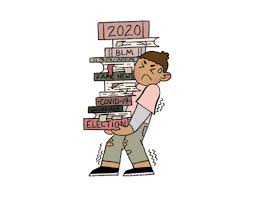
To depict the many challenges we faced in 2020What’s Different

In the past, my annual reflections on “what I learned” were typical for believers in Christ.  They were my experiences and observations as I progressed on my spiritual journey.  They included such things as how I experienced God’s goodness and what I would work harder on in the new year.  I always finished the year hoping I had deepened my relationship with Him.

So what’s different this year?  Everything is different!  Why?  Because 2020 was very different.  As my pastor said a few weeks ago, “There is no such thing as a ‘new normal’.  There is no normal.  Everything is dynamic.”  Life as we knew it has changed.  We now live in a constant state of change.

What I learned in 2020 requires that I go deeper than I normally would in order to fully express the range of emotions and responses to everything that has been happening around us. It’s been said “life will make you bitter or better”.  With 2020, the jury is still out.

2020 Responses:  We Long for Many Things

Most responses to 2020 have ranged from anger (dumpster burnings of 2020 in effigy) to appreciation for the opportunities presented as a result of the pandemic Stay at Home directives.

The variance in these responses may stem from our ability to accept, absorb, or assimilate the changes that are taking place.

Some people respond by retaliating for what they see as a loss of control or threat to their personal freedom.  Remember the initial responses to the pandemic?  The battle over wearing masks?  We are no longer able to “do what we want to do” without considering the impact of our choices on others.

We now more fully understand “our connectedness” and dependence on each other.  We will need each other to successfully navigate the world as it is in “a state of becoming”.  There is a saying that, “You can’t be a winner in a losing organization.”  That statement is never more true than right now.

A Year of Grieving

2020 has also given us much to grieve over.  The loss of life due to the pandemic is unbelievable.  I pray that we never become comfortable with the rising number of deaths within our nation and the world.  So complacent that we forget that each “number” represents a person, a family, a life no longer present with us.

Let us also continue to pray and support those who serve during these horrific times.  The medical professionals, public employees, and service providers who daily risk their lives for us.

A Year without Relationship

I think we grieve the most over our “disrupted relationships”.  We desperately miss being with our families and friends.   No hugs.  No kisses.  We’re left with Zoom calls, online worship, and elbow bumps, if we’re lucky.

This longing to be with others is evidenced by our nation’s inability to deal effectively with the coronavirus.  We desire to be with one another so much that we are willing to literally die for it (or cause someone else to die).

While we desire to be with family and friends, our relationship with others has suffered in 2020.  We have separated ourselves into tribes based on our political views and class distinctions.  We have set aside the basics we learned in kindergarten–play nice and share.  We are at war with each other!  But why?  Over what?  There will be no winners in the end—-only pain, anger, and resentment.

This is unfortunate especially since we so desperately need each other during these tumultuous times.  It is now that we need “to put on bowels of mercy, kindness, humbleness of mind, meekness, longsuffering…and love” (Col. 3:12-14).

So what have I learned?

God is faithful (Deut. 7:9; Heb. 10:23)  and is able to see us through whatever problems we face.  Actually that isn’t something new I’ve learned.  However, 2020 revealed God’s faithfulness in a new context.

That context included a deadly pandemic, social injustice, economic upheaval, and civil unrest.  2020 was like a dystopia movie.  A dystoria is an imagined place or state in which everything is bad, typically a totalitarian or environmentally degraded one.

But God was everything He said He would be.  He was my provider (Phil. 4:19).  He was my  protector (Ps. 46:1-3).  Jesus was my peace–something we still need in 2021.  God’s presence was my comfort and assurance through all the madness of 2020.

You and I are living proof of God’s faithfulness in that we now stand on the other side of 2020.  And how did we get here?  How did we get to the other side?  God brought us through (Is. 43:2).

God’s Plan of Salvation 

There is so much I have learned (and continue to learn from 2020).  But the most important thing I’ve learned is to see life through the reality of God and His plan of salvation.  

God is purposefully executing His plan of salvation for mankind.   Eternal God is sovereignly exercising His purpose in the midst of our history.  Regardless of today’s  current events or who is currently in leadership, they must all defer to the rule and reign of God (Daniel 2:21).

God’s plan for mankind didn’t end with the arrival of Jesus Christ.  God is still manifesting His plan and we are part of that plan right now.  It is our privilege to join God as He manifests His purpose in the world.

So what have you learned in 2020?  I can’t wait to hear from you.

Making the Right Choice

Maing the Right Choice

The warnings included in the letter of Hebrews were written to believers who were being tempted to return to the Jewish religion and traditions.  In their actions, they were not only choosing Judaism but in their choosing they were also rejecting the gospel of Jesus Christ.

Such is the case in all decisions we make.  When we say “yes” to one thing we simultaneously are saying “no” to its alternatives. In addition, with each decision there are consequences.  Good or bad.  Right or wrong.  Regardless, there are consequences.

Such is the case with this fourth warning.  The choice to return to Judaism contained dangerous consequences which the author attempts to convey in this fourth exhortation.    

Danger! Danger!

The writer of Hebrews has been diligent to warn of the dangerous behaviors being exhibited by the readers of this letter.  Behaviors that are leading to spiritual erosion. They include neglect, unbelief, and spiritual immaturity.

Hebrews 10:26-39 contains the fourth warning to the readers of this critical epistle.   This exhortation deals specifically with the “danger of drawing back”.

The writer continues this serious discussion which first began in Hebrews 6:4-8 with the danger of “falling away” (from Christianity).[1]   This verb is found only here in the New Testament.  The writer is picturing people who have been numbered among the followers of Christ but now leave that company.

Dangerous behaviors and consequences

The behaviors and consequences of “falling away” and “drawing back” are a real and present danger to believers.  We are to take these warnings seriously.   They highlight our need to remain steadfast and faithful (Heb. 10:38).

Behaviors and consequences (are)

Hebrews 6:4-8 

“Falling away” 

Hebrews 10:26-39 

“Drawing back”

Intentional

“with knowledge”

“Those who have were once enlightened, who tasted…who shared” (vv. 4 and 5)

“If we sin willfully after we have received the knowledge of truth” (v. 26)

“Recall the former days…after you were enlightened” (v. 32)

Irreversible

“unable to restore”

“It is impossible to renew to repentance” (v. 4)

“no longer remains a sacrifice for sins” (v. 26)

Irreverent

“of God’s grace and Jesus’ sacrifice”

“They are recrucifying the Son of God and holding Him up in contempt” (v. 6)


“a certain fearful expectation of judgment and fiery indignation” (v. 27)

“Trampled the Son of God…the blood counted a common thing…insulted the Spirit of grace.” (v.29)

 Apostasy by any other name

The writer’s admonition begins with calling out the willful sin of the readers (Heb. 10:26).  Our sins are often the result of our deliberate choice to impose our desire over God’s leadership (James 1:13-15).

This warning deals with the sin of apostasy, an intentional falling away, or defection. Apostates are those who move toward Christ, hear and understand his gospel, and are on the verge of saving belief, but then rebel and turn away. This warning against apostasy is one of the most serious warnings in all of scripture.[2] 

The fourth warning is contained in the final verses of this chapter (Hebrews 10:38-39).

Now the just shall live by faith; But if anyone draws back, My soul has no pleasure in him. But we are not of those who draw back to perdition, but of those who believe to the saving of the soul. 

“The just shall live by faith” is a quotation from Habakkuk 2:1-4.  Who are the “just”?  The just (RSV, my righteous one) in this passage is the person God accepts as righteous who will live by faith. In this verse, the writer is drawing attention to the fact that faith and drawing back are opposed to each other.

To “draw back” means to withdraw self or to shrink from declaring.  It is clear that God is not pleased with the one who draws back (Heb. 10:38). It is important for believers to go forward in the path of faith. To draw back offers the worst consequence–perdition which in some translations is interpreted to mean destruction.  The best choice is to persevere in our faith and be saved.

21st Century Danger

We continually make choices.  Some are simple.  Others may be more complex.  As we make our choices, we, as believers, must also be mindful of potential consequences.  This is especially true of those that affect our spirit man and our walk of faith.  Are we making decisions that cause us to “draw back”?  How are we to respond?

We are to remember when we first came to faith and the gratitude we exhibited in the gift of salvation (Heb. 10:32).  We boldly witnessed the goodness and greatness of God.  We eagerly served and engaged in God’s work (Heb. 10:33).

It is important to know “that we have a better and an enduring possession in heaven” (Heb. 10:34). We should include in our daily routine the reading of Scripture that reminds us of our eternal rewards and destination (Eph. 1:13-14).

Let us refuse to “cast away our confidence” (Heb. 10:35).  To “cast away” conveys the thought of a reckless rejection of what is valuable. Only Jesus Christ holds the pearl of great price (Matt. 13:45-46).

Through Jesus, we have received all spiritual blessings (Ep. 1:3) and great and precious promises (2 Pet. 1:4).  These enable us to endure struggles, reproaches, and tribulations (Heb. 10:32-33).  Because of this, believers can boldly proclaim, “We do not draw back to prediction but are of those who believe to the saving of the soul”.  (v. 39)


[1] Such cannot be brought back to repentance. Notice that he does not say cannot be forgiven or cannot be restored to salvation or the like. It is repentance that is in mind, and the writer says that it is impossible for these people to repent. This might mean that the repentance that involves leaving a whole way of life to embrace the Christian way is unique.  It cannot be repeated.  There is no putting the clock back.

[2] The MacArthur Study Bible