Tag Archives: God’s will

Praying with Purpose: Praying with Confidence

Praying with Confidence Our Prayers

As we stated earlier, prayer is the connector that releases God’s grace, promises, and power into the physical world.  As Oswald Chambers declared prayer is the “greater work” God has given us to do.

Regardless of the type of prayer we engage in—supplication, intercession, or deliverance—we understand the source of our prayers’ power.  The power does not come from us but from God.  Therefore we can have confidence when we pray.

Confidence builders

Our confidence in God dictates our response to the circumstances in the world and in our lives.  More importantly, it shapes our prayers to the Father.   We pray with confidence because we…

    • Acknowledge our REALITY. Our view of life looks different than the rest of the world.  It is based on the fact that God is sovereign and all-powerful (Ps. 97:1-6).

As citizens of God’s kingdom, we live in the presence of, under the authority of, and to the honor and glory of God.  Therefore, we operate according to His Word and under the direction of the Holy Spirit.

Our reality generates prayers of trust and hope as we face the uncertainties and pressures of 21st century living.

    • Walk in our IDENTITY. Our identity is based on who we are “in Christ”.

In Christ we have been adopted as children of God and have access to spiritual blessings (Eph. 1:3) and exceeding great and precious promises that by these we might be partakers of God’s divine nature (2 Pet. 1:4).  This includes God’s power within us through the presence of the Holy Spirit.

Our identity gives us continuous access to the throne of grace.  Therefore, our prayers have priority.  We are invited to come boldly to God for whatever we need (Heb. 4:16).

    • Honor God’s PURPOSE. Jesus often reminded others that He came to fulfill the purpose of His heavenly Father (John 4:34; 5:30; 6:38). God’s purpose for our lives has been identified from the foundations of the world (2 Tim. 1:9).

It is the believer’s great honor to live out that purpose in both our life and through the circumstances God has placed before us.  All things are for God’s glory and our good.

Praying with confidence

As we strive to expand our prayer capacity, it is important that we pray with confidence.  This confidence will lead us to greater faith and belief.  The result will be more of God’s will realized in our lives and in the world.

We close with the Apostle John’s final words to believers concerned with the challenges to their faith and belief in Jesus Christ.  It deals specifically with the certainties of our faith.  Whether certainties or confidence, the result is the same–belief that God sees us, hears our cries, and will be with us.

Now this is the confidence that we have in Him, that if we ask anything according to His will, He hears us.  And if we know that He hears us, whatever we ask, we know that we have the petitions that we have asked of Him.      1 John 5:14-15

Meditate on these verses and listen as God speaks to your heart.  Then pray the verses replacing the nouns with your name.  Let God’s Word speak “confidence” into your spirit.

Praying with Purpose: Am I ready for purposeful prayer?

Am I ready for purposefeul prayer?

What we know now

We began this series with the challenge to become more intentional and strategic in our prayers.  We do this by praying According to God’s will (1 John 5:14-15), Believing in God’s ability (Matt. 21:21-22), and being Committed to God’s outcome (Hab. 3:17-19).  When we pray in this manner, we place our trust in God’s love, His faithfulness, and His sovereignty.  Then our prayers become more purposeful.

To pray more purposefully will also require a new attitude.  This attitude is based on the recognition that prayer’s power is underwritten by God.  It is the connector that releases God’s grace, promises, and power from the spiritual realm into our physical world.

Armed with this knowledge, we can begin to pray knowing that our prayers have the potential to affect change not only in our individual lives but also to change circumstances in the world.  This includes the growing uncertainties of 21st century living.

Purposeful prayer 101

My prayer life, like many others, began one-sided:  asking, seeking, and knocking (Matt. 7:7).  I invested my time in learning what I thought was the “right way” to pray.  I followed the PAPA prayer formula.  I prayed the Scriptures.  I employed the ACTS model (adoration-confession-thanksgiving-supplications).  I wanted to better communicate with God, but I failed to realize what God really wanted.  He wanted me to listen.

With all these methods, the common thread is that they lead to a relationship with God.  When we’re in relationship with a person, we listen to them hoping to better understand who they are.  In prayer, we dialogue with God.  God speaks, we listen.  We become familiar with His ways: how He operates in the world and in our situation.  We understand His intent for our life and how to best serve Him.

Do we actively listen to hear God when we pray?  Or do we follow the prayer that leads to our desired end?  The Apostle Paul told us  that we sometimes don’t know how to pray.  Therefore it is the role of the Holy Spirit to guide us or redirect our prayers so they reflect the true will of God (Rom. 8:26-27).

In all seriousness, it is key that believers know that prayer is not just about getting what we want. Prayer is the greater work God has given us to do.

The Greater Work

Oswald Chambers, early-twentieth-century Scottish Baptist evangelist and teacher writes this about prayer:

Prayer does not equip us for greater works— prayer is the greater work. Prayer is the battle, and it makes no difference where you are. However God may engineer your circumstances, your duty is to pray. Never allow yourself this thought, “I am of no use where I am,” because you certainly cannot be used where you have not yet been placed. Wherever God has placed you and whatever your circumstances, you should pray, continually offering up prayers to Him. 

Where do I begin?

Believe that God desires to communicate with us (Gen. 35:13).  God is not some distant deity disinterested in His children.  We cry “Abba Father” knowing He hears our every word (Gal. 4:6).

Know that God wishes to be in relationship with us (James 4:8a).  By instituting His plan of salvation, He created the means to restore that which was loss in the Garden of Eden—fellowship with mankind.

Declare your intentions by asking God to help hear His voice. Hearing God is not natural (remember we loss that in the Garden) therefore, we must be intentional (Matt. 11:15).  Set aside time to listen for His voice.

Invite Him into time with you and expect to hear (1 John 5:14).  If you receive a fleeting impression, a scripture, or a song, don’t ignore it!  Ask God to dialogue with you about what you heard.

Purposeful prayer is not a method, but a walk with God where ongoing dialogue occurs.  It’s not about doing but it is about being mindful of our relationship with Triune God.  It is an exciting time of fellowship and discovery.  Are we ready for purposeful prayer?

Six Months to Live

Six months to Live Six months to live?

What would you do if after your annual physical exam, the doctor shared the sobering fact that you have six months to live?  This is not a scenario I would wish on anyone.  However, in reality, we don’t know how much time we have left in our frail and finite lives (Ps. 90:10-12).  It really could be six months, six days, or six years.  So what’s my point?

We have passed the midpoint of 2021.  Taken in a larger context, we have moved passed the events of 2020, with its losses and human volatility.  BUT GOD has brought us safely to this point in time  (Prov. 18:10).

And what will we do with the time that remains?  What will we do with our next six months?  Will we follow the purpose God has for our lives?   Or will we live our life as if there is no tomorrow?  Will we live each day with gratitude and intentionality?

Living with gratitude and intentionality

Gratitude is an emotion expressing appreciation and thankfulness for what one has.  Regrettably, we often miss the mark in articulating gratitude.  In the busyness of living, we take for granted those things God provides through His grace.

Intentionality is the fact of being deliberate or purposeful.  Living with intention means that we consciously direct our thoughts, beliefs, and actions toward some object or situation.  For believers, this object is Jesus and the Kingdom of God.

A second invitation to abundant living

Both gratitude and intentionality are key in moving us closer to the abundant life God has designed for each of our lives (Ep. 2:10; John 10:10).

As we examine our lives (with six months to live), it might be helpful to revisit the blessings God has for us when we practice gratitude and intentional living.

Abundant Living is a great reminder of God’s possibilities for the time He is giving us.   What will we do with our next six months?

The Surrendered Life and Sin

The Surrendered Life and Sin

Who do we choose?

Sin and surrender have more in common than their first letter.  Sin has at its core the stubborn resistance to surrender oneself to the authority and rule of God.  Remember Adam and Eve?

We all have used the excuse, “the devil made me do it” but someone had to open the door and invite him in!   As a child I accepted Jesus as my savior.  I bought the fire insurance but lordship?  That came much later in my adult life.  After much sinning and denying Jesus’ rule in my life, I surrendered to His lordship.  Thank God for His mercy and His glorious grace (Ep. 2:1-6).

Often time we fail to see the spiritual reality of two conflicting influences in this world—God and Satan. Each day we, unknowingly or knowingly, choose the one we will surrender to.  We give them rule, control, and influence in our life.  Paul makes clear this truth to the church at Rome (Rom. 6:16).

Do you not know that if you present yourselves to anyone as obedient slaves, you are slaves of the one whom you obey, either of sin, which leads to death, or of obedience, which leads to righteousness? 

The surrendered life in Christ, is by far the best choice.  But as Jesus cautioned, it is important that we consider the cost.

“Everyone need not apply!”

Jesus in His teaching on the cost of discipleship was brutally honest about His expectation of His followers.  There was no mincing of words or changing of position to make the offer more appealing to His listeners (Matt. 16:24; Luke 14:33).

Then Jesus said to His disciples, “If anyone desires to come after Me, let him deny himself, and take up his cross, and follow Me.

“So likewise, whoever of you does not forsake all that he has cannot be My disciple.”

Deny or forsake?  It’s still good-bye!

Intimate relations with Jesus require that we “deny self and forsake all”.  Such was the case during His earthly ministry 2000 years ago.  Jesus’ ministry continues today with us as His disciples.  His expectations have not changed.  

Deny has two meanings: (1) to affirm that one has no acquaintance or connection with someone and (2) to lose sight of oneself and own interests.  Matthew uses the second definition to explain Jesus’ rebuke to would-be disciples unaware of the cost to follow Him.    

Luke chose to express the same idea using the word forsake.  To forsake adds further to the ideal of departure from one’s old self and habits.  It means to renounce or bid farewell to.    

As we deny our own interest and forsake our past self, we must also reject our love for this world—“the lust of the flesh, the lust of the eyes, and the pride of life” (1 John 2:16).  All these create within us a divided heart which cannot love Jesus well nor surrender to His leading.

The surrendered life

The world, Satan, and our flesh are not big on “denying or forsaking.”   They encourage us to place our desires above the Lord’s.  They deceive by whispering, “You can have it your way right now.  Jesus can wait another day.”  Jesus replies, “I am The Way” (John 14:6) and offers instead His love (John 3:16), salvation (Heb. 2:10), forgiveness (Ep. 1:7), freedom (Ps. 146:7), and peace (Col. 3:15).

The surrendered life in Christ results in great joy and wisdom.  There is great confidence in knowing we have made the best choice in choosing “the Pearl of Great Price” (Matt. 13:46).

Certainty in an Uncertain World: Epilogue

Certainty in an Uncertain World-Epilogue

We close this series by reviewing what we have learned and by identifying next steps that will bring us greater certainty in an uncertain world.

What have we learned?

#1 We do not like uncertainty.  “It is like a type of pain, something to be avoided. Certainty on the other hand feels rewarding, and we tend to steer toward it, even when it might be better for us to remain uncertain.”  Uncertainty makes us uneasy.  We feel it is something we need to control (Prov. 3:5-6).

#2 Uncertainty is as sure as death and taxes.  The sources of uncertainty will not go away.  Such is the result of living in a fallen world.  Uncertainty is a “sure thing” that we must learn to manage (Eccl. 9:11).

#3 God is the only reliable source of certainty.  He provides us with divine certainty.    He alone has both the desire and the capability to address whatever may come our way.  And God never changes and is forever faithful (Lam. 3:22-23).  Because of God’s character, we can place our confidence and trust in Him.

Equipped with this information, how do we incorporate these realities into our lives?  How do we build spiritual muscle to contend with the uncertainties of life?

“Holdfast to your faith.”

Hebrews 11:1 gives us a point of reference to begin addressing uncertainty in our lives.  Our writer states in the opening verse: “Now faith is the substance of things hoped for, the evidence of things not seen.”   This statement comes after an appeal to the readers of this letter to “hold fast.”   (Heb. 10:19-39)

It is here that the author begins to cite individuals in biblical history who earned a place in the Faith Hall of Fame.  While the object of what they hoped for was temporal, it was their faith that helped them to holdfast.  For our discussion, I will focus on one member of this notable group, Abraham.  Let’s examine how Abraham’s faith helped him deal with uncertainty.

“He hoped against hope.”

Paul used Abraham as an example for the church at Romans.  In chapter 4, the apostle continues to teach the point that it is faith—belief in Jesus Christ—that individuals receive salvation.  It is in the closing verses (Rom. 4:16-25), that the Apostle Paul, like the writer of Hebrews, testifies to the faith of Abraham.

Paul magnifies the strength of Abraham’s faith in several expressions used in this text.

“Who against hope believed in hope.”  Upon hearing God’s promises, Abraham had to “bring into captivity every thought” (2 Cor. 10:5) he had concerning ‘what was possible’ with God.  Every rational explanation of how parenthood and leadership of a nation was possible (human hope) had to become “subservient” to the supernatural reality of God (divine hope).  Such hope is reliant on understanding the power and sovereignty of God (Rom. 4:17).

 “He considered not his own body.”  When Abraham did consider his own body, he birthed Ishmael with Sarah’s Egyptian handmaid, Hagar (Gen. 16).  That was not God’s plan.  It was God’s plan for Abraham and Sarah to birth a child when both their bodies were considered “dead”.   Once Abraham accepted God’s plan, he “didn’t focus on his own impotence and say, ‘It’s hopeless. This hundred-year-old body could never father a child. Nor did he survey Sarah’s decades of infertility and give up’ “(Rom. 4:19, The Message).  Sometimes God does things “His way” so we understand HE IS GOD and we are not.  Translation:  God is sovereign.

“He staggered not…”

“He staggered not at the promise of God.”  Some translations use the word, waver instead of staggered to describe the resolve of Abraham’s faith.  To stagger means to be at variance with oneself, to hesitate, or doubt (James 1:6).   Such was not the case with Abraham.  To the contrary, his acceptance of God’s promise resulted in the strengthening of his faith.  Some translations also share that this strengthening of Abraham’s faith resulted “in bringing God glory” (CSB) or that Abraham’s faith grew stronger “as he gave glory to God” (NRS).   When we trust God, not doubting, we are strengthened, and He is glorified.

 “Being fully persuaded.”  The literal reading of this phrase is “being fully assured.” Abraham was convinced that God was able and willing to make good on all His promises.  Such faith can be described as “God-centric”, in that, the accomplishment of the promises to Abraham were totally dependent on God.  In this case, the promises of God would depend on God’s ability to perform them—not man’s capability.   Abraham’s role, like ours today is to exercise our faith and believe God.

The impact of unbelief

Unbelief can cripple our faith.  It can cause us to make bad choices and interrupt God’s purpose for our lives.  Remember Abraham and Hagar?  One commentator wrote this about unbelief: “Unbelief dishonors God by making Him a liar (1 John 5:10).  Faith honors God by setting to its seal that He is true.”[1] 

Our unbelief is often caused by viewing a problem or situation from our ability to resolve it.  Unbelief is “shortsighted” seeing only our own capacity or ability to resolve.  We seldom factor in God until our plans go awry.  Many biblical failures occurred because of unbelief.  Remember the Garden of Eden?

The old elders of the church were often questioned about their faith in God.  They never attended theological institutions nor studied with great scholars of the Bible.  They would humbly respond, “I just know what I know!”  Translation:  They believed without a doubt who God was and they believed that God would do ALL that He promised.  For these elders to “know” was synonymous with their “belief”.

Conclusion

As we look around and see our world in a state of uncertainty, it is easy to become anxious and fearful.  It is difficult to understand what is happening around us.  Pandemics, civil unrest, financial insecurity.   Uncertainty has become commonplace with little hope of eliminating it. Who are we to believe?  Who do we trust for the right answers?

There is a solution for times of uncertainty in our life.   We can begin by embracing the divine certainty of God, His promises, and our position in Christ Jesus.  However, these certainties can only be realized through our intentional response of faith.

It is important that we as believers move past simply “intellectualizing” our faith.  We must “internalized” it.  Our faith in God must become “second nature” to us as we deal with our fears and our challenges.  Not pie in the sky but total reliance on the goodness and greatness of God.  This requires that we walk closely with Lord and practice His presence.

Let us rely on the power and sovereignty of God.  Don’t focus on your own impotency.  When we trust God, our faith is strengthened, and He is glorified.  Let us not stagger.  Let us be “fully persuaded” knowing God is in charge and the Source for all our needs.   God is our certainty for uncertain times.  God is our hope and our peace—our exceeding great reward (Gen. 15:1).

Closing Prayer

Father God, help us to trust You in all we face in these days of uncertainty.  Make our faith real and active.  Let us not walk by sight but by faith.  We praise You and glorify Your holy name.  We stagger not at Your promises knowing You are more than able.  And not only are You able, but You are willing.  We ask these things in Your darling Son’s name, our Lord and Savior Jesus the Christ.  AMEN


[1] Matthew Henry Commentary, Romans 4

Holiday Season 2020

Holiday season reflects God's purpose

Symbols of the holiday season are everywhere.  We are ready for that golden-brown turkey, giblet dressing and cranberry sauce.  Christmas decorations appear at the mall, at our favorite grocery store, and in our neighborhoods.

Most importantly, the holidays are about enjoying relationships.  Friends and family gather to share stories and to “love on each other.”  Everyone is invited to come and enjoy time together.  However, this year relationships will feel different.  Holiday season 2020, specifically, will be very different in the midst of the pandemic.

This season will be different

As the number of people infected with the virus increase, our nation struggles to find ways to “fatten the curve”.  How do you do that during the holidays?  We are warned to wear our masks, practice social isolation—”stay at home” and exercise social distancing—”stay apart”.

The holiday season is most often depicted by images of merriment and joy.  However, this year those images have been replaced with news broadcasts showing long lines to food pantries and food giveaways.  The financial impact of the pandemic has become the face of poverty.  Joblessness, hunger, and homelessness are new experiences for many who have previously lived comfortably.  To our shame, it is far too familiar for others.

My favorite representation of Thanksgiving is the plenteous cornucopia, bursting forth with ripened fruit from its wide and ample opening.  It is this image that has caused me to evaluate my own personal fruitfulness.  Especially during this “season of COVID-19”.   If I am “rooted and built up in Him” (Col. 2:7), am I bringing forth fruit pleasing to Him?  Am I fruitful?

A season for reflection

Fruit is the product of fruitfulness.  It is used metaphorically of work or deeds (Eph. 2:10; Phil. 1:11; 2 Pet. 1:8).  While works are evidence of Christian activity, it does not always tell the whole story.  Jesus’ teachings often encouraged listeners to look beyond what they could see with their physical eyes and to examine the motives and intentions behind the deeds (Matthew 7:16-20).

You will know them by their fruits. Do men gather grapes from thorn bushes or figs from thistles?  Even so, every good tree bears good fruit, but a bad tree bears bad fruit.  A good tree cannot bear bad fruit, nor can a bad tree bear good fruit.  Every tree that does not bear good fruit is cut down and thrown into the fire.  Therefore, by their fruits you will know them.

Fruitfulness is not “busyness for the Lord” but “transformed living” resulting in the mind of Christ (Phil. 2:5).  Fruitfulness reflects the heart and mind of our beloved Lord and Savior, in whose image we are to be daily conformed (2 Cor. 3:18).

A season for fruitfulness

God has placed us in this historic moment to reflect the heart and mind of Christ.  We were created for such a time as this (Esther 4:14).   It is our responsibility to align ourselves with God’s purpose and perform that which He has given us to do.

    • Am I doing all I can to share the grace and love of Jesus with those in need?
    • How can I demonstrate Jesus’ compassion during this season of COVID?
    • How can I personally help others who are “weary and hopeless”?

We can be Jesus’ eyes that see the needs of others.  We can be Jesus’ hands that move beyond sympathy to action.  As Jesus’ disciples, let us no longer live for ourselves but live for Him who saved us (2 Cor. 5:15).   God has “seeded” us into history to be fruitful.  It is here we are to take root, grow, and be fruitful.

Discovering our fruitfulness

This holiday season will look and feel very different in the midst of the pandemic.  Let us do our part to make it the beginning of something better.  Something that lasts beyond the holiday season.  Let it be the beginning of REAL LOVE for God and for others, even our enemies.  Amid the pandemic, let us create a world that honors God, that celebrates Jesus, and that brings real “comfort and joy”.

The Danger of Unbelief


John R. W. Stott (1921 – 2011) is known worldwide as a preacher, evangelist, author, and theologian. He wrote this about unbelief:

Unbelief is not a misfortune to be pitied; it is a sin to be deplored. Its sinfulness lies in the fact that it contradicts the Word of the one true God and thus attributes falsehood to Him. 

The second warning listed in the Hebrews letter reflects similar passion regarding the danger of unbelief (Heb. 3:7-4:13). Does it begin with drifting (neglect) and ends with doubting (unbelief)?

The writer of Hebrews frequently used Old Testament quotations and images to support their argument for remaining steadfast in the Christian faith.  The author cited historical accounts from the Old Testament to remind the readers of the danger of giving in to outside pressure rather than “holding fast to their faith” (Heb. 10:23).

Unbelief for the Hebrews

In this second warning the author outlines the danger of doubting and disbelieving the Word.  He uses the background of the exodus of Israel from Egypt and their experiences in the wilderness to explain their unbelief.

It was not God’s will that Israel remain either in Egypt or in the wilderness. His desire was that the people enter their glorious inheritance in the land of Canaan. But when Israel got to the border of their inheritance they delayed because they doubted the promise of God.  Therefore, the people went backward in unbelief instead of forward by faith.  They missed their inheritance and died in the wilderness.[1]

The “wilderness” for believers today is this current “season of uncertainty”.  Instead of the Promised Land, we are facing nonstop change and upheaval in our daily lives. This is a result of many factors affecting our nation including the current health pandemic, social inequalities, and civil unrest. The fallout from this season of uncertainty is fear, disruptions, loss, and fatigue.

Let’s be honest! Our personal faith is also being challenged.  We question, “What is God going to do with all these problems?”  We object, “When will God intercede on our behalf?”  Emotionally and spiritually, we are tired and need to see a “light at the end” of this long tunnel.  Can you imagine what it felt like living in the wilderness for 40 years?

21st Century unbelief

What does unbelief among Christians look like today?  Unfortunately, it looks like the Israelites’ unbelief in the wilderness.  It resembles the behaviors that resulted in the hardening of their hearts.

    • Distrust in God’s power.  We murmur and complain.  Although we desire our lives to be trouble free, it just isn’t reality. The reality is this–we live in a fallen world (1John 2:17).  There will be trials and tribulations. However, Jesus encouraged us by telling us He has overcome the world (John 16:33).  We can trust God’s power to handle whatever happens in our lives.
    • Dependence on self and others.  Scripture warns us “not to be wise in our own eyes” (Prov. 3:7).  However, since we distrust God’s power, we tend to seek answers from the world.  We foolishly place our trust in human leaders and political agendas. “Instant” access to information through technology makes us believe all our answers can be found on the Internet.
    • Departure from the “living God”.  God was grieved with Israel during the entire forty years because of their unbelief (Heb. 3:12).  God is saddened today as He sees the same thing happening with His followers.  Their hearts have become hardened.  In addition, the deceitfulness of sin has caused believers to rebel against God.  They desire to return to their “Egypt”.

Unbelief left unchecked

The danger of unbelief is “loss”.  Not the loss of our salvation. The believer in Christ is completely secure (John 10:29; Rom. 8:31-39; Ep. 2:4-10).

However, when we practice unbelief, we miss out on our inheritance today and must suffer the chastening of God (Heb. 3:12-19).

Unbelief is a thief that robs us of the blessings God has promised–promises that are our today (2 Pet. 1: 4).  We lose the peace and joy that can only be found in trusting God (Ps. 16:8-9).

Still the best choice

In our humanity, we might be inclined to depend on our own strength.  Amid our trials, we might be tempted to try some “nouveau” spiritual approach The question we must ask ourselves is, “what can be better than Jesus?”

The writer of Hebrews presented the best case for “choosing Jesus” over returning to Judaism.  As we look around at the issues we face, our best option is still Jesus.

Jesus, Son of the Living God, possesses all power on heaven and earth (Matt. 28:18).  Jesus is omniscient–knowing all things (1 John 3:20).  He is omnipotent–unlimited in power and authority (Daniel 4:35). Jesus is omnipresent–in all places at all times (Jer. 23:23-24).

Most importantly, Jesus loves us and has proven His love by dying for us so that we might have eternal life (John 3:16).  He is the Righteous and Just One (Deut. 32:3-4).  Jesus is all this and so much more.  Jesus the Best and Only Choice for all generations

[1]  Hebrews, The Wiersbe Bible Commentary

How am I to pray?


Where do I begin? I believe in prayer and have made a commitment to be more intentional in it along with fasting.  As I asked Jesus to help me know how to better hold that time with Him, this question came to mind, “How am I to pray?”  More specifically, how am I to pray during these tumultuous times?  What is to be the area I focus on during my time with Him?

Finding the right fit

Several years ago, I joined a prayer group that prayed for our nation.  In the center of the prayer circle, in which we sat, was a picture of the president of the United States.  Later we prayed for the world.  The president’s picture was then replaced with a map of the world.

I’m sure we used the circle to help us focus our attention and prayersThe Lord already knew who the president was.  And since God created the world (and everything in it), I’m sure geography wasn’t an issue for Him.  Thank God for leading us in how to pray because sometimes we really don’t have a clue.

What does the Bible say?

The Bible provides some general areas for our prayers.  Here are a few to help point us in the right direction.

Who are we to pray for?

  • our leaders (1 Tim. 2:1-2)
  • our enemies (Matt. 5:44)
  • the saints (Eph. 6:18)

How are we to pray?

  • without ceasing (1 Thess. 5:17)
  • believing (Mark 11:24)
  • according to the will of God (1 John 5:14-15)

Why are we to pray?

  • so people will come to a knowledge of the truth (1 Tim. 2:4)
  • so God’s kingdom will be realized (Matt. 6:10)
  • to keep us from temptation (Matt. 26:41)

Let the Holy Spirit lead

In Romans 8:26-27, the Apostle Paul makes the case for relying on the Holy Spirit to guide our prayers.

(In the same way) the Spirit also helps us in our weakness, because we do not know what to pray for as we should, but the Spirit himself intercedes for us with unspoken groanings.  Now He who searches the hearts knows what the mind of the Spirit is, because He makes intercession for the saints according to the will of God.  And he who searches our hearts knows the mind of God.

Prayer circles are helpful and important to the Kingdom, but sometimes it’s best to let the Holy Spirit lead us in our prayers.  For example, He may lead us to pray for specific people or circumstances.  All the while leaving the outcome to His sovereign will.  This type of prayer, intercessory prayer, invites us to cry out on behalf of another.

“I just want to testify”

In March our church prayed for a baby born prematurely.  The hospital saw this child’s chances of survival as slim to none.  But our church prayed without ceasing.  The hospital was in awe as the baby not only survived but ultimately thrived.   Our baby went home in August as a witness to the power of intercessory prayer.

In April, we invited friends and family to pray for New York City.  They were, at that time, the epicenter of the COVID pandemic.  We prayed, and I tell you, things shifted the following week.  Now New York City is viewed as the model for managing during this pandemic.  And they praise God for His mercy and grace.

At the end of July, our small group prayed that the violence in our city would cease.  While I haven’t been able to access the impact with monthly statistics, I believe our prayers made a difference.  Why? Not because I have the numbers to prove it but because of what God says in His Word.  John writes in the close of his epistle about the certainties of faith, including our prayers.

Now this is the confidence that we have in Him, that if we ask anything according to His will, He hears us.  And if we know that He hears us, whatever we ask, we know that we have the petitions that we have asked of Him.   1 John 5:14-15

We asked according to God’s will.  We are commanded not to kill (Exod. 20:13).  It is the Lord’s will that we love one another (Rom. 12:10) and be reconciled to each other (Matt. 5:23).  This is God’s revealed will.  We therefore believe God heard our prayer and that we will have the petitions that we asked from Him.

Pray for this moment

Prayer changes things, especially when guided by the Holy Spirit.  God alone knows where He wants us to join Him in His work.  In doing so, we get the opportunity to observe His glory and His power.  This strengthens our faith and encourages us to pray without ceasing, even when we don’t see immediate results (2 Cor. 4:18).

The failures and faults of 21st century living require more than man can provide.  Why?  Because the problems we face deal with the conditions of the human heart—selfishness, hate, jealousy, envy, and covetedness—just to name a few.

The prophet Jeremiah accurately described our current condition in the world when he said “the heart is more deceitful than anything else, and incurable​—​who can understand it?” (Jer. 17:9) Man’s heart has not changed.  Only God can heal what ails us.

As we look at the conditions of this world, know that God is ever present and vigilant.  He neither slumbers nor sleeps, and is aware of the people, places, and plans that need our prayers (Ps. 121:4).  Our task is to be more intentional and disciplined in our prayer life.

As a nation we need God’s direction and intervention.  While politicians and special interest groups have their place, we need to place our full confidence in God.  He is the only One who can lead us to His desired outcome for the world (Jer. 29:11).  Let’s put God and His will in the middle of our prayer circle and see where He leads us.

Is God really in control? Man’s free will versus God’s sovereignty

Last week we discussed man’s responsibility in light of God’s sovereignty.  I put forth the thought that although God is all powerful, everywhere present, and knowing all things, we are expected to act prudently and biblically responsible (Titus 2:11-12).

We, as believers, are to use the resources available to us to accomplish the purpose and plan of God.  This includes our gifts and talents.  This mindset of acting responsibly begins with the conscious choices we make through our free will (Gal. 6:7-8).

While mindful of the theological discussions on the relationship between God’s sovereign plan of salvation and man’s free will, they will not be addressed in today’s teaching.  For those interested in pursuing this area further, I have included this reference to begin your personal study and for follow-up discussions with your pastor.

What is free will?

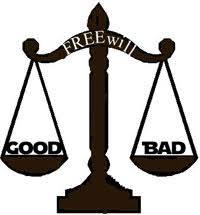
What is free will and how does it fit with God’s exercise of sovereignty?   Free will simply put is having the “freedom to choose”.  When God created man in His own image (Gen. 1:26-27), He empowered him with a gift that no other creature possessed. Man could operate under his own volition (the faculty or power of using one’s will).

Webster defines freedom as not under the control or in the power of another.  It denotes one’s personal sovereignty with the right of self-determination and self-expression.  Will in the Hebrew language is most often used to define the inner man.  It includes the soul—mind, will, and emotions (heart).

Adam and Eve chose to exercise their personal sovereignty and pursued their soul’s desire.  It is here that the core of sin began in the independent use of mind and will to choose what was good and what was evil (Gen. 3:5,22).

It is not surprising (and with intention) that God included these core elements of the soul in His great commandment (Deut. 6:4-5):  “Hear, O Israel: The LORD our God is one LORD; and you shall love the LORD your God with all your heart, and with all your soul, and with all your might.”  Isn’t it remarkable that love for God had to be “commanded”?

Free will—not force

God does not force us to follow Him.  However, God’s plan will be accomplished either with us or without us.  God may even choose to use another means by which to accomplish His plan.  But His plan and purpose will be achieved (Is. 23:9).  Remember the icebergs?

While we are working in the external realm, God is exercising His authority, in both the external and eternal realm to bring into fruition His plan resulting in His glory and our good (Is. 14:27).  As the noted writer and theologian A.W. Tozer noted, “God’s plan will continue on God’s schedule.”

Choice not coercion

God’s placement of His image in man demonstrated His great love for His creature.  Mankind was the apex of His creation.  The result of this unique relationship was to have been God living in unbroken fellowship with man and man loving God.

However, “The God-who-Sees” must have known that with the gift of free will would also come the risk of a “divided heart” (1 Kings 18:21; 1 Sam. 7:3).  Adam and Eve chose “free will” over God.  The reality that began in the Garden is the same reality we must acknowledge in 2020—alignment with God’s sovereign will is really a matter of choice.

Our Free Will-Our Choice

After contrasting man’s free will with God’s sovereignty, my takeaway is to be more intentional and prudent in the choices I make.  My choice—large or small—is a reflection of how much I love and trust God.  It is my acknowledgement of God’s wisdom, love, and sovereignty.

Abdicating my will to God is not based on coercion or fear.  It is “freely given” to the one whose image I bear (1 Cor. 15:49) and who gave His life for me (John 3:16).

As in every area of our life, Jesus is our supreme example of perfect obedience to the will of God without the lessening of personal choice.  Although Jesus was fully aware of His purpose and the outcome of His life, He still prays in Gethsemane, “Father, if thou art willing remove this cup from me; nevertheless not my will, but thine, be done.” (Luke 22:42)   Let all the redeemed of the Lord follow Jesus’ example.

Is God really in control? Man’s responsibility versus God’s sovereignty

God's sovereignty vs Man's responsibility

What is man’s responsibility in light of God’s supreme authority and power over everything?  Does God’s predetermined plan and purpose negate man’s responsibility to move forward with his own personal plans?  Where does God’s sovereignty end and man’s responsibility begin?

These are questions that have been debated for centuries among many great theologians and dedicated scholars.  Today we will begin to explore how to better operate (cooperate) within the sovereign rule of God.

Defining man’s Responsibility

How we define our responsibility in light of God‘s sovereignty is often shaped by one of two common views.  One view holds the belief that man has no role and therefore, no responsibility.  This belief contends that all events are predetermined and therefore inevitable regardless of what man does.

This is seen as a somewhat fatalistic view with a submissive outlook.  Man is seen as a mere “puppet” in accomplishing God’s sovereign plan and purpose.  If this were true, why then would God created us with free will?  (Next week’s discussion)

Another view of responsibility

Another view is the belief that although God is sovereign, man does retain responsibility for his life.  Through use of our gifts and talents, by our response to trials and tribulation, through the choices we make, we are continually (perhaps unknowingly) participating with the Creator as He executes His plan and purpose.

This partnership can be illustrated by how icebergs move.

In the frigid waters around Greenland are countless icebergs, some little and some gigantic. If you’d observe them carefully, you’d notice that sometimes the small ice floes move in one direction while their massive counterparts flow in another. The explanation is simple. Surface winds drive the little ones, whereas the huge masses of ice are carried along by deep ocean currents. When we face trials and tragedies, it’s helpful to see our lives as being subject to two forces—surface winds and ocean currents. The winds represent everything changeable, unpredictable, and distressing. But operating simultaneously with these gusts and gales is another force that’s even more powerful. It is the sure movement of God’s wise and sovereign purposes and the deep flow of His unchanging love.[1]

Sovereignty and Pray

While we may feel incapable of fully understanding God’s plan, He has revealed what we need to know to move forward in our lives.  While the secret things belong to God, the revealed things belong to us—to guide our behaviors and actions (Deut. 29:29).  One of the areas God has revealed to us is our responsibility to pray.

Believers are biblically instructed to pray (Rom. 12:12).  We are even directed for whom we are to pray—our leaders, our enemies, and the unsaved.  We often close our prayer recognizing the sovereignty of God with the pronouncement, “Thy will be done” (Matt. 6:10).

Prayer assumes the sovereignty of God.  If God is not sovereign, we have no assurance that He is able to answer our prayers.  It is in our prayers that we proclaim the power and ability of God to accomplish that which we are praying (1 John 5:14-15).  Prayer is the expression of our trust in God’s sovereignty.  It is our responsibility to pray.

Sovereignty and Prudence

We as believers are also responsible to act with prudence. I never fully appreciated this word until I understood its use in the context of God’s sovereignty.  Though not frequently highlighted in the biblical text, its application is noteworthy in both the Old and New Testament record.

In the framework of God’s sovereignty, prudence is the “use of all legitimate, biblical means at our disposal to avoid harm to ourselves and others AND to bring about what we believe to be the right course of events.”[2]

In the King James translation, prudence is used on three occasions.  Prudence—good sense and insight—is attributed to Solomon for his ability to accomplish the building of the temple in Jerusalem.  (2 Chron. 2:12).  In Proverbs 8:12, wisdom is said to dwell together with prudence—both important for knowledge and discretion.  The Apostle Paul includes prudence—knowledge and holy love of the will of God—as one of the spiritual blessings received by believers as a result of being in Christ (Eph. 1:8).   It is our responsibility to practice prudence.

Do Our Part

Although we recognize the reality that we operate within God’s sovereign purpose and plan, it does not negate our responsibility to “do our part”.  It is with the knowledge of God’s sovereignty that we are to take action with the specific means provided to us to address the situations in our life.   This includes both prayer and prudence.

    • Peter and John though directed by Jesus to “preach to all nations” when threatened by the Jewish Sanhedrin prayed that God would “enable then to speak with boldness” (Acts 4:24, 28-29).
    • Nehemiah saw God sovereignly position Israel to rebuild the wall in Jerusalem, yet he posted guards day and night (Neh. 4:7-9) and insured his workers were armed as they worked (Neh. 4:16-20).
The Bottom-line

As believers, we cannot use the sovereignty of God as an excuse not to actively engage in the challenges and opportunities God presents in our lives. God’s sovereignty by no means negates our responsibility to use every means at our disposal to promote the right outcomes.  Those outcomes should be based on what God reveals to us through His Spirt and His Word.  These are proven principles by which we can align with and serve the purpose of God. 

Lastly, when we feel as though we are drifting without purpose and direction, remember the “icebergs”.  They operate simultaneously with gusts and gales AND with another force that’s even more powerful.  We too operate simultaneously—by God’s sovereign purpose AND by our moral responsibility as He works in the ordinary circumstances of our lives (Rom. 8:28).

[1]   Contributor unknown

[2]  Jerry Bridges, Is God Really in Control:  Trusting God in a World of Hurt