The God of All Comfort: A Time to Revisit

It’s been 6 months since we first published “The God of All Comfort”.  The intent of that March recording was to offer words of encouragement during the extraordinary times created by the coronavirus pandemic.

Since the virus’ arrival, we’ve referred to the changes caused by it as the “new normal”.  However, secretly, we hoped the changes would not be “typical” but instead only “temporary disruptions” that would eventually “go away”.  But they didn’t and they haven’t.

In that video, we shared our belief that God was in control of this situation and that He would be with us during the time of this dreadful health pandemic.  So today, we revisit March 2020 to see where we’ve landed and to see if the God of all comfort has made good on His offer to comfort us.

Where has the time gone?

It’s time to inventory how you’ve been spending your time. In March, we offered several ways to maximize our time while sheltering in place and practicing social distancing.

We talked about the need to sustain our relationships in new ways.  It included expanding our technology to “reach out and touch”.  Since that time, I can’t share the number of Zoom events I’ve attended–meetings with family, Zoom coffees, Zoom birthdays.  God created us for relationship (Gen. 2:18). That’s why it is important to maintain our personal communities during this time.

For Ron (my husband) and I, the most difficult thing with COVID-19 has been separation from our family. We miss the trips to be with siblings and the special times we share–laughing, hugging, and doing silly things together.  I guess that’s why God created family (Gen. 1:28).

In the meanwhile

Stephen Colbert has a segment on his late-night show called, “In the meanwhile”.  It is the perfect lead into this part of my WordBytes today to describe the events that have occurred in tandem with the coronavirus.

In the meanwhile, our shrinking economy, social unrest, and political division are proving to be as deadly as COVID-19.  This is because they further weaken our fragile economy and strain our emotional capacity to deal with all the changes in our life.

In the meanwhile, we now live in a COVID-19 world.  Businesses are slowly reopening.  We’ve implemented public health directives intended to slow the spread of the disease and ensure safety of the community.   Mandates to encourage social distancing and the wearing of masks, like many of the changes we now live with, have been met with anger and resistance.

In the meanwhile, demands for equality and social justice further heighten racial tension within this nation. What is the best way to educate our children–online, in-class, or hybrid?  Only time will tell. In the meanwhile, where is the God of all comfort?

God of All Comfort:  Our Constant

“The God of all comfort” is an Old Testament description of God who is the ultimate source of every true act of comfort (Ps. 23:4; Ps. 119:76).  The Greek word for comfort is related to the familiar word paraclete, one who comes alongside to help.  It is another name for the Holy Spirit (John 14:16).

Comfort is often used to mean softness and ease.  But this is not the meaning in 2 Cor. 1:3-4.  The Apostle Paul is saying that God came to him in the middle of his suffering and trouble to strengthen him and give him courage and boldness.

Paul thanks the God of all Comfort for his deliverance from the trials and tribulations he experienced in Asia (Acts 19).  Consequently, God delivered Paul from all these (2Cor. 1:8-10) and provided for all his needs.  This deepened Paul’s love and trust in God.  It was Paul’s personal need and God’s divine response–His mercy and comfort–that drew Paul even closer to God than before his trials.  Are you closer to God since March 2020?

God is still in the heavens and He reigns over all the world (Ps. 103:19). God has not changed (Mal. 3:6; James 1:17).  Has God not come alongside us (paraclete) to help us during this time of trouble?  Has God not been there to provide divine comfort–strength and courage–during this time of change?

God promises to faithfully care for us even in the midst of our trouble.  This is evident in the fact that WE ARE STILL HERE. It is in recognition of God’s comfort that with gratitude we can lift our hands in praise to God.

That we may be able to comfort…

What have we learned since March 2020 about the God of all Comfort?  How will we share what we have learned with others?   Just as Paul shared with the church at Corinth, sharing how we endured afflictions and trials can benefit others (2 Cor. 1:5-6).  As God comforts us, we can comfort others. In doing so, we not only encourage those going through these difficult times, but also ensure their ability to persevere.

By extending our comfort, we can help our community not only survive but thrive in the midst of change.  We can help others increase their emotional capacity and their ability to move forward rather than being stuck in the past.

Most importantly, we can introduce them to the God of all Comfort.  Gloria Gaither leaves us  this observation about the God of all comfort.

God walks with us. He scoops us up in His arms or simply sits with us in silent strength until we cannot avoid the awesome recognition that yes, even now, He is there. 

Who would you recommend?

In this new age of consumerism, people are always looking for the best deal.  It’s understandable.  If we’re going to spend our money, we want to insure we’re getting the greatest value for our buck.

Services such as Angie’s List, Yelp, and Business.com, offer us a way to hedge our bets before spending our money.

The modern consumer thrives on information. Before making a buying decision, customers have long sought out the opinions and experiences of others to inform themselves as to whether a company is creditable or not. Today, this process is quick, easy, and accessible to anyone with a computer and internet connection.

Consumerism and politics

We are rapidly approaching general elections in November.  Unfortunately there is no service we can pull up on our computer to help with selection of the best candidates.  During this “season” of health pandemics, social crisis, and family challenges, we are in search of individuals who can reverse the problems we’ve experienced in 2020.  All the candidates, locally and nationally, claim to have the best “offer”.  Who would you recommend?

In the Gospel of Mark, Jesus is presented as an active, compassionate, and obedient Servant who ministers to the physical and spiritual needs of others.  Consequently, this gospel moves quickly to His public ministry where He performs many miracles (there are eighteen).  Jesus used these miracles to demonstrate not only His power but also His compassion.  As I look around at the needs of our city and our nation, service to and compassion for people are characteristics of one who will quickly attend to the problems and trials we face. Such was the case in our study text which is only recorded in Mark’s gospel.

Best qualified

In Mark 7:31-37, Jesus is found in the region of Decapolis by the Sea of Galilee.  A man who is both deaf and speech impaired is brought to him.  They recommended Jesus as the One best qualified for the task at hand.  It isn’t clear whether those seeking Jesus’ help expected healing but they did ask that Jesus “put His hands” on the infirmed man. (v. 32)   Sometimes we come to Jesus in our prayers not knowing what to ask But Jesus, who is omniscient knows exactly what we need (Rom. 8:26-27).

Better than expected

I’m sure the man, unable to hear or speak, was curious as to what was about to happen to him.  It is noted in one commentary, that Jesus in preparing the man for his healing used His own form of sign language:   And He (Jesus) took him aside from the multitude, and put His fingers in his ears, and He spat and touched his tongue (v. 33). Then Jesus looked to heaven, and sighed, and said to him, “Be opened.” (v. 34)  With one command, both impediments were cured.  The crowd was astonished.

Although Jesus charged the crowds to say nothing about the miracle, they could not help themselves and in their zeal shared the miracle with this observation:  “He has done all things well. He makes both the deaf to hear and the mute to speak” (v. 37).  To do things well means to do things “excellently”. (1 Cor. 14:17; Gal. 5:7)

Consumerism, the soul, and Jesus

Unfortunately, consumers, as a rule, aren’t very intentional when it comes to matters of the soul.   I don’t know where they go to seek out the opinions and experiences of others to inform themselves.  Where do they go to insure their spiritual needs are addressed excellently?  Where do they go with their fears and anxieties? Who would you recommend?

As believers, we know one thing is sure.  We have a Savior, Jesus Christ, who is more than equipped to handle the challenges we face today and tomorrow (Jude 1:25).  He is best qualified to meet our every need—provisionally and spiritually, because “He does all things excellently”.

It is natural for us to expect Jesus “to save us” by doing miracles in our life, like the deaf and dumb man.  And HE DOES.  But Jesus also wants us to know that He can be trusted with the daily events of our life.  Jesus’ grace will provide all we need to manage both our spiritual and temporal needs (Ps. 23:1-3).   Why?  Because He (Jesus) does all things well! (v. 37)

As we prepare for this day and the days ahead, look to the only One we can recommend to see us through these tumultuous and challenging times.  Trust the only One who died for us (John 11:25); who never fails (Is. 55:10-11); who cannot lie (Num. 23:19). Jesus has the power and authority to do “all things” (Matt. 28:18).    Jesus does all things well.

How am I to pray?


Where do I begin? I believe in prayer and have made a commitment to be more intentional in it along with fasting.  As I asked Jesus to help me know how to better hold that time with Him, this question came to mind, “How am I to pray?”  More specifically, how am I to pray during these tumultuous times?  What is to be the area I focus on during my time with Him?

Finding the right fit

Several years ago, I joined a prayer group that prayed for our nation.  In the center of the prayer circle, in which we sat, was a picture of the president of the United States.  Later we prayed for the world.  The president’s picture was then replaced with a map of the world.

I’m sure we used the circle to help us focus our attention and prayersThe Lord already knew who the president was.  And since God created the world (and everything in it), I’m sure geography wasn’t an issue for Him.  Thank God for leading us in how to pray because sometimes we really don’t have a clue.

What does the Bible say?

The Bible provides some general areas for our prayers.  Here are a few to help point us in the right direction.

Who are we to pray for?

  • our leaders (1 Tim. 2:1-2)
  • our enemies (Matt. 5:44)
  • the saints (Eph. 6:18)

How are we to pray?

  • without ceasing (1 Thess. 5:17)
  • believing (Mark 11:24)
  • according to the will of God (1 John 5:14-15)

Why are we to pray?

  • so people will come to a knowledge of the truth (1 Tim. 2:4)
  • so God’s kingdom will be realized (Matt. 6:10)
  • to keep us from temptation (Matt. 26:41)

Let the Holy Spirit lead

In Romans 8:26-27, the Apostle Paul makes the case for relying on the Holy Spirit to guide our prayers.

(In the same way) the Spirit also helps us in our weakness, because we do not know what to pray for as we should, but the Spirit himself intercedes for us with unspoken groanings.  Now He who searches the hearts knows what the mind of the Spirit is, because He makes intercession for the saints according to the will of God.  And he who searches our hearts knows the mind of God.

Prayer circles are helpful and important to the Kingdom, but sometimes it’s best to let the Holy Spirit lead us in our prayers.  For example, He may lead us to pray for specific people or circumstances.  All the while leaving the outcome to His sovereign will.  This type of prayer, intercessory prayer, invites us to cry out on behalf of another.

“I just want to testify”

In March our church prayed for a baby born prematurely.  The hospital saw this child’s chances of survival as slim to none.  But our church prayed without ceasing.  The hospital was in awe as the baby not only survived but ultimately thrived.   Our baby went home in August as a witness to the power of intercessory prayer.

In April, we invited friends and family to pray for New York City.  They were, at that time, the epicenter of the COVID pandemic.  We prayed, and I tell you, things shifted the following week.  Now New York City is viewed as the model for managing during this pandemic.  And they praise God for His mercy and grace.

At the end of July, our small group prayed that the violence in our city would cease.  While I haven’t been able to access the impact with monthly statistics, I believe our prayers made a difference.  Why? Not because I have the numbers to prove it but because of what God says in His Word.  John writes in the close of his epistle about the certainties of faith, including our prayers.

Now this is the confidence that we have in Him, that if we ask anything according to His will, He hears us.  And if we know that He hears us, whatever we ask, we know that we have the petitions that we have asked of Him.   1 John 5:14-15

We asked according to God’s will.  We are commanded not to kill (Exod. 20:13).  It is the Lord’s will that we love one another (Rom. 12:10) and be reconciled to each other (Matt. 5:23).  This is God’s revealed will.  We therefore believe God heard our prayer and that we will have the petitions that we asked from Him.

Pray for this moment

Prayer changes things, especially when guided by the Holy Spirit.  God alone knows where He wants us to join Him in His work.  In doing so, we get the opportunity to observe His glory and His power.  This strengthens our faith and encourages us to pray without ceasing, even when we don’t see immediate results (2 Cor. 4:18).

The failures and faults of 21st century living require more than man can provide.  Why?  Because the problems we face deal with the conditions of the human heart—selfishness, hate, jealousy, envy, and covetedness—just to name a few.

The prophet Jeremiah accurately described our current condition in the world when he said “the heart is more deceitful than anything else, and incurable​—​who can understand it?” (Jer. 17:9) Man’s heart has not changed.  Only God can heal what ails us.

As we look at the conditions of this world, know that God is ever present and vigilant.  He neither slumbers nor sleeps, and is aware of the people, places, and plans that need our prayers (Ps. 121:4).  Our task is to be more intentional and disciplined in our prayer life.

As a nation we need God’s direction and intervention.  While politicians and special interest groups have their place, we need to place our full confidence in God.  He is the only One who can lead us to His desired outcome for the world (Jer. 29:11).  Let’s put God and His will in the middle of our prayer circle and see where He leads us.

A Final Word on the Sovereignty of God


This week we close our study on the sovereignty of God.  It is our hope that a better understanding of God’s sovereignty has expanded your trust and confidence in our “all wise God” (Jude 1:25).

Our appreciation of the sovereignty of God will also help us as we attempt to make sense of these tumultuous times.  We know that our future is not dependent on our past or current circumstances but it is based on Who we serve (Ps. 20:7).

We thank God for His grace.  Grace introduced at Creation when we were given God’s image.  We thank Him even more for salvation resulting in our righteousness, sanctification and redemption (1 Cor. 1:30).  All these are ours as a result of sovereign God’s fulfillment of His purpose for mankind.

The Challenge to God’s sovereignty

As a result of God’s grace and love, we are now invited to freely choose a lifestyle that will result in God’s glory and our good.  So why is it so hard for man to operate under God’s sovereign rule?  The challenge to God’s rightful position and authority boils down to a matter of sin.

Man’s resistance to God’s sovereignty is rooted in sin that began in the Garden of Eden and is still manifesting itself today on the world stage. Remember, the wisdom of God, revealed in His purpose and will are foolishness to the world (1 Cor. 3:19).  Such thinking leads to disobedience.  And disobedience to God is a fast track to sin and ultimately death (James 1:14-15).

God’s sovereignty or man’s sin

Unless led by the Holy Spirit, man, by nature, will most often choose to be wise in his own eyes (Prov. 3:5-6).  He is persuaded by his lust of the flesh, the lust of his eyes, and the pride of life (1 John 2:16) which satisfies his fleshly impulses.

However, when led by the Holy Spirit, man can more clearly see and discern the will of God  As it is only by the Holy Spirit who can reveal the sovereignty of God, it is not surprising that when the Spirit has been poured out in such an abundant measure, that this truth has been clearly known and loved.[1]

The biblical account cites many who chose their will over God’s with disastrous results. Yet God’s sovereign will was accomplished (Job 42:2; Is. 14:27).  Many of them were kings, prophets, and people of God.  They “should have known better” but they didn’t do better.  These accounts were written for our learning so that we might not make the same mistakes (Rom. 15:4).  Here are just a few to help illustrate man’s resistance to God’s will.

    • Saul (1 Samuel 10:8; 13:7-10)
    • The children of Israel (Exodus 32)
    • Jonah (Jonah 1)

Alignment with God’s Sovereignty

We can better position ourselves to align with God’s sovereignty when we recognize:  (1) God’s authority and plan, (2) man’s moral responsibility, and (3) believer’s relationship with God.

God’s authority and plan

    • His right—as Creator God, He is the only rightful ruler and authority over His universe.
    • His rule—it is God’s nature, His goodness and greatness that “qualifies” Him to rule.
    • His will—His divine plan of salvation and redemption of mankind is constantly at work.

 Man’s  moral responsibility

    • Our choice—how we exercise our “free will” is an indicator of how we respond to God’s sovereignty.
    • Our love—God is the object of our affection resulting in our loyalty and our obedience.
    • Our obedience—we are to submit to God’s will by actively participating in His eternal purpose.

 Believer’s relationship with God

    • Our reality—it is grounded in the belief that God can do what is needed to bring about His purpose. That belief fosters our trust in God.
    • Our partnership—it gives access to God’s will and ways. This opens up enormous opportunities to join with God in establishing His kingdom rule.
    • Our service—it is a natural outcome of our belief and partnership with God.
Final Words on God’s Sovereignty and You

We conclude this study with remarks from one of my favorite teachers, A. W. Pink.  He shares his “heart” on this matter of sovereignty so that we may grow strong in our faith and witness for the Lord.

The sovereignty of God is something more than an abstract principle which explains the rationale of the divine government: it is designed as a motive for godly fear; it is made known to us for the promotion of righteous living; it is revealed in order to bring into subjection our rebellious hearts.

 A true recognition of God’s sovereignty humbles as nothing else does or can humble, and brings the heart into lowly submission before God, causing us to relinquish our own self-will and making us delight in the perception and performance of the Divine will.

 When we speak of the sovereignty of God we mean very much more than the exercise of God’s governmental power. Truly to recognize the sovereignty of God is to gaze upon the Sovereign himself.  It is to come into the presence of the august “Majesty on High.”[2]

[1]   The Sovereignty of God,  A. W. Pink

[2] Ibid.

Is God really in control? Man’s free will versus God’s sovereignty

Last week we discussed man’s responsibility in light of God’s sovereignty.  I put forth the thought that although God is all powerful, everywhere present, and knowing all things, we are expected to act prudently and biblically responsible (Titus 2:11-12).

We, as believers, are to use the resources available to us to accomplish the purpose and plan of God.  This includes our gifts and talents.  This mindset of acting responsibly begins with the conscious choices we make through our free will (Gal. 6:7-8).

While mindful of the theological discussions on the relationship between God’s sovereign plan of salvation and man’s free will, they will not be addressed in today’s teaching.  For those interested in pursuing this area further, I have included this reference to begin your personal study and for follow-up discussions with your pastor.

What is free will?

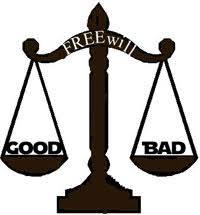
What is free will and how does it fit with God’s exercise of sovereignty?   Free will simply put is having the “freedom to choose”.  When God created man in His own image (Gen. 1:26-27), He empowered him with a gift that no other creature possessed. Man could operate under his own volition (the faculty or power of using one’s will).

Webster defines freedom as not under the control or in the power of another.  It denotes one’s personal sovereignty with the right of self-determination and self-expression.  Will in the Hebrew language is most often used to define the inner man.  It includes the soul—mind, will, and emotions (heart).

Adam and Eve chose to exercise their personal sovereignty and pursued their soul’s desire.  It is here that the core of sin began in the independent use of mind and will to choose what was good and what was evil (Gen. 3:5,22).

It is not surprising (and with intention) that God included these core elements of the soul in His great commandment (Deut. 6:4-5):  “Hear, O Israel: The LORD our God is one LORD; and you shall love the LORD your God with all your heart, and with all your soul, and with all your might.”  Isn’t it remarkable that love for God had to be “commanded”?

Free will—not force

God does not force us to follow Him.  However, God’s plan will be accomplished either with us or without us.  God may even choose to use another means by which to accomplish His plan.  But His plan and purpose will be achieved (Is. 23:9).  Remember the icebergs?

While we are working in the external realm, God is exercising His authority, in both the external and eternal realm to bring into fruition His plan resulting in His glory and our good (Is. 14:27).  As the noted writer and theologian A.W. Tozer noted, “God’s plan will continue on God’s schedule.”

Choice not coercion

God’s placement of His image in man demonstrated His great love for His creature.  Mankind was the apex of His creation.  The result of this unique relationship was to have been God living in unbroken fellowship with man and man loving God.

However, “The God-who-Sees” must have known that with the gift of free will would also come the risk of a “divided heart” (1 Kings 18:21; 1 Sam. 7:3).  Adam and Eve chose “free will” over God.  The reality that began in the Garden is the same reality we must acknowledge in 2020—alignment with God’s sovereign will is really a matter of choice.

Our Free Will-Our Choice

After contrasting man’s free will with God’s sovereignty, my takeaway is to be more intentional and prudent in the choices I make.  My choice—large or small—is a reflection of how much I love and trust God.  It is my acknowledgement of God’s wisdom, love, and sovereignty.

Abdicating my will to God is not based on coercion or fear.  It is “freely given” to the one whose image I bear (1 Cor. 15:49) and who gave His life for me (John 3:16).

As in every area of our life, Jesus is our supreme example of perfect obedience to the will of God without the lessening of personal choice.  Although Jesus was fully aware of His purpose and the outcome of His life, He still prays in Gethsemane, “Father, if thou art willing remove this cup from me; nevertheless not my will, but thine, be done.” (Luke 22:42)   Let all the redeemed of the Lord follow Jesus’ example.

Is God really in control? Man’s responsibility versus God’s sovereignty

God's sovereignty vs Man's responsibility

What is man’s responsibility in light of God’s supreme authority and power over everything?  Does God’s predetermined plan and purpose negate man’s responsibility to move forward with his own personal plans?  Where does God’s sovereignty end and man’s responsibility begin?

These are questions that have been debated for centuries among many great theologians and dedicated scholars.  Today we will begin to explore how to better operate (cooperate) within the sovereign rule of God.

Defining man’s Responsibility

How we define our responsibility in light of God‘s sovereignty is often shaped by one of two common views.  One view holds the belief that man has no role and therefore, no responsibility.  This belief contends that all events are predetermined and therefore inevitable regardless of what man does.

This is seen as a somewhat fatalistic view with a submissive outlook.  Man is seen as a mere “puppet” in accomplishing God’s sovereign plan and purpose.  If this were true, why then would God created us with free will?  (Next week’s discussion)

Another view of responsibility

Another view is the belief that although God is sovereign, man does retain responsibility for his life.  Through use of our gifts and talents, by our response to trials and tribulation, through the choices we make, we are continually (perhaps unknowingly) participating with the Creator as He executes His plan and purpose.

This partnership can be illustrated by how icebergs move.

In the frigid waters around Greenland are countless icebergs, some little and some gigantic. If you’d observe them carefully, you’d notice that sometimes the small ice floes move in one direction while their massive counterparts flow in another. The explanation is simple. Surface winds drive the little ones, whereas the huge masses of ice are carried along by deep ocean currents. When we face trials and tragedies, it’s helpful to see our lives as being subject to two forces—surface winds and ocean currents. The winds represent everything changeable, unpredictable, and distressing. But operating simultaneously with these gusts and gales is another force that’s even more powerful. It is the sure movement of God’s wise and sovereign purposes and the deep flow of His unchanging love.[1]

Sovereignty and Pray

While we may feel incapable of fully understanding God’s plan, He has revealed what we need to know to move forward in our lives.  While the secret things belong to God, the revealed things belong to us—to guide our behaviors and actions (Deut. 29:29).  One of the areas God has revealed to us is our responsibility to pray.

Believers are biblically instructed to pray (Rom. 12:12).  We are even directed for whom we are to pray—our leaders, our enemies, and the unsaved.  We often close our prayer recognizing the sovereignty of God with the pronouncement, “Thy will be done” (Matt. 6:10).

Prayer assumes the sovereignty of God.  If God is not sovereign, we have no assurance that He is able to answer our prayers.  It is in our prayers that we proclaim the power and ability of God to accomplish that which we are praying (1 John 5:14-15).  Prayer is the expression of our trust in God’s sovereignty.  It is our responsibility to pray.

Sovereignty and Prudence

We as believers are also responsible to act with prudence. I never fully appreciated this word until I understood its use in the context of God’s sovereignty.  Though not frequently highlighted in the biblical text, its application is noteworthy in both the Old and New Testament record.

In the framework of God’s sovereignty, prudence is the “use of all legitimate, biblical means at our disposal to avoid harm to ourselves and others AND to bring about what we believe to be the right course of events.”[2]

In the King James translation, prudence is used on three occasions.  Prudence—good sense and insight—is attributed to Solomon for his ability to accomplish the building of the temple in Jerusalem.  (2 Chron. 2:12).  In Proverbs 8:12, wisdom is said to dwell together with prudence—both important for knowledge and discretion.  The Apostle Paul includes prudence—knowledge and holy love of the will of God—as one of the spiritual blessings received by believers as a result of being in Christ (Eph. 1:8).   It is our responsibility to practice prudence.

Do Our Part

Although we recognize the reality that we operate within God’s sovereign purpose and plan, it does not negate our responsibility to “do our part”.  It is with the knowledge of God’s sovereignty that we are to take action with the specific means provided to us to address the situations in our life.   This includes both prayer and prudence.

    • Peter and John though directed by Jesus to “preach to all nations” when threatened by the Jewish Sanhedrin prayed that God would “enable then to speak with boldness” (Acts 4:24, 28-29).
    • Nehemiah saw God sovereignly position Israel to rebuild the wall in Jerusalem, yet he posted guards day and night (Neh. 4:7-9) and insured his workers were armed as they worked (Neh. 4:16-20).
The Bottom-line

As believers, we cannot use the sovereignty of God as an excuse not to actively engage in the challenges and opportunities God presents in our lives. God’s sovereignty by no means negates our responsibility to use every means at our disposal to promote the right outcomes.  Those outcomes should be based on what God reveals to us through His Spirt and His Word.  These are proven principles by which we can align with and serve the purpose of God. 

Lastly, when we feel as though we are drifting without purpose and direction, remember the “icebergs”.  They operate simultaneously with gusts and gales AND with another force that’s even more powerful.  We too operate simultaneously—by God’s sovereign purpose AND by our moral responsibility as He works in the ordinary circumstances of our lives (Rom. 8:28).

[1]   Contributor unknown

[2]  Jerry Bridges, Is God Really in Control:  Trusting God in a World of Hurt

Is God really in control? Knowing the God who sees


knowing the God who sees

Knowing God (theology) is central to our faith and our hope of salvation.  It fuels our trust during times of adversity and hardship.  Our view of God provides the framework on which we as believers live our life.  In knowing God we can better understand His sovereignty—His rightful position of supreme authority and power.

Seeing God through His attributes

We learn about God by understanding His attributes.  Attributes are the qualities which characterize God’s nature.   Some believers define these attributes into two (2) general categories:  His goodness and His greatness

Others understand God’s nature viewed through:

  • His omnipotence:   God is all powerful. (Ps. 66:5-7)
  • His omniscience:    God knows all things actual and possible.  (Is. 46:9-10)
  • His omnipresence: God is everywhere present.  (Ps. 139:7-10)

In reading these brief samplings of God’s attributes, believers have reason to be encouraged and hopeful knowing that God is more than able to handle any of the problems we face today including health pandemics, social inequities, and racial discord.

God in Action

In the Bible we witness God’s sovereignty through His divine attributes.  God’s attributes are most often seen through nature (Ps. 19:1-3) and through His relationship with man.  One notable relationship was the one He established with Abram.

Abram, like Adam, would play an important role in God’s sovereign plan of salvation (Gen. 12:2).  It was from Abram’s descendants that Jesus, the promised Messiah, would emerge.  Through Jesus Christ, not only would Israel be blessed but the whole world would become beneficiaries of God’s divine grace (Gal. 3:6-9).

The LORD made a covenant with Abram to “give His descendants land” (Gen. 15:18). However, after ten (10) years in Canaan, Abram and his wife, Sarai had “no baby”.  Sarai, thinking she was barren (and that God needed some help), persuaded Abram to take her handmaiden, Hagar, to fulfill the promise God had made to them. (Gen. 16:3).

Did God see what was happening? God not only saw what was happening but He also knew the resulting effect of Sarai’s misguided plan. God in His omnipresence and omniscience saw and knew that there would be impacts from Sarai and Abram’s scheme that would reach even into the 21st century.

The God who knows and sees

The situation that had been engineered by man (or woman, in this case Sarai) was the perfect setting for Jehovah, the God Who sees, to exercise His sovereignty in redirecting the fate of not only Abram, but also the future of an Egyptian slave girl named Hagar.

While Sarai’s plan of offering her maid to Abram to bear him a child was acceptable within the social custom of the day, there were still consequences that Sarai and Abram had not considered.  More importantly, they were working outside the will of God and His plan for their life.

Is this not the case for mankind in the 21st century? God has given us instruction on how we are to live. However, many times we attempt to accomplish God’s purpose through counterfeit and fruitless efforts. We are guilty like Sarai and Abram of accepting society’s customs and values in making life decisions that often lead to disharmony and confusion.

Working outside God’s Sovereignty

After Hagar conceived, the relationship between she and Sarai began to “go south.” Hagar began to despise Sarai (Gen. 16:4, 5).  Sarai began to mistreat Hagar.  So Hagar fled to the desert, headed for her homeland. But the God Who sees had other plans for the runaway. It was here that the Angel of the LORD (the first reference to the Angel of the LORD in the Old Testament) began to speak to Hagar, asking two questions that would frame God’s special message for her: “Where have you come from and where are you going?”

Often the God Who sees will ask questions for which He already knows the answers. The God Who sees recognizes our unique circumstance including how we arrived at this place in our life. Whether by mistreatment or reliance on our own efforts, God is there to redirect our path to His perfect purpose.

Knowing God in His Sovereignty

Hagar would have to stay there unless she “returned and submitted” herself again to Sarai. Hagar was “strongly encouraged” by the Angel of the LORD to “put herself back under the affliction” of Sarai (v. 9).

For her obedience, she was given a promised inheritance for her son, whom the Angel of the LORD named Ishmael, “the LORD has heard your affliction”. Hagar then called the name of the LORD Who saw and spoke to her in the desert: “You-Are-the-God Who-Sees” (v. 13).

Sometimes God puts us back at “square one” in order to bless us in His unique way. It may require that we acknowledge our part or culpability in the unfortunate circumstance we’re in, even asking forgiveness for offenses we may have inflicted. Obedience to His instruction is crucial. We trust that the God Who sees always has our best interest in mind, regardless of our perception of the outcome (Jer. 29:11).

Knowing God in all His glory requires that we also know Him in His sovereignty.  Because God is both good and great, we can trust our future with Him.  We have no need to rely on trends and forecast when we know that God is all powerful, that He knows all things actual and possible, and that He is everywhere present.  Such authority cannot be matched by anything or anyone in heaven or on earth.

The sovereign God who created heaven and earth, covenanted with Abram and Sarai, and contented for our salvation, surely sees us.  God sees us—He saw us in the past (Rom. 5:6), He sees us in the present, and we can trust, He will see us in the future (Ps. 31:15).   Now is the time to get to know the God who sees.

Is God really in control? Why now?

God is sovereign

Why now?  Why are we studying the sovereignty of God?  Because we have questions!  What is the future of this nation?  Who is best equipped to lead us in this “new normal” world we find ourselves?  How are we to move forward through this health pandemic and social unrest?  Does anyone have a plan?

Because we have these questions, it is timely to share a truth that will encourage us during this period of uncertainty and turmoil.  It doesn’t seem like anyone has the answers nor is anyone able to guarantee success.

While all this may be true of humanity and our current institutions, the Creator of heaven and earth (Ps. 19:1-6) knows the answers for all our questions.  Who then is in a better position to provide us with the answers we need?  God is sovereign and He has always had a plan for mankind.  What we are experiencing right now is part of that plan.

Knowing God is the “why now”

It is important to continually reinforce our knowledge of who God is.  Knowing God is foundational in securing our trust and our confidence (Ps. 27:1-3).  This is especially true during difficult times when fear and doubt challenge our faith.  When that happens, we can stand firmly on what we know about God and those things which He has revealed to us.

Those things God reveals to us can answer persistent questions concerning not only our life but the lives of those around us, including our nation.   How we respond to things revealed become the entry point for God to provide His power, His provision, and His presence.

The Call for Understanding God’s Sovereignty

In his book, The Sovereignty of God, A.W. Tozer, pastor, author, and spiritual mentor, cries out for renewed understanding of God’s sovereignty.

Present day conditions call loudly for a new examination and new presentation of God’s omnipotence, God’s sufficiency, God’s sovereignty. From every pulpit in the land it needs to be thundered forth that God still lives, that God still observes, that God still reigns. Faith is now in the crucible; it is being tested by fire, and there is no fixed and sufficient resting-place for the heart and mind but in the throne of God. What is needed now, as never before, is a full, positive, constructive setting forth of the Godhead of God. 

 It is in the context of God’s sovereignty that we can manage our fears and minimize our anxieties.  The uncertainties and insecurities we experience today can now be transferred to God who is the only one who can do something about them (2 Cor. 12:9).

Moving from head to heart

Before we get into the nuts and bolts of the sovereignty of God (and you know I love nuts and bolts), it is important to remind ourselves that what we learn about God is not to be reduced to “mere academics”.

We must apply this truth (as with all truth) not only to our minds but also to our hearts.  If we do the former without the latter, we might know that God is sweet but we will never taste His sweetness (Ps. 34:8).

Defining the Sovereignty of God

Sovereignty is the full right and power of a governing body over itself, without any interference from outside sources or bodies.[1] In political theory, sovereignty is a functional term designating supreme legitimate authority over some political entity. It is the ultimate overseer, or authority, in the decision-making process of the state and in the maintenance of order.[2] 

The sovereignty of God refers to His position of supreme authority and power.  He rules over and owns everything because He made everything.  Much like man’s sovereignty, God has legitimate authority over His universe.  As the sovereign One, God has a predetermined plan and purpose for everything that happens in that universe.  Not only does He have a plan (Ep. 1:11) but God oversees and makes decisions which fulfill His divine plan.  God upholds all things and all things owe their existence to Him (Heb. 1:3).[3]

The Right to Supreme Authority

God’s sovereignty is a natural consequence of His omniscience, omnipotence, and omnipresence.  God is described in the Bible as all-powerful and all-knowing (Psalm 147:5), outside of time (Exodus 3:14; Psalm 90:2), and responsible for the creation of everything (Genesis 1:1; John 1:1). These divine traits set the minimum boundary for God’s sovereign control in the universe, which is to say that nothing in the universe occurs without God’s permission.

God has the power and knowledge to prevent anything He chooses to prevent, so anything that does happen must, at the very least, be allowed by God. When we speak of the sovereignty of God, we mean He rules the universe.  The debate begins when and where His control is direct and when it is indirect.  This will be explored at a later time.

God’s Plan Unfolding in His Sovereignty

With everything that is occurring in our nation and our cities, it’s easy to wonder if God really cares about us.  There are those who have a cartoonish view of God’s sovereignty.

God’s relationship with His creation is pictured as “a man viewing an ant in a fish bowl”.  He is seen as distant, detached, and disconnected.  That may be how we feel as we view the world around us today.  But as I stated at the beginning of this teaching, God has a plan.

The Triune God orchestrated their plan before the creation of the world.  That redemptive plan (Rom. 5:2) has been unfolding through the history of mankind and continues even today in the 21st century.

As chronicled from Genesis to Revelation, God has an eternal plan that restores man’s fellowship with God by the creation of an escape from death’s curse (Romans 5:2) and the rediscovery of the spiritual life.  It is God’s plan to bring mankind to Himself (Eph. 1:7-11) and ultimately to a new heaven and new earth (Rev. 21:1).

It is by His divine power and gracious will that we live, and move, and have our meaning (Acts 17:28).  Knowing God is sovereign is enough to give us a good hope (2 Thess. 2:16).  It is enough to assure us of our future well-being (Jer. 29:11).

[1] Wikipedia

[2] Britannica.com

[3] Insight for Living Canada


Is God really in control?  Sure facts, overwhelming odds, and God

Is God really in control

Today is the first day of July and I’d like to welcome you to Wisdom Wednesday.  This is not to be confused with Throwback Thursday or Flashback Friday but it’s a new phrase to represent a return to something good from the past.  In this case, it is a previous WordBytes teaching which emphasizes a “faith basic”.

I want to use Wisdom Wednesday to introduce a new series, “Is God Really in Control?—Understanding the Sovereignty of God.”   For the next few weeks we will peel back the onion of God’s nature, how God accomplishes His will on earth, and the believer’s role under God’s sovereign rule.

Why God is in control?

This study is important “for such a time as this” (Esther 4:14) as we face challenges that seem impossible.   Our fears can be quickly calmed by embracing the fact that God is the supreme authority over everything in heaven and on earth (Daniel 4:35; Is. 46:10).

In God we can place our confidence and our hope.  In the midst of gloom and crisis, we can trust in the supreme God who rules over everything.  And because God is sovereign, He ultimately controls all that happens in the world and in our lives (providence).   To introduce this series, I’d like to turn our attention to an earlier WordBytes entitled, “Sure Facts, Overwhelming Odds, and God” to open this study.

Sure Facts

What do sure facts, overwhelming odds, and God have in common?  These are factors which often determine a person’s chance of success in the world. While these may be actual considerations, they are not the final word. We must always factor in the sovereignty and providence of God to not only level the playing field, but also to become the obvious advantage.

Sure facts take into consideration those elements we are born with or born into.  They include our “family factors”—our race, our gender, family structure (i.e., parental influence, number of siblings, birth order) and socio-economic position.  We had little control over their selection.

In the case of Joseph, he was born into the family of Jacob as the second youngest of thirteen children.  Jacob had two wives (Leah and Rachel) and two handmaidens (Bilhah and Zilpah) who bore his children (Genesis 30) but Joseph was Jacob’s favorite (Gen. 37:3).  This created an unhealthy and toxic environment for child rearing marked with sibling rivalry and jealousy.

Overwhelming Odds

Overwhelming odds are circumstances that minimize the possibilities of success in life and relationships.  They sometimes affect one’s ability to earn a living, care adequately for one’s family, or to live safely and confidently.   Joseph was sold by his jealous brothers to the Ishmaelites for twenty pieces of silver and was brought to Egypt.  Being a Hebrew slave, the odds of Joseph rising above his new found station in life were slim to none.  The odds became even smaller when he was thrown into prison as a result of the lies of Potiphar’s wife.  When it appeared release from prison was near, Joseph became the victim of the baker’s forgetfulness further obstructing any hope of freedom (Gen. 40:23).  But God was about to do exceedingly above all that Joseph could ask or think (Eph. 3:20).

God the Holy Equalizer

God was on the scene for Joseph as the Holy Equalizer and Change Master.  What appeared to be sure facts and overwhelming odds for Joseph soon became “biblical history.”   Genesis 50:19-20 declares the power of God’s sovereignty:  “As for you, you meant evil against me; but God meant it for good, to bring it about that many people should be kept alive, as they are today.”  God was the final authority.

God, the Holy Enabler and Way Maker, reversed the circumstances for Joseph whose journey began as a slave from Canaan but ended as a powerful ruler in Egypt.  He went from servant to savior for his people who would have perished from the famine in their land.  Joseph could have used the Psalm 16:5 as his personal testimony:  “O LORD, You are the portion of my inheritance and my cup; You maintain my lot.  The lines have fallen to me in pleasant places; Yes, I have a good inheritance.”

What do you believe?

Succumbing to what we believe are “sure facts and overwhelming odds” in our life can only result in despair and hopelessness.  Belief and trust in our God becomes the refreshing promise of rescue and provision regardless of the circumstances we face.  God’s plan and purpose for our life supersedes indisputable facts and devastating odds (Habakkuk 3:17-19).

Our future is not dependent on our family history or our personal past, but on Who we serve.  So the next time you’re weighing your options based on “facts and odds”, remember to factor in God.  God always has the final word.   “Some trust in chariots, and some in horses; But we will remember the name of the LORD our God.” Ps. 20:7

Anxiety Relief: Stressed and Depressed

Anxiety Relief

We need anxiety relief

Stressed?  Depressed? One of the biggest thieves of energy, health and life is anxiety.  Anxiety is described as a feeling of worry typically about an imminent event or something with an uncertain outcome.  Our current life experiences with the health pandemic, economic recession, and social unrest, have resulted in heightened anxiety within our families, our cities, and our nation.

In response to the coronavirus, pharmaceutical companies and medical researchers are rushing to develop a  cure for this deadly disease.  With the cries for justice and social reform, people across this nation and around the world, are in search of a cure to racism. But what relief can be offered for the heightened sense of anxiety we live with daily?

Who has the cure for the anxiety?

Where do we find anxiety relief?  What cures are available for the anxiety caused by the aforementioned circumstances and other life events?

Possible cures offered to date include intervention (therapy), meditation,  and physician-prescribed medication.  Unfortunately, we as a nation, have also chosen to self-medicate resulting in destructive and  addictive behaviors.

For this week’s WordBytes, I’d like to share  another source of  anxiety relief offered by one of my favorite writers.  Dr. F.B. Meyer, described as one of the world’s most gifted pastor and expositor, offers sage wisdom to believers as we make this journey of faith, one-day-at-a-time.  Dr. Meyer offers biblical relief for our anxiety.  A prescription that comes directly from the Great Physician (Exodus 15:26).