
We (believers) define truth as the meaning and reality of life defined by God versus truth shaped by postmodern thinking. The believer’s source of truth is presented by God Himself in His Word and through the direction of the “Spirit of Truth”, the Holy Spirit.
Truth defined by God becomes the compass by which believers are able to discern truth from error (1 John 4:6) therefore allowing them to live out their God-ordained purpose (Ep. 2:10).
How well am I doing with being truthful?
Following God’s truth may result in rejection and personal persecution. Inside the safety of the church walls it’s easy to agree with the ethics and morality inherent in God’s truth.
However, once outside the “physical boundaries” of the church, it is the “heart” which must reflect God’s truth. It is the heart that directs the mind, will, and emotions (the soul) to sieve the noise of the world through the filter of God’s truth.
Truth and obedience are closely connected as believers must choose between God’s instructions or man’s acceptance (Matt. 10:28).
Does the world want to know the truth?
We discussed this question earlier as to the world’s readiness for the truth. Often the world’s responses make the truth appear to be a remnant of the 20th century—no longer relevant in today’s fast-paced, high tech world. Unfortunately, truth is often defined by what’s trending on social media.
To further complicate the search for truth, corporate/community leaders and aspiring politicians create “untruthful” responses to difficult social issues that simply satisfy people who don’t really want to know the truth; so the community and nation are given a lie (instead of truth) to make them feel better.
Unfortunately people would rather believe a lie than the truth—think about that for a minute! Are people really being deceived or are they simply choosing to believe a lie? It’s easier (2 Tim. 4:3-4).
Am I ready to be a truth teller?
In Psalm 119:46, the writer speaks of their unfailing dedication to the truths offered by God: “I will speak of Your testimonies also before kings.And will not be ashamed.” Testimonies speak of witnessing. In Scripture, it relates specifically to divine testimonies or truth directly from God.
We must ask ourselves why we sometimes choose to believe a lie rather than the truth. The truth may be related to our life style, our family, or even about us personally. Perhaps we are judgmental, critical, or unforgiving. That’s why it is so important to regularly pray that the Holy Spirit expose those areas that interfere with receiving the truth of God.
The gold standard for truth tellers
To be a truth teller requires boldness to stand for holy “rightness” (Heb. 13:6) and to proclaim what is God’s truth versus what is politically or socially correct (Luke 12:4-5; Ps. 119:46).
When Jesus taught the Beatitudes to His disciples, He established a new standard of truth that was to be actualized in the life of the believer—a standard that would result in holy and sanctified (set apart) living.
Paul declared himself to be a truth teller. While it resulted in his persecution and polarization from the mainstream, he boldly proclaimed: “None of these things [persecution and prison] move me; nor do I count my life dear to myself, so that I can finish my race with joy.” (Acts 20:24)
Let us follow the examples given to us by God. Dare to be a truth teller.
Truth is an incredibly significant concept. Our view of truth shapes not only our personal lives but also our society. It especially impacts our relationship with God including our view of Scripture.
Our definition of truth is affected by what we watch, what we read, and even the opinions of our friends. Add to that the sway of social media, your “truth” is being adjusted with every post and tweet you receive. Imagine there are 500 million tweets sent every day[1]. Scary isn’t it.
Let’s face reality! We live in an age where we are being bombarded by varying opinions as to what is or isn’t truth. Because of these deceptive trends, it is important that we have a reliable and trustworthy compass by which to navigate in this world. We need guidance from God. We need God’s divine perspective.
God’s perspective of truth
In the Old Testament, truth is rendered as true or faithful. In either case, the Hebrew concept communicates reliability and trustworthiness. This trustworthiness is frequently used to describe God’s divine faithfulness (Ps. 31:5; Jer. 42:5).
In the New Testament, truth emphasizes reality as God has revealed it in creation (Rom. 1:18) and in the gospel (Eph. 1:13; Col. 1:5; 1 Tim. 2:4). God’s perspective of truth is given to us through His Word and through the Spirit of Truth—the Holy Spirit. Armed with these divine gifts we are provided a continual source of truth.
Truth in action
Adherence to the truth was critical during the formation of the early Church. Pressured by the Judaizers to continue with the practice of circumcision, the church at Galatia was in danger of spiritual error. They were rejecting the truth (salvation through Jesus Christ alone) to avoid persecution. We at one time or another have been guilty of quietly accepting error versus being truth tellers. That is to our shame.
In Galatians 5:7, Paul poses a question to this young church: “You were getting along so well. Who has interfered with you to hold you back from following the truth?”
Paul continues by stating emphatically, “This persuasion does not come from the One who calls you.” When we drift from the truth that God has revealed, we can be assured of its origin—the puppeteer of deception and lies, Satan.
Coram Deois a Latin phrase translated “in the presence of God”. It has its origin is Christian theology which summarizes the idea of Christians living in the presence of, under the authority of, to the honor and glory of God. Truth is to be lived coram Deo.
Practicing God’s divine perspective
Truth is to be practiced not only within the church but also outside its four walls. Imagine the impact that error has on every aspect of our society—in our homes, in the workplace, and in our institutions. Practicing God’s divine perspective acknowledges the importance of sharing truth in every sphere of our life.
Using God’s revelation, we have access to reliable knowledge—divine truth—about God, about ourselves, and how we are to live in relationship with our fellow man. Unfortunately, we often separate our “faith walk” from our “lifestyle”. God’s truth should permeate every area of our life. Practicing God’s divine perspective requires that wewalk in God’s truth continuously.
Our dependence on God’s truth is not based on emotional sentimentalities but firmly grounded in the nature of God (Deut. 7:9). We walk in accordance with His moral realities and act in harmony with His divine revelations (Ps. 26:3). Practicing God’s divine perspective recognizes God’s trustworthiness.
Knowing the reliability of God and accepting the reality of God, we can begin to operate from God’s divine perspective. God’s divine truth becomes the vehicle by which we can successfully navigate in this 21st century postmodern society.
What is truth? What does it look like amid a health pandemic, economic uncertainty, and civil strife? Does truth look different when placed in the context of the current worldview? And how does it stack up against the biblical view we, as believers of Christ are to follow?
When Jesus was brought to Pilate for judgment, the curious ruler asked Jesus, “So you are a king?”
Jesus answered, “You say that I am a king. For this I was born, and for this I came into the world, to testify to the truth. Everyone who belongs to the truth listens to my voice.” Pilate asked him, “What is truth?” After he had said this, he went out to the Jews again and told them, “I find no case against him. (John 18:37-38)
The truth question in 2021
Pilate’s response to the question of truth is often repeated today. With the introduction of relativism, we too may be asking the same question. We demand fewer rules and more personal freedom. The answer to the truth question is dependent on who or what has the greatest influence on our life—man or God.
The prophets warned that a time would come when the matter of truth would cause great division among men. Lack of truth ultimately leads to deception, pride, and injustice (Is. 5:20-23). So here we stand, in 2021, a divided nation, fighting over, “what is truth?”
With that thought in mind, I’d like to recast an earlier WordBytes entitled, “Can you handle the truth?” I have changed the title to better fit the social context in which we now find ourselves. While there are manyproposed definitions of the truth there can only be one. Time to answer the question, “Can we handle the truth in 2021?”
Can we handle the truth?
Especially when that truth is measured against the authority of Scripture and the lordship of Jesus Christ? We face a major challenge to walk in biblical truth while living in a postmodern world. Especially as we enter this second decade of the 21st century.
With all the political rhetoric and social bantering, we need truth. Behind the news bytes and sound bits, there is an intention movement to redefine “what truth is and what it isn’t”.
But can we really handle truth? What will we do when we receive it? Will we bury it? Ignore it? Or kill the person who brings it? That’s exactly what the Jews did to Jesus.
This inclination to “repackage” the truth is nothing new. It comes directly from the father of lies, Satan (John 8:44). We must be careful how we define truth, or we too may fall prey to the subtly of deception. “Did God really say you must not eat any of the fruit in the garden?” (Gen. 3:1, NLT)
Does truth have a limited “shelf life”?
In decades past, people could depend on the media to communicate the “truth” regarding specific issues of the day. Newspapers, magazine publications and newscasters were committed to operate at the highest ethical standards.
In addition, we could depend upon our local leaders—civic or religious—to offer us truth. But over time that has changed.
Unfortunately, both media and individuals now offer opinions based on their personal agendas or corporate bias. Truth is now shaped by social media and image consultants—by the number of “likes”, “retweets” and “followers” one can amass. This leaves us “in search for truth”.
Truth and Realty
What is truth? Truth is defined by Webster as that which agrees with reality. Our reality and meaning are grounded in God. That reality began in the Garden of Eden. Created in God’s image, our purpose and destiny are tied to our identity in Him through Christ (Col. 3:3).
This reality was sidetracked by sin and replaced with Satan’s counterfeit that placed self on the throne where only Christ was to be seated and exalted. Because of Jesus’ atoning work on the Cross, our sins were forgiven, and we are now reconciled back to God (2 Cor. 5:18, 19).
When we affirm our faith, we acknowledge that we have died to our old sin nature (Gal. 5:24) and walk in newness of life (Rom. 6:4). We no longer follow the worldview—its influence was negated by the Blood. Our meaning and reality is now realigned with God (2 Cor. 5:15). “For in Him we live and move and have our being” (Acts 17:28a).
Connecting with Truth
More than ever before, we must connect with the only True Source of Truth, Jesus Christ, our Lord and Savior (John 14:6). God’s Word and the Spirit of Truth stand ready to silence the lies, myths and fables we might hear (2 Tim. 4:3-4). It is God’s truth that will guide our behaviors and our responses in this fallen world.
God is the only source of truth for our lives. Can we handle the truth? Do we dare to speak truth when the world doesn’t want to hear? In 2021, let us through the Holy Spirit have the courage and commitment to be Truth followers!
E.F. Hutton was one of the most respected financial firms in the United States during the latter part of the 20th century. It was known for being cutting edge and innovative including it’s iconic marketing campaigns. The slogan “when E.F. Hutton talks, people listen,” became a cultural touchstone. It is even more important for believers that when God speaks, we listen!
The writer of Hebrews opens their letter with the clear declaration that although God spoke to man in the past through His prophets, He was changing His method of communications. God was doing a new thing. God would now speak through His Son, Jesus Christ.
This new way was the gospel message of Jesus Christ. Jesus offered a more excellent, effectual, and eternal way of providing salvation to mankind. In the progression of Hebrews, the writer proves that Jesus is superior to angels, a High Priest superior to Melchizedek, and the Mediator of a superior covenant (The New Covenant).
Warnings along the way
The warnings through Hebrews 10 attempted to address the spiritual erosion of the believers in receipt of this letter. Their behaviors constituted real dangers that could seriously damage their ability to serve and remain faithful to Christianity. They included negligence, unbelief, spiritual immaturity, and drawing back.
Their actions, once viewed as exemplary, were now approaching indifference. This resulted in several reminders to the readers concerning their ministry responsibilities in outreach (Heb. 13:1-2, 16), teaching (Heb. 5:11-13), and worship (Heb. 10:25).
Are we experiencing warnings along our Christian walk? Have we become lax in our commitment to our spiritual giftedness? Are we sloppy in our worship and praise? Are we negligent in our service to the Lord, regardless of how small or large it might be? Has our witness become “silent” for fear of rejection or reprisals? Are we indifferent to the needs of our community and fellow man?
A Call to Faithfulness and Endurance
In Hebrews 11 the writer exhorts their readers to faithfulness and endurance. They connect with their audience by sharing the experience of the heroes of Old Testament history.
The writer first spends time sharing the importance of faith. Its value and worth can be summarized in that faith is:(1) based on confident convictions, (2) certainty about unseen hopes and realities, and (3) is honorable, in that the saints were commended for it. (Heb. 11:1-2)
Since the readers are presented with “so great a cloud of witnesses” who demonstrated faith and endurance, they can also be expected to do the same (Heb. 12:1).
The final warning
The author concludes the basic argument of this epistle (the excellency of Jesus Christ) with a final admonition and warning (Heb. 12:25-29). The warning points to the danger of refusing God.
This final warning cautions against apostasy or behaviors which may lead in that direction. This was discussed in earlier warnings to the readers who were in danger of “falling away” (Heb. 6:4-8) and “drawing back” (Heb. 26-39). Although they had initially accepted the gospel of Jesus Christ, they were still in danger of “turning away” (apostrepha) from or rejecting God’s new way of relating to His people.
We are receiving a kingdom
The author, knowing the tendency of their readers to spiritual weakness, uses Old Testament examples and contrasts to warn their readers to “see to it that theydo not refuse Him who speaks” (v. 25). The warning is this. If the Israelites did not escape God’s wrath as He spoke on earth, how much worse the punishment would be as God speaks from heaven? (Heb. 12:25)
God sent His Son Jesus to speak for Him (Heb. 1:2). More importantly, Jesus would provide a “more excellent way” to God through His substitutional death and sacrifice. The power of sin would finally be broken. Jewish sacrifices and offerings were temporary. They could never offer the promises and privileges of the Gospel. Jesus offered the power of heaven and the permanence of eternity in Mt. Zion (Heb. 12:26-27).
The writer closes this warning with a message of hope. The message is this–believers were “receiving a kingdom which could not be shaken” (Heb. 12:28). The verb receiving is in present tense meaning the action is a “fact of reality occurring in actual time”, historically and remaining even into the present. This meant believers were part of God’s kingdom that would never change and were partakers of His generous grace (Heb. 3:14).
Within this new community “believers are to serve God with reverence and godly fear” (CSB, awe). A believer who departs from God’s magnificent privileges invites God’s retribution (Heb. 12:29; Heb. 10:29).
The Message of Hebrew for the 21st Century
The warnings contained in Hebrews are also appropriate for believers today. Especially if we desire to remain faithful to the gospel and hope to persevere during this period of history when our faith is constantly under fire.
There are many factors which threaten our ability to “hold fast” our profession of faith (Heb. 10:23). Many are “heart-issues”.
The hardened heart. Our refusal to accept the teaching and guidance of God’s Word. “Today, when you hear his voice, do not harden your hearts as in the rebellion.” (Heb. 3:15)
The darkened heart. Our continuance in sinful behavior although delivered by Jesus Christ. “If we sin willfully after we have received the knowledge of truth, there remains no more sacrifice for sin.” (Heb. 10:26)
The misguided heart. Our lack of wisdom and truth needed to discern right from wrong. “Take care, brethren, lest there be in any of you an evil, unbelieving heart, leading you to fall away from the living God. But exhort one another every day, as long as it is called “today,” that none of you may be hardened by the deceitfulness of sin.” (Heb. 3:12-13)
The divided heart. Our lack of faithfulness resulting in the choice of the world over God. “Do not be led away by diverse and strange teachings; for it is well that the heart be strengthened by grace, not by foods, which have not benefited their adherents.” (Heb. 13:9)
Be not discouraged by the admonitions of Hebrews. Its writer has also included many promises for believers that desire Christ and choose to serve in the kingdom of God. These promises are built on the excellency of Jesus Christ–the same yesterday, today, and forever (Heb. 13:8). They are the “more excellent way” (Heb. 5:9; 6:19; 7:19; 7:22; 8:1-2,10). God is still speaking. Are we listening?
At the beginning of this series, I asked if you were “helping or hindering your spiritual journey”. I posed three questions, which now fit nicely with today’s warning on the danger of spiritual immaturity.
First, where are you in your current faith walk? Secondly, what would motivate you to seriously consider the five (5) warnings? And finally, where does Jesus Christ fit in your life today?
It is now time to move these questions from their previous position as the backdrop for this series to the focal point for our exploration of spiritual immaturity. We begin this journey by contrasting it with its opposite–spiritual maturity.
What is spiritual maturity?
As I researched this topic of spiritual maturity, there were varying views and opinions as to its definition. For some it is a process; for others it is a pathway to follow. And still others see spiritual maturity as the goal of the believer’s life. That being the case I offer several views for your consideration.
Commitment to Transformation
Dallas A. Willard, an American philosopher known for his writings on Christian spiritual formation, describes spiritual maturity as taking place “when we are drawn close to a life with Jesus. We, by the grace of God, behave differently because we have been transformed.”
This transformation occurs as believers intentionally build and live their lives as disciples of Jesus Christ in the Kingdom of God. This transformation occurs as believers commit to grow, commit to change, and commit to learn.
Using Willard’s description, spiritual maturity is a process. One that never ends until we reach heaven and are face-to-face with our Savior (1 Cor. 13:12). Using this description, the question I would ask is this. As 21st century believers, do we behave differently?
Building on the Foundation of the Gospel
Ligonier Ministries, founded by the late Dr. R.C. Sproul, exists to proclaim, teach, and defend the holiness of God in all its fullness to as many people as possible. In “Four Essentials of Spiritual Maturity”, author and contributing writer Kent Hughes outlines four key areas needed for spiritual maturity.
While these essentials are directed to pastors, they also outline key responsibilities for believers who desire to be spiritually mature. They include:
Christ-focused exposition of the Word—Christ is the source and sustainer of spiritual maturity
Cautious “striving” to accurately present the Word—described as “struggling in preaching the gospel mystery”
Commitment to the Christian community—”to comprehend with all the saints” (Eph. 3:18-19)
Christian maturity demonstrated—the believer is a living testimony of what love and devotion for God should look like
Using Hughes’ description, spiritual maturity is a pathway. One that is to be passionately pursued (2 Tim. 2:15). That pathway includes leading people to Christ. Using this description, the question I would ask is this. As 21st century believers, are we intentional in building our lives on the foundation of God’s Word?
Passion to Persevere
Lastly, I present the viewpoint that spiritual maturity is a goal. The specific goal is the believer’s capacity to persevere. The believer is both able to weather the storms of life while also proclaiming the glory of the Lord.
Oswald in his book, Spiritual Maturity, describes it this way:
Spiritual maturity is not a level of growth Christians achieve but the passion to press on in Christ. As we embrace God’s Providence, the work of the Holy Spirit, the character Christ desires, the terms of discipleship, hardship, and more, we can move from infancy toward the fruitful maturity we were created to enjoy.
Pastor Andy Stanley, senior pastor and founder of North Point Ministries shares a similar viewpoint: “Spiritual maturity is measured in terms of persevering faith not perfect behavior.”
The Apostle Paul also describes spiritual maturity in terms of the early churches’ ability to persevere. Faced with fierce and continuous persecution for their faith, they were told not to “faint” in their work for Christ (2 Cor. 4:1, 14-17; Gal. 6:9; Col. 3:15). That is perhaps the reason the writer of Hebrews included spiritual maturity as important for this group.
Using this description, the question I would ask is this. As 21st century believers, are we able to persevere? While we may not face religious persecution, how we respond to the current state of our world, i.e., health pandemic, economic uncertainty, and civil unrest, can be an indicator of our ability to “hold fast our faith” (Heb. 10:23).
Now is the Time
God needs spiritually mature, 21st century disciples who will represent His Kingdom. These disciples must be willing to proclaim, defend, and teach the gospel of Jesus Christ. Especially in a post-modern world that is hostile to Christianity.
Most importantly, 21st century disciples must show and share the love of Christ–even to those who may hate us (Luke 6:27-36). We no longer can depend only on our pastor to provide outreach to the lost and to the disenfranchised. Neither can we wait for the church’s mercy ministry to provide for the homeless and the impoverished. The “them” is now “us”—our family, our neighbor, and our co-worker.
The physical church is temporarily “ON HOLD” for many of us. Other churches may be operating at a reduced capacity. But God is calling us today to be what He designed us to be—The Church (1 Pet. 2:4-6). As the Master Builder, God places His living stones just where He wants us to be (1 Cor.12:18). Spiritual maturity is not an option—it is a necessity for the world we live in today!
Next week we will explore the “Failure of Spiritual Immaturity”.
John R. W. Stott (1921 – 2011) is known worldwide as a preacher, evangelist, author, and theologian. He wrote this about unbelief:
Unbelief is not a misfortune to be pitied; it is a sin to be deplored. Its sinfulness lies in the fact that it contradicts the Word of the one true God and thus attributes falsehood to Him.
The second warning listed in the Hebrews letter reflects similar passion regarding the danger of unbelief (Heb. 3:7-4:13). Does it begin with drifting (neglect) and ends with doubting (unbelief)?
The writer of Hebrews frequently used Old Testament quotations and images to support their argument for remaining steadfast in the Christian faith. The author cited historical accounts from the Old Testament to remind the readers of the danger of giving in to outside pressure rather than “holding fast to their faith” (Heb. 10:23).
Unbelief for the Hebrews
In this second warning the author outlines the danger of doubting and disbelieving the Word. He uses the background of the exodus of Israel from Egypt and their experiences in the wilderness to explain their unbelief.
It was not God’s will that Israel remain either in Egypt or in the wilderness. His desire was that the people enter their glorious inheritance in the land of Canaan. But when Israel got to the border of their inheritance they delayed because they doubted the promise of God. Therefore, the people went backward in unbelief instead of forward by faith. They missed their inheritance and died in the wilderness.[1]
The “wilderness” for believers today is this current “season of uncertainty”. Instead of the Promised Land, we are facing nonstop change and upheaval in our daily lives. This is a result of many factors affecting our nation including the current health pandemic, social inequalities, and civil unrest. The fallout from this season of uncertainty is fear, disruptions, loss, and fatigue.
Let’s be honest! Our personal faith is also being challenged. We question, “What is God going to do with all these problems?” We object, “When will God intercede on our behalf?” Emotionally and spiritually, we are tired and need to see a “light at the end” of this long tunnel. Can you imagine what it felt like living in the wilderness for 40 years?
21st Century unbelief
What does unbelief among Christians look like today? Unfortunately, it looks like the Israelites’ unbelief in the wilderness. It resembles the behaviors that resulted in the hardening of their hearts.
Distrust in God’s power. We murmur and complain. Although we desire our lives to be trouble free, it just isn’t reality. The reality is this–we live in a fallen world (1John 2:17). There will be trials and tribulations. However, Jesus encouraged us by telling us He has overcome the world (John 16:33). We can trust God’s power to handle whatever happens in our lives.
Dependence on self and others. Scripture warns us “not to be wise in our own eyes” (Prov. 3:7). However, since we distrust God’s power, we tend to seek answers from the world. We foolishly place our trust in human leaders and political agendas. “Instant” access to information through technology makes us believe all our answers can be found on the Internet.
Departure from the “living God”. God was grieved with Israel during the entire forty years because of their unbelief (Heb. 3:12). God is saddened today as He sees the same thing happening with His followers. Their hearts have become hardened. In addition, the deceitfulness of sin has caused believers to rebel against God. They desire to return to their “Egypt”.
Unbelief left unchecked
The danger of unbelief is “loss”. Not the loss of our salvation. The believer in Christ is completely secure (John 10:29; Rom. 8:31-39; Ep. 2:4-10).
However, when we practice unbelief, we miss out on our inheritance today and must suffer the chastening of God (Heb. 3:12-19).
Unbelief is a thief that robs us of the blessings God has promised–promises that are our today (2 Pet. 1: 4). We lose the peace and joy that can only be found in trusting God (Ps. 16:8-9).
Still the best choice
In our humanity, we might be inclined to depend on our own strength. Amid our trials, we might be tempted to try some “nouveau” spiritual approach. The question we must ask ourselves is, “what can be better than Jesus?”
The writer of Hebrews presented the best case for “choosing Jesus” over returning to Judaism. As we look around at the issues we face, our best option is still Jesus.
Jesus, Son of the Living God, possesses all power on heaven and earth (Matt. 28:18). Jesus is omniscient–knowing all things (1 John 3:20). He is omnipotent–unlimited in power and authority (Daniel 4:35). Jesus is omnipresent–in all places at all times (Jer. 23:23-24).
Most importantly, Jesus loves us and has proven His love by dying for us so that we might have eternal life (John 3:16). He is the Righteous and Just One (Deut. 32:3-4). Jesus is all this and so much more. Jesus the Best and Only Choice for all generations
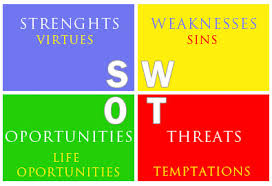
In my past life as a business consultant, I was engaged to help clients develop strategic plans to accomplish their organization’s mission and business goals. As part of that process we often included an analysis of the “environment” in which the client operated. It was called a situation analysis.
A situation analysis refers to a collection of methods . They are used to analyze an organization’s internal and external environment to understand their capabilities, customers, and competition. These methods of analysis helped to identify not only opportunities but also potential threats to the business. These analyses often served as informative warnings of potential dangers.
The epistle of Hebrews, a letter to Jewish Christians of that day, includes warnings that are much like a business situation analysis to help its readers see potential threats to their spiritual well-being.
The Audience
The writer of this Hebrews’ letter knew the needs of their intended recipients. Unlike the recipients of Paul’s letters, they were not a church (Rom. 1:7; Eph. 1:1; Gal. 1:2). They were a specific group of Jewish Christians–men of some intellectual ability. They had been established for a good many years (Heb. 2:3; 13:7), and had a history of persecution. They should have been mature Christians by this time, capable of teaching others (Heb. 5:11-6:2). Instead they were withdrawn and inward-looking.
The audience was seen as negligent in good deeds (Heb. 13:16). They were sloppy in their approach to attendance at worship service (Heb.10:23-25). They showed evidence of “cooling” in their faith. Most importantly, this group was wavering between Christianity and Judaism. The author of Hebrews needed to rekindle the readers’ commitment to Christ.
Their problem did not involve sin in its most obvious sense. They were not openly and willingly breaking one or several of God’s commandments, like stealing, lying, adultery, or murder. But regardless, they were falling short of the glory of God through wrong attitudes—things that we might consider today as being “matters of the heart.”
The writer of Hebrews’ challenge was to contrast the achievements of Jesus with that of the Old Testament priesthood and sacrificial system.
The Environment
Like the authorship of Hebrews, the exact location of this audience is unknown. There is no opening salutation typically found in New Testament letters. No city is identified to indicate where these Jewish Christians resided.
We do, however, get a hint as to where the author of Hebrews was located. Included in the closing, the writer advises their readers to salute “those that rule over you and all the saints” just as “they of Italy salute you” (Heb. 13:24). Commentaries identify this reference to Italy as possibly pointing to Rome.
Written in Rome (before A.D. 70), Hebrews may provide valuable insight into the “world” these readers may have lived in. It may also help us understand what it meant to be a follower of Jesus Christ during that time.
The early converts to Christianity in Ancient Rome faced many difficulties. The first converts were usually the poor and slaves as they had a great deal to gain from the Christians being successful. If they were caught, they faced death for failing to worship the emperor. It was not uncommon for emperors to turn the people against the Christians when Rome was faced with difficulties. In AD 64, part of Rome was burned down. Emperor Nero blamed the Christians and the people turned on them. Arrests and executions followed.
The Warnings of Hebrew
The warnings of Hebrews have been the focal point of many commentators and biblical scholars. There are many reasons for this intense scrutiny. Most importantly, these warnings emphasize behaviors that seriously damage believers’ faith in Jesus Christ. These warnings are more than indicators of possible problems, or other unpleasant situations but extreme spiritual “dangers”.
Warning1: Danger of neglect (2:1-4)
Warning 2: Danger of unbelief (3:7-4:13)
Warning 3: Danger of spiritual immaturity (5:11-6:20)
Warning 4: Danger of drawing back (10:26-39)
Warning 5: Danger of refusing God (12:25-29)
Comparison with today
This series is intended to help us examine where we are in our individual walk of faith. Are we helping or hindering our journey? Therefore, I will offer “more questions than answers” for our consideration as we move through the book of Hebrews.
We begin with these. First, where are we in our current faith walk? Secondly, what would motivate us to seriously consider the five (5) warnings? And finally, where does Jesus Christ fit in our life today?
Our examination of these questions will act as the backdrop for this study series. It is our hope that at the conclusion we will better understand the current threats to our faith and our spiritual growth. This includes the current 21st century worldview of Jesus Christ and Christianity.
We begin next week with an analysis of the first two warnings–the danger of neglect and the danger of unbelief.
Lost in Space was an American science fiction television series in the 1960’s. It followed the adventures of the Robinsons, a pioneering family of space colonists who struggle to survive in the depths of space.
When danger was near to the Robinson family, Robbie, their protective robot, would cry out, “Danger”. Similarly, we teach our children to be aware of danger. They call out a warning, “stranger danger” when they feel threatened.
Stranger danger!
Warnings play a huge role in sheltering us from potential harm or danger. Because of the seriousness of the coronavirus pandemic, we carefully heed the medical warnings provided to us by both our local and our state health officials. With the growth of cyber-crimes in our nation, we quickly respond to security warnings by purchasing systems to protect our personal assets. Police warnings of increases in crime incent us to invest in elaborate surveillance and security equipment.
However, do we, with the same diligence, heed spiritual warnings as we move through these fretful times? Are we concerned about the health and well-being of our souls? What about our family’s spiritual well-being? During the next few weeks, we will be using the book of Hebrews to discuss “spiritual danger warnings” in the 21st century.
Opportunities in warnings
The writer of Hebrews gave five (5) warnings to his readers. Although the historical context for this epistle is different than in 2020, the warnings included in Hebrews are still relevant for today.
Warren Wiersbe, noted teacher and biblical scholar had this to share concerning the practical applications that can be found in the book of Hebrews:
Many people have avoided the epistle to the Hebrews and, consequently, have robbed themselves of practical spiritual help. Some have avoided this book because they are afraid of it. The warnings in Hebrews have made them uneasy. Others have avoided this book because they think it is too difficult for the average Bible student. To be sure there are some profound truth in Hebrews, and no preacher or teacher will dare to claim that they know them all! But the general message of the book it’s clear and there is no reason why you and I should not understand and profit from it.
The Apostle Paul wrote, “everything that was written in the past was written to teach us, so that through the endurance taught in the Scriptures and the encouragement they provide we might have hope” (Rom. 15:4). Let’s get ready to dig in!
In this new age of consumerism, people are always looking for the best deal. It’s understandable. If we’re going to spend our money, we want to insure we’re getting the greatest value for our buck.
Services such as Angie’s List, Yelp, and Business.com, offer us a way to hedge our bets before spending our money.
The modern consumer thrives on information. Before making a buying decision, customers have long sought out the opinions and experiences of others to inform themselves as to whether a company is creditable or not. Today, this process is quick, easy, and accessible to anyone with a computer and internet connection.
Consumerism and politics
We are rapidly approaching general elections in November. Unfortunately there is no service we can pull up on our computer to help with selection of the best candidates. During this “season” of health pandemics, social crisis, and family challenges, we are in search of individuals who can reverse the problems we’ve experienced in 2020. All the candidates, locally and nationally, claim to have the best “offer”. Who would you recommend?
In the Gospel of Mark, Jesus is presented as an active, compassionate, and obedient Servant who ministers to the physical and spiritual needs of others. Consequently, this gospel moves quickly to His public ministry where He performs many miracles (there are eighteen). Jesus used these miracles to demonstrate not only His power but also His compassion. As I look around at the needs of our city and our nation, service to and compassion for people are characteristics of one who will quickly attend to the problems and trials we face. Such was the case in our study text which is only recorded in Mark’s gospel.
Best qualified
In Mark 7:31-37, Jesus is found in the region of Decapolis by the Sea of Galilee. A man who is both deaf and speech impaired is brought to him. They recommended Jesus as the One best qualified for the task at hand. It isn’t clear whether those seeking Jesus’ help expected healing but they did ask that Jesus “put His hands” on the infirmed man. (v. 32) Sometimes we come to Jesus in our prayers not knowing what to ask. But Jesus, who is omniscient knows exactly what we need (Rom. 8:26-27).
Better than expected
I’m sure the man, unable to hear or speak, was curious as to what was about to happen to him. It is noted in one commentary, that Jesus in preparing the man for his healing used His own form of sign language: And He (Jesus) took him aside from the multitude, and put His fingers in his ears, and He spat and touched his tongue (v. 33). Then Jesus looked to heaven, and sighed, and said to him, “Be opened.” (v. 34) With one command, both impediments were cured. The crowd was astonished.
Although Jesus charged the crowds to say nothing about the miracle, they could not help themselves and in their zeal shared the miracle with this observation: “He has done all things well. He makes both the deaf to hear and the mute to speak” (v. 37). To do things well means to do things “excellently”. (1 Cor. 14:17; Gal. 5:7)
Consumerism, the soul, and Jesus
Unfortunately, consumers, as a rule, aren’t very intentional when it comes to matters of the soul. I don’t know where they go to seek out the opinions and experiences of others to inform themselves. Where do they go to insure their spiritual needs are addressed excellently? Where do they go with their fears and anxieties? Who would you recommend?
As believers, we know one thing is sure. We have a Savior, Jesus Christ, who is more than equipped to handle the challenges we face today and tomorrow (Jude 1:25). He is best qualified to meet our every need—provisionally and spiritually, because “He does all things excellently”.
It is natural for us to expect Jesus “to save us” by doing miracles in our life, like the deaf and dumb man. And HE DOES. But Jesus also wants us to know that He can be trusted with the daily events of our life. Jesus’ grace will provide all we need to manage both our spiritual and temporal needs (Ps. 23:1-3). Why? Because He (Jesus) does all things well! (v. 37)
As we prepare for this day and the days ahead, look to the only One we can recommend to see us through these tumultuous and challenging times. Trust the only One who died for us (John 11:25); who never fails (Is. 55:10-11); who cannot lie (Num. 23:19). Jesus has the power and authority to do “all things” (Matt. 28:18). Jesus does all things well.
For I have not shunned to declare to you the whole counsel of God. Acts 20:27 (NKJ)
Our intent in creating this series has been to offer a new perspective on the whole counsel of God that will hopefully increase believers’ confidence in its validity and its value in navigating in the 21st century. If you’re struggling with obedience and how to be obedient to God, continue reading.
We introduced our series by first discussing the wisdom of God. The “unsearchable” knowledge of God (Rom. 11:33) establishes the foundation for acceptance of the whole counsel of God and for victorious living under “Kingdom Rule”.
We expanded the definition of the whole counsel of God to include not only that which is revealed through His Word and the Holy Spirit, but also extends to His realized purpose and His will in the world and in the believer’s life.
The reliability of God’s counsel is a consequence of who He is and His relationship with believers. God is, by nature, exceedingly good and great! Because of that, God’s counsel can be trusted.
So why do people reject God’s counsel?
When I teach God’s Word, I am surprised at the number of pushbacks and arguments I get from people as I share the whole counsel of God. I see in their eyes and hear in their voices, the inner conflict that God’s Word creates in their life as they attempt to convince me (and justify to themselves) their “difference with the counsel” that is being “revealed”. It is out of this place of discomfort that the Bible and the Holy Spirit is regularly accused of being “intolerant”, “outdated”, and “inaccurate”.
The reason for their “disconnect” is the standard they use to assess the “value or correctness” of God’s counsel. Their “source of counsel” is, in most cases, the world, their flesh, and/or the influence of Satan. Once this is understood, it becomes clear the basis of their discomfort is not the sufficiency of Scripture but the struggle for authority in their life—God’s authority or the current worldview? God’s authority or what makes them happy? God’s authority or Satan’s authority? It is a matter of authority and obedience.
Obedience and thewhole counsel of God
I was saved when I was nine years old. I bought the “fire insurance” and wasn’t going to hell. But it was 30 years later that I learned about “lordship” and God’s authority and rule in my life. That required me to change the source of my counsel—no longer the world, my flesh, or Satan—but the whole counsel of God.
My personal journey has led me to believe that people’s disobedience and rejection of God’s counsel usually stems from one or all of the following:
Blinding by Satan. “And even if our gospel is veiled, it is veiled to those who are perishing. In their case the god of this world has blinded the minds of the unbelievers, to keep them from seeing the light of the gospel of the glory of Christ, who is the image of God.” 2 Corinthians 4:3-4 (NRS)
Paul explains to the Corinthians the reason why people reject the gospel. The translated meaning of veiled is “to hide or hinder the knowledge of a thing.” And who is the culprit responsible for the veiling? It is Satan. Satan’s agenda is to keep people away from their Creator and His purpose for their lives. And what doesn’t Satan want people to know? “The gospel of the glory of God” realized through the sacrificial death and resurrection of Jesus Christ. Jesus has provided freedom from the bondage of sin, a path back to God (reconciled), and access to spiritual blessings prepared for them (Eph. 1:3-5).
Bentness of the Flesh. “Do not love the world or the things in the world. The love of the Father is not in those who love the world; for all that is in the world — the desire of the flesh, the desire of the eyes, the pride in riches — comes not from the Father but from the world. And the world and its desire are passing away, but those who do the will of God live forever. 1 John 2:15-17
As Christians we not only have become new creatures in Christ (2 Cor. 5:17) but we also have been delivered from the penalty and the power of sin. However, until Christ’s return or we transition to be with Him in heaven, we must still deal with the presence of sin, in our unredeemed flesh and by virtue of living in this fallen world.
These two facts require BELIEVERS to continually be aware of those factors that tend to “bend us” toward the “world’s view of life” versus God’s expectations of Christian behavior and purpose. If you have not accepted Christ’s offer of salvation, there is still “room at the Cross” with an opportunity to “change the bentness” of your flesh and the influence of this “falling” world in our lives.
Battle for Truth. “Ever since the creation of the world his eternal power and divine nature, invisible though they are, have been understood and seen through the things he has made. So they are without excuse for though they knew God, they did not honor him as God or give thanks to him, but they became futile in their thinking, and their senseless minds were darkened. Claiming to be wise, they became fools. Romans 1:21-22
The battle for truth in the 21st century is raging. We feel the effects of postmodernism both inside and outside the Church. To exacerbate this dilemma, social media and technology has introduced the ability for individuals and groups to flood the channels with their agendas that spread propaganda, misinformation, and disinformation.
Propaganda is defined as the systematic transmission of information or ideas in order to encourage or instill a particular idea, attitude, or response. Misinformation is erroneous or incorrect information. Misinformation differs from propaganda in that it always refers to something which is not true. Its intent is usually neutral. Disinformation refers to disseminating deliberately false information, with the intention of influencing policies of those who receive it.
John Hopkins Sheridan Libraries
So where is one to go for good counsel? To the only source that has a record of being all wise, reliable, and totally committed to our well-being. That Source is God.
God’s Counsel = LIFE
The whole counsel of God includes some things that are difficult to hear—the fact that we are dead in sin and deserving of God’s wrath (Eph. 2:1–3) and the fact that we cannot save ourselves through works (Eph. 2:8–9). The gospel is a call to faithfulness and holy living (Eph. 1: 4). Believers will face persecution (John 16:33) and likely be considered foolish. But none of these things should dissuade us.
When we accepted God’s lordship and are obedient to His will and His purpose, our life will become richer and fuller—God planned it that way through Jesus Christ who is the living WORD (John 10:10). Accept the full counsel of God as your source of wisdom and direction. God’s counsel is the true path of life (Ps. 16:11).
Please Pin this post. Thanks!
Ravi Zacharias – God’s Plan for your life and how to be obedient