Our Theology of Suffering: Where does it come from?


Our Theology of Suffering: Where did it come from?

Suffering is part of life

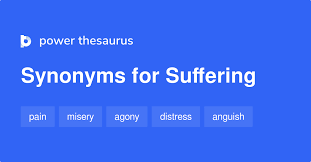
I know you probably don’t want to hear this, but suffering is part of living in this fallen world.  Suffering is the state of undergoing pain, distress, or hardship. As humans, we continually look for every possible way to either avoid suffering or move through suffering as quickly as possible.

As we discussed last week, Satan introduced sin in the Garden of Eden (Gen. 3:16-19). Suffering is a natural consequence of sin.  However, we often direct our frustration, not at its source, sin, but instead we ask, “Why did God let this happen?”

However, if we look behind the pain, distress, or hardship, we will discover “the lust of the flesh, and the lust of the eyes, and the pride of life” (1 John 2:16).  These things make up “the world system” that is at enmity with God.    Take a moment and reflect on the latest sufferings.  Even the extreme weather can now be attributed to man’s abuse of the ecology.

Our theology shapes our view of suffering

Our theology of suffering is shaped by our understanding of who God is.  It is important to know who God is and conversely, who He is not.   While God IS all powerful, all knowing, and everywhere present, God does not exist to act as our Superman, or Wonder Woman, or Batman—running from here and there stopping evil.

God is the rightful ruler and authority over His universe (Col. 1:16). His divine plan of salvation and redemption of mankind is constantly at work.  God is the sure foundation on which we can stand in times of uncertainty and times of suffering (Hab. 3:17-19).

Our trust in God shapes our view of suffering

Trust in God is another key factor that shapes our theology of suffering.  In review of the biblical record, there are many incidents of suffering—pain, distress, or hardship.  Incidents which required the Lord God to show Himself strong on behalf of His people.  Sometimes God would remove the object of suffering.  More often, however, God allowed the suffering to continue to grow the believer’s trust and faith in Him (2 Cor. 12:7-10).

In his letters to the new churches, the Apostle Paul often spoke of the need to trust and believe God, regardless of their current suffering.

And we know that God causes everything to work together for the good of those who love God and are called according to his purpose for them. (Rom. 8:28, NLT)  

 All of this is for your benefit. And as God’s grace reaches more and more people, there will be great thanksgiving, and God will receive more and more glory. That is why we never give up. Though our bodies are dying, our spirits are being renewed every day. For our present troubles are small and won’t last very long. Yet they produce for us a glory that vastly outweighs them and will last forever! (2 Cor. 4:15-17, NLT) 

Our worldview shapes our view of suffering

Our worldview—our beliefs, values, and behavior—also influences how we view suffering.  Many of us believe that we are in control of the events and circumstances in our life.  We go to great efforts to manage and manipulate those things, which we feel, are in our control.  That, however, isn’t always true. Remember COVID 19?

The Preacher (King Solomon) makes this assessment of “control” in Ecclesiastes 9:11. Regardless of personal capacity or ability—speed, strength, wisdom, cleverness, or skill, “time and chance” happens to us all.  Suffering nullifies both personal capacity and ability.

Believers operate from a different worldview.  We operate from God’s “Kingdom” worldview.  As followers of Jesus Christ, we are citizens of God’s Kingdom, though we “temporarily” reside on earth (Phil. 3:20).  This view acknowledges the reality of sin and suffering but offers an “alternate” response to the suffering we face.

The kingdom view recognizes that:

    • God always loves and cares for His children (Ps. 23).
    • God sovereignly rules over the universe (Ps. 103:19).
    • God is always with and for us (Gen. 28:15; Matt.28:20).

Holding this view, we are able to persevere and live confidently even amid suffering.

Conclusion

Suffering is a reality of living.  We will be better equipped to deal with suffering when our theology is correct.  It begins with: (1) the correct view of God, (2) placement of trust in the “right” Person (The Triune God), and (3) an “eternal” Kingdom worldview.

Next week we will look at suffering:  its purpose and possibilities.

Our Theology of Suffering: An Introduction

Our Theology of Suffering: An Introduction

No suffering please

How do you feel about suffering? What are your beliefs about its cause and effect?  Its purpose and possibilities.  I, for one, am not volunteering for any unnecessary pain.  However, if it hasn’t become evident at this point in our life, suffering is part of our journey as human beings.

Suffering was not part of God’s original divine plan.  However, Satan’s introduction of sin in the Garden of Eden resulted in its creation (Gen. 3:16-19).  As humans, we continually look for every possible way to avoid suffering.  And if we can’t avoid it, we try to move through suffering as quickly as possible.

That’s why it is important for our spiritual growth and development to understand the what and why of suffering.  This includes learning to best strengthen our resolve and focus when suffering occurs.  Because “I guarantee you” that we all will suffer in the future.  But the question is, what is your response to suffering?  How well do you manage your pain?

What is suffering?

Suffering is the state of undergoing pain, distress, or hardship. As we look around, we might conclude that we are living in a continual state of suffering.

Pain, whether it be physical, mental, or emotional is evident in our society by the number of individuals seeking relief through food, drugs, and alcohol.  Distress is extreme anxiety and sorrow.

Anxiety disorder is the class of mental disorder in which anxiety is the predominant feature. This disorder, an illness characterized by constant and boundless worry that interferes with the daily life, is the most common psychiatric illness in the United States, affecting 40 million American adults.[1]

Hardship (deprivation) is caused by any number of reasons:  acts of nature resulting in loss of life and property or man-made (political/social/economic agendas and policies).  Hardship presents itself in the growth of the lower economic class, which is one-third of where Americans are today.

The lower economic class, also known as the working class, is the socio-economic group with the least income. They are often categorized as families whose income falls below poverty line. These are the people who live hand to mouth, or paycheck to paycheck. They barely earn enough to cover their expenses and a huge expense often sends them into debt.[2]

What do we learn from the definition of suffering?  Suffering affects more than our physical well-being.  Suffering is not just episodic.  It occurs more frequently and “routinely” than we want to admit.  We have, unfortunately, accepted it as “part of life”.  And to some degree it is part of life BUT how we respond and manage it, makes the difference between successful living and thriving OR stressful living and surviving.

Pain management

When we experience pain that cannot be alleviated with medication, surgery, or rehabilitation, our physician will often prescribe pain management treatment.  The intent is to teach us strategies which will help us maintain control or influence over our pain.  This might include for example, breathing techniques or mindfulness-based therapies.

Key to successful pain management treatment is the realization that the pain will not be eliminated, however, we can exercise control over the degree the pain will hinder or disrupt our life.

For believers, our pain management for suffering lies with our knowledge of God, and of Jesus our Lord (2 Pet. 1: 3-4).  Since we live in a fallen world, suffering will continue.  However, armed with knowledge of God, we can live confidently, trusting in His goodness and His greatness (Ps. 27:1-3).

This is especially true during difficult times—times of suffering—when fear and doubt challenge our faith.  When this happens, we can stand firmly on what we know about God and those things which He has revealed to us as His children (Rom. 8:17).

Knowing these things can not only help us better respond to the suffering happening in our life but also react appropriately to the disruptions in the world around us.  How we respond to things revealed become the entry point for God to provide His power, His provision, and His presence.

Next week, we will continue to discuss and develop our theology on suffering.

[1] Pew Research Center

[2] Ibid


When Life Happens


When Life Happens

How was your day?

You rush to the bank to make that critical deposit on Friday afternoon.  Your watch shows you have five minutes before closing.  As you pull up to the bank window; instead of the teller, you see the “closed” sign.  Your watch evidently was running slower than you knew.  Life happens!

You go for your annual mammogram examination.  The technician finishes with a smile and a promise to be right back.  She leaves to share your pictures with the attending physician.  She returns and somberly informs you that after dressing, the physician would like to meet with you.  Life happens!

Majoring in misfortune?

From minor irritations to upsetting reports, life happens.  These interruptions catch us unprepared for the inevitable. They are unexpected and usually, unfavorable circumstances that come to take “the wind out of our proverbial sail.”

In Ecclesiastes 9:11, The Preacher (King Solomon) makes the assessment that regardless of personal capacity or ability—speed, strength, wisdom, cleverness or skill, life happens.

I returned, and saw under the sun, that the race is not to the swift, nor the battle to the strong, neither yet bread to the wise, nor yet riches to men of understanding, nor yet favour to men of skill; but time and chance happeneth to them all.

He uses two words, time and chance, to create a figure of speech that represents “life happens moments”—we call it misfortune      (Ecc. 9:11b).  Misfortune nullifies both personal capacity and ability.  No one is exempt from misfortune.  We all have our day when it gains our full attention.

What is our response?

What is our response to misfortune?  “Why me?” We try to do the right thing, make the appropriate preparation, and make the best choices based on “what we know at the time.” So what happened? Life happened.

As inhabitants of fallen world, we are not immune to the affects and experiences which life presents. But while believers live “in the world”, we do not have to respond as the world when life happen moments occur.

A better way!

I’d like to recommend 3R’s that will help us manage life’s misfortune.

#1. REMEMBER our position. We are not our misfortune. Our hope and security lies in our position in Christ Jesus. In Christ, we are heirs of God and therefore, the object of His love. Therefore, in spite of misfortune, we stand firm on God’s promises and His power (Eph. 1:19).

#2. REFRAME our situation. We are not blind to misfortune but we know who controls all circumstances. Nothing happens to us that does not first pass God’s examination. Reframing begins with accepting God’s sovereign rule over our lives (2 Cor. 4:8-9).

#3. RECAST our response.  Recasting is accomplished by trusting God and looking for ways to transform misfortune into opportunities that enrich our spiritual life. These opportunities may be more time in personal witnessing, intercessory prayer, fasting, and Bible meditation.    We respond with confidence times of misfortune because we are assured of who will be with us until the end (1 John 4:4).

Ask the Holy Spirit to bring to memory a time when “life happened” to you.  How did you respond?  Using the three (3) principles listed in today’s teaching, journal how that moment or situation can now be understood differently.  Feel free to share your thoughts.

The next time you have a “life happens moment”, read Ecclesiastes 9:11. Better yet, commit to memorizing this scripture for future reference. Why? Because life happens!

When life turns left


When life turns left

Bad news

The morning headlines reads: “Man Loses Everything in Bizarre Disasters.”

Breaking News at 5 shares this update: “Doctors were seen leaving the victim’s home.  It is believed that now, even his health is beginning to deteriorate due to the shock of these tragic turn of events.  However, bad as things might be, he is currently being supported by his church and close friends.  While our victim was unavailable for comment, his wife was said to be angry and unsupportive.  Some even heard her tell her husband, “You ought to curse God for all that is happening to us.”

Well, as you can tell the “he” in this news event was Job.  He was described in Scripture as “blameless and upright, and one who feared God and shunned evil.” (Job 1:1) Job was a tribal chieftain, like Abraham who suddenly incurred total disaster—his wealth lost, children dead, and his health ruined.

Suffering in Faith

The book of Job analyzes the question how a righteous person like Job can encounter such enormous troubles.  Of course, as we read Job, we better understand why Job’s situation came to be (Job 1:6-12). More importantly, by the end of the book, we understand that, like Job, we cannot always understand why we suffer but we must endure our sufferings in faith.

What does it mean to “endure suffering in faith”?  In faith believes that despite our circumstance, we know that God is with us (Is. 43:1-2).  In faith we remain steadfast, even during tragedy (1 Pet. 4:1; 1 Cor. 15:58).   In faith our trust is anchored to Almighty God who is in control of all that is happening to us (Hab. 3:17-19).

One thing we must always remember (and never forget):  We live in a fallen world.  It is a place where everything is not always perfect nor is it always fair.  Life happens!  Sickness, disease, misfortune, and other “stuff”.  That’s reality.   But only ONE reality.

Reality when life turns left

If we lose everything we own, will we still love God?  Suppose we lose our only child, our family home, and our health.  Will we still serve God?  If everyone turns their back on us, will we still obey God?  When God is silent, can we still trust Him?   Such are the questions we ask ourselves when life turns left.  What, why, how?

As followers of Jesus Christ, we live in a reality based on “who we are” and “Whose we are”.  First and foremost, we are children of God and joint heirs with Christ (Rom. 8:17).  Secondarily, we are in Christ (Ep. 1:3-14).  In Christ, we have the security of God’s presence, His power, His provision, and His protection.  Bad things may happen in our life (remember we live in a fallen world) but in Christ we are able to overcome the world.

This month we will spend some time on the theology of suffering.  Why? Because these times of uncertainty will often lead to suffering and pain.  We need to believe that regardless of our circumstance, we can live victoriously even during our suffering (2 Cor. 4:17).

To begin our journey, we invite you to read The Clue to Life’s Maze,” F.B. Meyer’s perspective on Job and life lived in the context of a fallen world.

Turn on the Light!

Turn on the Light!

Jesus is the Light

Last week, we asked, “Where’s the light?” The answer to that question is Jesus.  Jesus is the Light of the world, in whom there is also life. Jesus’ light dispels the darkness that is so prevalent in our world:  the deceitfulness of sin.  Because of The Light, we have spiritual discernment and are able to see truth clearly in a world where there are no absolutes nor standards of integrity.

How is that possible?  Through the transformation that begins when we became “new creatures in Christ” (2 Cor. 5:17).  Each day, we become more like Christ—a light that is to shine in a darkened world.

Light transformation

In Ephesians 5:8, Paul explains the extraordinary transformation Christ makes in the life of His believers.

Paul accomplishes this by contrasting the believer’s old life with their new life.  Paul borrows an example from nature that would be easily understood by his readers—light and darkness.

For you were once darkness, but now you are light in the Lord.  Walk as children of light.  

“For you were once darkness.”  This statement of conclusion describes the state in which current saints found themselves before Christ.  Darkness (skotos) described their past condition.

We were not “in darkness” but we actually “were darkness”.  Metaphorically this describes individuals in whom “darkness becomes visible and holds them sway.” They are morally darkened by sin, spiritually bankrupt, and desperately in need of salvation (Rom. 3:23).

Who are you?

“But now you are light in the Lord.”  What caused the change between “once darkness and now light”?  Salvation!  God’s plan of salvation provided a change in status—from darkness to light.

Light (phos) is used figuratively to describe truth and its knowledge, together with the spiritual purity (in contrast to vv. 3-5) associated with it.  God took us (sinners) who were “foolish, disobedient, and deceived and according to His mercy, He saved them (us)” (Titus 3:3-5).

Life as a light bearer

“Walk as children of light.”  As new creatures in Christ (2 Cor. 5:17), a new relationship emerged.  No longer in fellowship with darkness, we became children and joint heirs with Christ (Rom. 8:17) with all its power (Ep. 1:19) and privilege (Ep. 2:6).

In addition, our lives were redirected to God’s purpose—to walk as children of light.  As “light bearers” we now offer to the lost the same light we received when we walked in darkness.  By hearing our personal witness and the Gospel, the darkened world will be attracted to The True Light, Jesus Christ (John 8:12; 9:15).

As you plan your daily activities remember to embrace your identity as children of light.  Look for opportunities to “turn on the light” in dark places and “show others the goodness of God, for He also called you out of the darkness into his wonderful light” (1 Peter 2:9, NLT).

Where’s the light?

Where’s the light?

This is the panicky question young children ask their parents as they enter a dark room.  They are concerned in knowing where the light can be found.

Similarly, “Where is God?” is the panicky question we ask as we see our “secure” world coming unraveled before our very eyes.

Jesus is the Light

I know my last few WordBytes have centered around a song.  Guess what?  I have a new song for you this week.  It is a familiar song typically (but not exclusively) sung during Christmas as we celebrate the advent of Jesus into this darkened world.

We’ll walk in the light, Beautiful Light,

Come where the dew drops of mercy shine bright.

Shine all around me by day and by night.

Jesus, the Light of the world.   

Guess what?  Jesus is STILL the Light of the world 365 days of the year!

Light that dispels the darkness

Even amid the darkness cast upon our world and our environment, nothing can extinguish the brightness that Jesus offers to “penetrate” the darkness.  Why do I say that?  Examine the historic evidence in the biblical record.

In the Old Testament, we first meet Jesus as part of the Holy Trinity that entered the “earth without form, and void; and darkness was upon the face of the deep.  And the spirit of God moved upon the face of the waters.  And God said, let there be light; and there was light.” (Gen. 1:2-3) In Creation, God’s light entered the physical realm.     

In deliverance of the Israelites out of Egypt, the LORD went ahead of them in a pillar of cloud by day to guide them; by night, He provided a pillar of fire to give them light, so that they could travel by day or night. (Exod. 12:21-22).  In Deliverance, God’s light showed the way.

In the New Testament, God sent the consummate Light in Jesus Christ.  The Gospels give evidence of Jesus as the True Light.  The Apostle John introduces Jesus in these terms in John 1:4-5, 9.

 In Him was life, and the life was the light of men.  And the light shines in the darkness, and the darkness did not comprehend it. That was the true Light which gives light to every man coming into the world.

Jesus was the Light that would shine on our souls and redeem us from the darkness:  the bondage of Satan, and the deceitfulness of sin.

Our Journey through Darkness

Our life is perhaps a consummate example of how Jesus penetrates the darkness that rises in our life.  Take time right now and reflect on when there seemed to be no answer to a problem or a solution for a particular situation.  Nothing but darkness!  It may have risen externally, by way of personal danger, family illness, or financial struggle.

Do we ever take time to reflect on not only, how we made it through, but more importantly, who brought us through the darkness?  That’s why I journal, because it records the “dark places” in my life and how Jesus provided the light I needed to see.  It also captures the scripture that the Holy Spirit shared to burst through the darkness that seemed to hem me in.

One of my “light” scriptures was given to me while experiencing my mother’s transition.  It was Psalms 138:3.

In the day when I cried, thou answered me, and strengthened me with strength in my soul.  

Another came from Habakkuk 3: 19:

The Lord God is my strength, and he will make my feet like hinds’ feet, and he will make me to walk upon mine high places.

In my dark places and in my tight spaces, Jesus has been and will always be my Light.

Walk in the Light

Today, we don’t have to stay in darkness.  We must be careful not to be deceived in believing that the answers to our world and personal problems (darkness) can be found in power, money, nor political affiliation.  Have they produced the light we need for joy, peace, and contentment?  Why not?  Because darkness cannot create light!

Let us come out of the darkness and walk in the marvelous light that God has given us through Jesus our Lord and Savior (1 Pet. 2:9).  Walk in the beautiful Light.  JESUS IS the Light of the world.

Have you got good religion?

Have you got good religion?

Do we have it?

“Have You Got Good Religion?” is an African American gospel song which imagines a series of questions Jesus might ask believers.

After the opening query, “Have you got GOOD RELIGION?”, there are five (5) additional questions which Jesus asks.  The individual then answers with an emphatic response, “Certainly Lord!”  As there have been many renditions of this song, there also have been many modifications to the “original” questions.

For this teaching, I’d like to share the original verses:

  • Have you been redeemed?
  • Have you been to the water?
  • Have you been baptized?
  • Is your name on high?
  • Has your name been changed?

The occasion or background for this dialogue is not given nor is it even important.  But as I purview the Church in the 21st century and the role of each of us as believers, I find the questions very appropriate.

Do we have good religion?

What is religion?

The origin of the word religion is from Latin religio or religare which means “obligation, bond, or to bind”.   Modern classification describes religion as a particular system of faith and worship.  It is also belief in and worship of a superhuman controlling power especially a personal God or gods. 

I’m sure one time or another our faith walk has been described in terms of how we pursue our “religion.”  As we share our beliefs as it relates to world events, we might be told, “you are taking this religious thing too far!” Or as we refuse to acquiesce to some immoral or dishonest act, we may be accused as being “too religious”.

So what is good religion?

I concur with both definitions of religion put forth earlier.  I worship only One God, the Creator and Sustainer of all life (Ps. 104).  He is the ruling authority in my life.  My Lord and Savior Jesus the Christ redeemed me and translated me from darkness into light (1 Pet. 2:9).  Jesus lives in me through His Holy Spirit who empowers and guides me in all things.  I am a Christian and I worship God in spirit and in truth (John 4:24).

We must be careful however, not to allow man-made rituals and practices to keep us from true righteousness—being in right relationship with God AND with each other.  Such was often the case with the Pharisees who often mistaken religious activities for true worship and love for God (Matt. 15:1-20). Sadly, we see this in our churches who cling to history and tradition.  These often result in the quenching of the Holy Spirit.

What’s in a song?

I think the questions put forth in the song, help us to define what “good religion” looks like.  Then we can begin to examine ourselves to see if we are still of the faith (2 Cor. 13:5).

    • Have you been redeemed? To be redeemed means we have accepted Jesus as our Lord and Savior.  We no longer belong to Satan but are now part of God’s family. (Titus 2:11-14)
    • Have you been to the water? Have you been baptized? Baptism is our public testimony to our willingness to follow Jesus.  It is our external witness to our allegiance to Him. (Rom. 6:3-4)
    • Is your name on high? “On high” refers to “heaven” where the Book of Life is kept until Judgment Day (Rev. 20:11-15).  In it are the records of all people considered righteous before God.  Our name is in the Book because we have Christ’s imputed righteousness. (2 Cor. 5:19).
    • Has your name been changed? Our name is the source of our identity.  Biblical name changes were the result of spiritual identity changes in the life of those who have been with God, i.e., Abram to Abraham, Sari to Sarah, Jacob to Israel.  Our spiritual identities are changed when we become new creatures in Christ (2 Cor. 5:17).
How would we respond?

If God were to pose the six questions contained in our song today, can we say emphatically. “Certainly Lord?” What would be our proof?

F.B. Meyer, noted theologian shared this description on religion—I offer it as my definition of “good religion.”

In Matthew 15:16, our Lord teaches that true religion is certainly not a matter of eating and drinking or outward ceremony.  It is the intention of the soul, the continual drawing from Christ the life power needed for our work and ministry to others.  

Is our life a witness to God’s power and love?  Have we joined Jesus in His work to serve in this fallen world?   If we can say, “Certainly Lord!” then our life and works become a testimony of our “good religion.”  (2 Cor. 5:14-15).

Losing Our Mind

Losing Our Mind

Losing our Mind

In the 90’s there was a commercial that declared “a mind is a terrible thing to waste.” Its intent was to encourage the pursuit of higher education.

Unfortunately, a politician, hoping to win “kudos” and votes with potential constituents misquoted this saying resulting in the statement, “a mind is a terrible thing to lose.” That politician was not re-elected.

Mind management

In his letter to the church at Philippi, the Apostle Paul gives advice as to the best use of one’s mind. “Let this mind be in you, which was also in Christ Jesus” (Phil. 2:5).  In other words, we are to set aside our way of thinking and replace it with the same type of thinking as Jesus.  And what is the results of doing this? Victorious living.

Victorious according to Webster is defined as having won a victory or characterized by victory. I’m not suggesting that our life will be perfect nor problem free.    Our victory comes in the knowledge that Jesus has already overcome every situation we now face in our life (Heb. 4:15; 1 John 5:5).  In Christ, we have everything we need to overcome the challenges of 21st century living (2 Pet. 1:3-4, RSV).

His divine power has granted to us all things that pertain to life and godliness, through the knowledge of him who called us to his own glory and excellence, by which he has granted to us his precious and very great promises, that through these you may escape from the corruption that is in the world because of passion and become partakers of the divine nature.

How do we obtain the mind of Christ?

To have a mind of Christ we must…

Be willing to exchange our position and our plans, for the purpose God has designed for our life. Christ willingly joined God in His plan of salvation for mankind (Eph. 1: 4-6).

Trust in God and believe that all things work together for good to those called according to His purpose (Rom. 8:28).

Humble ourselves like Christ.  Our intents and actions should seek “no personal reputation” nor gain (Phil. 2:6-8).  Christ voluntarily set aside His privileges (“being in the form of God”) and accepted a lower status (“took on the form of a bondservant and made in the likeness of man”). Why? For us.  That we might be released from the bonds of sin and have eternal life.

Our victory

Finally, to have the mind of Christ, we must be obedient.   Obedience is the highest form of love. Because of our love for God, we must be willing to sacrifice our thoughts and actions to follow the instructions He has set before us (1 Sam. 15:22). Christ’s obedience was love of the highest caliber.  Jesus was obedient even if it meant death by the worst possible punishment, death on the cross (Phil. 2:8).

Paul shares with the Philippians God’s reward for Jesus Christ’s “mind” (Phil. 2:9-10):

Therefore, God has highly exalted him and bestowed on him the name which is above every name, that at the name of Jesus every knee should bow, in heaven and on earth and under the earth, and every tongue confess that Jesus Christ is Lord, to the glory of God the Father.

Possessing the mind of Christ will empower us to “pull down strongholds and cast down obstacles that hold themselves up above the knowledge of God.  We can do this by bring into captivity every thought to the obedience of Christ.” (2 Cor. 10:4-5)

A mind may be a terrible thing to lose” unless you replace it with the mind of Christ.  There is an old axiom that states, “You can’t lose what you never had.” Read the Gospel account of the Madman of Gadarenes (Mark 5:1-19) and see how losing your mind can change your life.

Opportunities in Uncertainty

Opportunities in Uncertainty


Josh’s opportunity

Josh had experienced much turmoil and strife during his current job assignment.  There was frequent upheaval among his peers against current management.  Those efforts, fortunately, had been squelched.  As a result of that effort, many of his team members suffered great loss and were not allowed to move forward with the organization.

Earlier in his career, Josh was chosen to be part of a special team to evaluate next steps for his organization.  Because of Josh’s loyalty and his credentials, he was now a candidate for a new opportunity.

Because of the earlier “coup attempt”, many of the older, seasoned members were no longer there.  What remained was a young and inexperienced group, who needed guidance and support in moving the organization to new heights that had been promised to them.

And now, he was being offered a promotion as head of the organization.  But was he ready?  What did he need to move forward?  Was there an opportunity in this uncertainty?  These were possible  questions asked by Moses’ replacement, Joshua (Deut. 31:7).

Ready for an opportunity?

How would we respond if offered the opportunity set before Joshua?  That was the question I asked myself during my morning devotion as I read Deuteronomy 31:1-8 and Joshua 1:1-18.  In both scripture texts, Joshua is repeatedly told several things that would prepare him for his new leadership role.

The first dealt specifically with his reaction to the opportunity.  What were the emotions he felt knowing what lie ahead of him?  Joshua was told to “be strong, fear not, and be of good courage” (Joshua 1:6-9).   But how was he to do that?

He had seen Moses as he dealt with this group of stiff-necked and disobedient people.  He remembered the frustration that Moses often felt in trying to keep them faithful to God and His commandments.  Moses was the great mediator between these people and Yahweh, Almighty God.  Would he be able to do the same?

Fear or dismay?

As I studied these texts, I asked myself (and my husband) this question.  Which is worst—fear or dismay (discouragement)? Is there a difference? Fear is anxiety caused by approaching danger—real or imagined.  Discouragement is described as depression of one’s spirit.  It can be caused by a heavy burden, defeat, an apparent failure, or even sickness.

Both fear and discouragement would be unique challenges that Joshua would need to manage as he moved forward.  Both could potentially lead to failure in Joshua’s assignment to take the Israelites into the Promise Land.  And not only entrance into the land that God promised, but to also conquer the current inhabitants.

Fear or discouragement?  Which one is our biggest threat as we face the challenges of living in these times of uncertainty?  How are we to manage the stresses of life that come both rapidly, continuously, and often violently?

Fear and discouragement are Satan’s “weapons of choice” to hinder and even stop us as we move into God’s purpose for our life.  Satan will often focus on the largeness of the problem and/or the smallness of our ability to stop us in our tracks.

That’s why we need the intervention of Someone who is bigger than the problem and able to do exceedingly above all that we can ask or need (Eph. 3:20).  That Someone is God our Father, made available through His Son Jesus the Christ, and made manifest in our lives through the Holy Spirit.

God’s Promise

In his new leadership role, it was critical that Joshua remembered what God had promised:  It is the Lord who goes before you; He will be with you, He will not fail you or forsake you (Deut. 31:8). 

Despite the difficult times experienced living in the Wilderness, Joshua saw firsthand God’s love and faithfulness to His people.  God had chosen Israel to be His treasure (Deut. 7:6) and He would make good on every promise He made to them (Joshua 1:5-7).

Joshua had seen God’s great power as evidenced through His miracles and works:  The ten plagues in Egypt, the parting of the Red Sea, and God’s provision during Israel’s 40 years in the wilderness (Deut. 8:3-4). God’s promise to Moses was the same promise He now made to Joshua:  God would go before him and with him.  God would not fail nor forsake him.     

We daily face changes and challenges, turmoil, and threats.  They are as great and as real, for us, as Joshua’s new leadership opportunity.  But like Joshua, we can rest assured that we can depend on and trust in the promises of God.  God goes before us and with us, wherever the circumstances of life may lead us (Heb. 13:5).

God is more than able to handle whatever may come our way.  He is “Alpha and Omega, the beginning, and the ending…which is, and which was, and which is to come, the Almighty” (Rev. 1:8).  It is in His presence, and under His authority that all things are possible (Matt. 19:26).   So be not afraid nor be dismayed, we are not alone.  There is always opportunity even amid uncertainty when God is with us.

How’s your joy capacity?

Joy Capacity

Joy and strength

Upon returning from exile, Nehemiah told the builders of the new wall of Jerusalem that “the joy of the Lord would be their strength.” (Nehemiah 8:10) The type of joy Nehemiah was alluding to was only possible from our Almighty God Who would sustain them through the direst of circumstances.

What sustains you?  In the midst of all our challenges as a nation, in our communities, and in our families, how are you holding up?  How is your joy capacity?  Is the joy of the Lord still our strength today?  Yes!  The principle of joy still resonates even in the 21st century (James 1:2-3; Phil. 4:4).

What exactly is joy?

Joy is defined by Webster as a feeling of great pleasure and happiness.  This definition, however, fails to explain the importance of joy in building resiliency, or our ability to “bounce back” from the challenges of life.  It is joy that increases our emotional capacity to handle the difficulties we face while we live in this fallen world.

Joy nuggets

Although we may feel like we have little or no joy left, we must be diligent to “refill” our joy tanks.  I’d like to share just a few “joy nuggets” nuggets so you too can increase your JQ–joy quotient.

We increase our joy when we are in relationship.  I’m not talking about sexual relationship (although that is important) but I mean when we are in fellowship with others.  God said it is not “good for man to be alone.” In response, God created woman to be in relationship with Him. (Gen. 2:18) God Himself was in relationship with the first married couple.

In relationship, joy comes from knowing that the person you are with is happy to see and be with you.  Relationship was key to Christ as we observe His relationship with His disciples and His close circle which included Peter, James, and John

We increase joy when we are in community.  Social restraints and changing technology have made archaic the idea of a physical community.  Remember Mrs. Branch who taught the girls how to play the piano?  Or Mr. Johnson’s “show and tell” sessions about his adventures in the Army.  Or Mrs. Mott’s homemade cider and gingerbread at Halloween.

Community offered familiarity, authenticity, and validation.  Joy was found in acceptance and genuine interest in the individual.   Join a community that can offer these benefits.  Remember the television sitcom, “Cheers”.  At Cheers “everybody knows your name and their all so glad you came.  We want to go where everybody knows your name!”

 We increase joy when we reflect on moments of appreciation.  Think about a person that you appreciate and a time you felt especially grateful to be with that person.

Describe the emotion you felt when you were with them.  Describe what your body felt like when that person was present.  Doing this exercise regularly will raise your joy level.  

Let your joy flow

Although joy might appear to be a fleeting emotion, it really requires that we be intentional in our pursuit of it.

My joy begins first with God, my most important relationship.  It is in time of prayer, reading His Word, and fellowship through worship that I feel my greatest joy.   With Him, I feel safe, calm, and connected.  I feel joy.

Next, I find great joy with family and friends.  It is in sharing meals, recounting stories, and in creating new memories that I find joy.  These times together help me put into perspective what is important and “joyful.”  I share joy.

How is your joy capacity?