Don’t Let Go Your Faith!


Don't Let Go Your Faith!


Where is your faith?

Economic upheaval, social strife, and natural catastrophes.   All these cause us to continually feel anxious, apprehensive, and nervous.  What is our response to these feelings of dread?  These feelings may cause us to question our faith.  Are we secure in our belief that God is there to help us in our  direst of circumstances?  These questions, unanswered, can result in a faith unable to stand the challenges we face in the 21st century.

In the book of Hebrews, the author addresses many Jewish believers, who had  stepped out of Judaism into Christianity.  Faced with persecution by their countrymen, they wanted to reverse their faith choice.  The author moves forward to show that there is more to be gained in Christ than to be lost in Judaism.

Let us hold tightly…

As true as it was in the 1st century, today it is even more imperative that we believers hold firmly to our faith even in the midst of persecution, antagonist challenges, and the current worldview.

The religious landscape of the United States continues to change at a rapid clip. In Pew Research Center telephone surveys conducted in 2018 and 2019, 65% of American adults describe themselves as Christians when asked about their religion, down 12 percentage points over the past decade. Meanwhile, the religiously unaffiliated share of the population, consisting of people who describe their religious identity as atheist, agnostic or “nothing in particular,” now stands at 26%, up from 17% in 2009.

 How do we counter the pressures we feel?  “Let us hold tightly without wavering to the hope we affirm, for God can be trusted to keep his promise.” (Hebrew 10:23)

Without wavering to the hope we affirm…

In God we can place our confidence and our hope.  Amid gloom and crisis, we place our hope in the supreme God who rules over everything.  And because God is sovereign, He ultimately controls all that happens in the world and in our lives.

Our belief and hope in our God become the refreshing promise of rescue and provision regardless of the circumstances we face.  God’s plan and purpose for our life supersedes indisputable facts and devastating odds (Habakkuk 3:17-19 ).

For God can be trusted to keep His promises.

Although we flippantly have inscribed on our coins, “In God we trust”, it’s now time to write upon our hearts the Psalmist’s words, “I have put my trust in God.” (Psalm 56:4)   Trust in Hebrew means bold and confident.  The description means to throw oneself down, extended on the ground, upon his face. We figuratively (and literally) throw ourselves boldly into God’s arms.

As we face the many challenges of life that tend to shake the very foundation of our faith, let us “put our trust” in the One who is able to deliver us from all harm (Psalm 46:2).  With God we are able to exchange our fear for bold confidence (Ps. 20:7).

Stretch out on “mature faith”, believing what God has promised in His Word.  Depend on the presence of the Holy Spirit to bring to your memory that which God has said He would do (2 Corinthians 1:20).

Don’t let go your faith!

Although we may occasionally “waver” in our faith (we’re a work in progress through sanctification), we must never give up on God.  While we may be unsteady and even unstable at times, God never changes.  He is always the same (Malachi 3:6).  God is everything we need  and much, much more.

I believe like the writer of Hebrews that there is more (so much more) to be gained in Christ than anything and everything that this world has to offer (Ephesians 1:3-17).  Knowing all this, why would I ever let go my faith  God!

Where do I go for comfort?


Where do I go for comfort?

Where do you go?

There is a song I love to sing when I feel at my wits end (yes, even believers reach that point).  The lyrics clearly describe the various resources I seek when in that state of mental and spiritual anguish.  Today I even played it in praise as God answered a prayer of deliverance for a family member.  The words are these:

Where do I go when there’s nobody else to turn to?
Who do I talk to when nobody wants to listen?
Who do I lean on when there’s no foundation stable?

I go to the Rock
I know He’s able
I go to the Rock.

 Where do I go, where do I go?
When the storms of life are threatening?
Who do I turn to when those winds of sorrows blow?
And is there a refuge in the time of tribulation?

I go to the Rock
I know He’s able
I go to the Rock.

 That Rock, in the song, is the Rock of our salvation—Jesus Christ.  God has provided for us “The Source” as “The Resource” to the comfort we need in times when storms roar in our life.  God does that because He is the only, real source of all comfort.  He is the God of all Comfort.

All Comfort

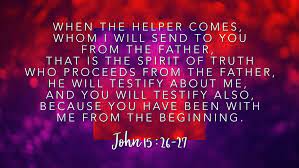
“The God of all comfort” is an Old Testament description of God who is the ultimate source of every true act of comfort (Ps. 23:4; Ps. 119:76).  The Greek word for comfort is related to the familiar word paraclete, one who comes alongside to help.  It is another name for the Holy Spirit (John 14:16).

Comfort is often used to mean softness and ease.  But this is not the meaning in 2 Cor. 1:3-4.

Blessed be the God and Father of our Lord Jesus Christ, the Father of mercies and God of all comfort, who comforts us in all our tribulation, that we may be able to comfort those who are in any [a]trouble, with the comfort with which we ourselves are comforted by God.

The Apostle Paul is saying that God came to him in the middle of his suffering and trouble to strengthen him and give him courage and boldness.

Paul thanks the God of all Comfort for his deliverance from the trials and tribulations he experienced in Asia (Acts 19).  Consequently, God delivered Paul from all these and provided for all his needs (2 Cor. 1:8-10).  This deepened Paul’s love and trust in God.  It was Paul’s personal need and God’s divine response–His mercy and comfort–that drew Paul even closer to God than before his trials.  Are you closer to God after your trials and challenges?

God has not changed (Mal. 3:6; James 1:17).  Though God is still in the heavens, He reigns over all the world (Ps. 103:19). God comes alongside us (paraclete) to help us during our time of trouble.  God is there to provide divine comfort–strength and courage–during difficult times.  He is the God of all comfort.

That we may be able to comfort…

Just as Paul shared with the church at Corinth, sharing how we endure afflictions and trials can benefit others (2 Cor. 1:5-6).  As God comforts us, we can comfort others. In doing so, we not only encourage those going through difficult times, but also ensure their ability to persevere.

By extending our comfort, we can help our community not only survive but thrive in the midst of social upheaval and political rankering.  We can help others increase their emotional capacity and their ability to move forward rather than being stuck in their past pain and hurt.

Most importantly, we can introduce them to the God of all Comfort.  Gloria Gaither, Christian singer-songwriter, and author leaves us this observation about the God of all comfort.

God walks with us. He scoops us up in His arms or simply sits with us in silent strength until we cannot avoid the awesome recognition that yes, even now, He is there.

Rehearsing God’s Mercy

Rehearsing helps us remember.

When we hear the word “rehearse”, we conjure up visions of singing, dancing, or acting. A rehearsal is a preparatory event that is performed before the official public performance, as a form of practice. The intent of a rehearsal is to ensure that all details of the performance are adequately prepared and coordinated for presentation.

This Psalm is a timely rehearsal that help us to remember God’s loving protection and provision in our lives. It is a time that we reflect when God has shown His great mercy to us (Lam. 3:22-23).  It is, then possible, by repeating God’s example, that we can begin to expand our mercy and our compassion to others.  It is in preparing that we begin to conform to the image of Jesus (Rom. 12:2). We can begin to rehearse God’s mercy.

Rehearsing prepares.

In Psalm 106, the psalmist prepares the Jews who have returned from Exile by recounting the mercies extended by God to the nation of Israel. Can you imagine returning to your hometown after a 70-year absence?

Many of the older Jews had died in captivity; younger Jews had little to draw upon to refresh their memory of God’s love and provision for Israel during her glory days. Instead, they arrived to find burnt gates and broken walls.

Many would have forgotten God’s reason for allowing them to go into captivity.  It was their habitual, sinful nature and rebellious lifestyle (v.43) that resulted in their 70-year banishment from Israel.  It was the psalmist’s intent to prepare the returning Jews’ hearts and minds for spiritual revival—a return to God.

Rehearsing increases wisdom.

The Psalmist takes time to share with the returning Jews, the errors that contributed to their  exile.  Here are a few key learnings that are still appropriate for today’s believers.

    • Confess and repent of your sins to avoid God’s judgment. “We have sinned with our fathers, we have committed iniquity, we have done wickedly.” (v. 6)
    • Seek God’s wisdom in all your decision making. “They soon forgot his works; they waited not for his counsel.” (v. 13)
    • Eliminate complaints about what you don’t have and express gratitude for God’s provision.“They despised the pleasant land, they believed not his word: But murmured in their tents and hearkened not unto the voice of the LORD.” (vv.24-25)

Even in Israel’s rebellion and sin, God never failed to extend His mercy and grace (vv. 44-45).

Nevertheless he (God) regarded their distress when he heard their cry.  For their sake he remembered His covenant and showed compassion according to the abundance of his steadfast love.” 

Rehearsing makes for great testimonies.

If we were to “rehearse” God’s mercy in our life, what would we write? Would it be similar to Israel’s history reflecting a life pattern of sin and backsliding? Do we see evidence of God’s love and mercy regardless of our rebellion and spiritual failures?  Take time to reflect on where you’ve come from and then write your own psalm reflecting when and how God’s love and mercy was extended to you.

Satan uses our memory to evoke shame and guilt for things we have done that were not God honoring.  However, we can use our past errors as our testimony to others about the saving love of Christ. If we now walk under the guidance and direction of God’s Spirit, remembrance of our life B.C. (Before Christ) should not be an indictment against us but evidence of the immense love God has for us.

There is nothing better than living in God’s A.D. (Abundant Dominion). Let us continually rehearse God’s mercy in our hearts and minds as we prepare for effective service and kingdom building.

What I Learned in 2022: The Needful Thing

What I Learned in 2022: The Needful Thing

Where did I spend my time?

In formulating my list this year, I began by answering the question, “where did I spent my time.”  I considered the books I read:  books on spiritual disciplines, strategic prayer, and holy watchfulness.  Who were the people I included on my calendar and how was my life enriched by being with them?

All these informed my final selection of what I learned in 2022.  And what I learned was this:  The pursuit of God is the most important thing in my life.  He is everything His Word says He is.  He is Alpha and Omega, the Beginning and the End.  He is our Everlasting Father, our Healer, Provider, and Protector.  And much, much more.

The pursuit of God and His righteousness really resonated with me as I read the Luke narrative about two sisters who had differing views on how to spend their time.

Mary and Martha

In Luke 10:38-42 (NKJV), we are introduced to two sisters, Mary and Martha.  We are given a snapshot of how each chooses to “spend their time with Jesus.”  As you read this text, ask the Holy Spirit to reveal who you most resemble.

Now it happened as they went that He entered a certain village; and a certain woman named Martha welcomed Him into her house. And she had a sister called Mary, who also sat at Jesus’ feet and heard His word. But Martha was distracted with much serving, and she approached Him and said, “Lord, do You not care that my sister has left me to serve alone? Therefore, tell her to help me.”  And Jesus answered and said to her, “Martha, Martha, you are worried and troubled about many things. There is only one thing worth being concerned about. Mary has discovered it, and it will not be taken away from her.”

Is this us today?  The busyness of life steals time from us.  That same time can be best used in fellowship with Jesus.  What stands in our way?  Perhaps, it’s social media, or an over committed calendar. Satan loves to keep us busy.  As a result, we fill our lives with things of the world rather than sitting at the feet of Jesus, the only One Who has all we need.

A Thirst for God

In Psalm 42:1-2, the Psalmists uses the imagery of a thirsty deer, to describe longing to be with God.

As the deer longs for streams of water, so I long for you, O God.
I thirst for God, the living God. When can I go and stand before him? 

This is perhaps what Mary had a thirst for: The Living God.  Isn’t it funny how we continually look for things in this world to satisfy our human “thirsts”. We attempt to satisfy them with “stuff”: money, clothes, ambition, relationships.  But in the end, it is the intangibles that only a relationship with Jesus Christ can truly satisfy.  Love, joy, peace.  Only in God’s presence can we satisfy our thirsty soul.

One thing is needful…that good part

What was the one thing needed? The New Living Translation says it this way: “There is only one thing worth being concerned about.  Mary has discovered it.” The word “needed” is translated to mean “a necessity; such things needed for sustenance and the journey”.  And what was that good part?  Jesus.  Jesus, the Living Word, was necessary for Mary to live life more abundantly (John 10:10).  Jesus was needed for spiritual sustenance and the journey of life.  And He still is.

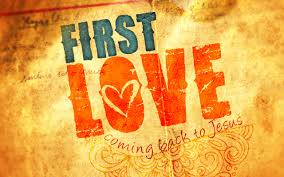
As we address the challenges of 21st century living, we as believers have left our “first Love” (Rev. 2:4).  We have forgotten what it means to be “in relationship with Jesus”.  Relationship is built as we read God’s Word and better understand His ways and His works. Martha had forgotten that at one time she too sat at Jesus feet and listened to His Word.  But now she had allowed the “busy work” to replace the “good work”.

Why is it the “good part”? Relationship with Jesus is the only thing that is important—in time and for eternity.  What we see now is fading away…deteriorating…temporary.  But what God offers us is incorruptible and undefiled, that never fades away; reserved in heaven for us (1 Pet. 1:4).  This is what was offered to Mary and therefore, wouldn’t be taken away from her.  This is still the offer to us today.

Where do we sit?

What’s most important to you?  What will our calendar say is the priority for our time?  What “words” capture our attention and become our values, beliefs, and lifestyles?  What I learned in 2022, was illustrated in the story of Mary and Martha.  Jesus states it clearly then as He states it in 2023.  “One thing is needful.” (Luke 10:42) Rediscover and pursue your First Love.  Make fellowship with the Father and Jesus your top priority in 2023.

Making a Fresh Start

Opportunities and challenges

Happy New Year!  With this new year comes both opportunities and challenges. More importantly, comes our chance to receive exceeding great and precious promises through the knowledge of God, and of Jesus our Lord (2 Pet. 1: 2, 4).

To begin this year, WordBytes will launch a new series entitled The Clarion Word Classics.

The word “clarion” comes from the Latin word claru or ‘clear’.  Used as an adjective, it means ‘loud and clear’.   Our intent with this quarterly series is to make “loud and clear” what is ours in Christ and as children of God (Rom. 8:17).

Making a Fresh Start

Throughout 2023, we will share faith writings from key theologians who will strengthen and enrich our spiritual lives and faith walk.  This includes such sage theologians and writers such as J.I. Packer, Oswald Chambers, and C.S. Lewis.

We will also introduce contemporary writers who express spiritual answers to the challenges of 21st century living.  This includes such authors as Priscilla Shirer, Alistair Begg, John Piper, and black theologian, Bruce L. Fields.

To begin the Clarion Word Classics, we introduce F.B. Meyer (a favorite of mine).  His devotion for the new year is entitled, Making a Fresh Start.”  Meyer infuses scripture throughout his writings.  See if you can find them within the text.

What do you want for Christmas?


What do you want for Christmas?

Christmas past

What do you want for Christmas this year?  What’s your ask?  When I was a child, my anticipation of Christmas was so high.  I remember the special journey to see the animated Christmas displays in the store windows in downtown Kansas City, Missouri.  The shops on “Petticoat Lane” and the special baked goods at “The Cake Box”.  There was no sitting on Santa’s lap and sharing our list of wants, but endless nights of looking at the special Christmas catalogue from Sears, J.C. Penney’s, and “Monkey Wards” (Montgomery Wards).  What a wonderful and magical time!

But I’m no longer a child.  To the contrary, I’m a grandmother and family elder.  Now as I anticipate Christmas, I ask myself, what do I want?  What are my choices?  Things eternal or things of this world? Now I must look beyond Christmas Day with its torn wrapping paper and empty boxes.  I want something that lasts beyond Christmas Day.  Don’t you?  As we close out this year, I invite you to join me in answering this question for yourself.

What’s on your list?

Harry & David suggests we warm hearts with festive gourmet gifts and Christmas gift baskets.  That’s no surprise!  “Do it Yourselfers” ensure us that handmade gifts will be received with joy:  polaroid photo magnets (try finding a polaroid camera), beautifully packaged cookie mixes or pretty finger knit blankets.  Who has the time?

Topping the list of the 23 “hottest cool gadgets” for Christmas is a Black Bird drone with camera for $99.  “For the first time, ordinary people can capture crazy selfies and shots that were previously only possible with professional equipment.”  I’m sure our neighbors and friends will love sharing in on this gift.

But what do people really want?

Here are some things to consider as you plan your gift shopping.

In an article entitled The Top 10 Things People Want in Life but Can’t Seem to Get, I was amazed in reading the responses to this informal survey that probed “critical life and career questions.”  From my reading, I compiled (in their order of importance) the top five (5) areas people are feeling desperate about:  happiness, money, freedom, peace, and joy.   I’ve included a sixth, balance, since it is the focus of many Millennials and Genxers.  What was surprising was that most of the items were intangible, subjective (what I can feel), and internal versus external.

In the aftermath of COVID (before the variants), people wanted “relationship”.   A few verbatims are captured below recognizing the extraordinary power and satisfaction that can only be found through our connection with one another.

  • “Have a big family get together!”
  • “Go to a game and watch some sports!”
  • “See my mom in assisted living.”
  • “Make sure all my friends are cured too, then we’ll party!”

A new Barna Group report was released this month on trends in the Black church[1].  When asked what churchgoers wanted for their lives, the results were as follows:

  • 84% wanted good health
  • 83% wanted a close relationship with God
  • 77% wanted to provide for their family
  • 75% wanted a clear purpose for living

Note the focus of the three groups.  They were primarily, intangibles, subjective, and internal.

What I want for Christmas 2022

Challenges will continue in 2023.  Financial upheaval, political squabbles, shortages, rising social needs, hunger, and homelessness (regardless of the new names).  What do we need?  What do we want?

After conducting my personal survey among friends and family, I’ve created a revised “short Christmas list”.  Many of the items on this list have been sermonized during this season of Advent.  They are hope, peace, joy, and love.

    • Hope—”expecting a better future for the world, our nation, and our families”
    • Peace— “less hatred, division, and political strife”
    • Joy— “more contentment and gratitude regardless of our situation”
    • Love—”better relationships and greater compassion for others”

Reflecting on the various lists of “things” people desire, it is clear, God has already provided these and much more.  Happiness, freedom, and balance. God will provide it.  Relationship.  God will be whomever we need in our life.   Hope, peace, joy, and love.  In Him and in His presence, we will find more than we need (Eph. 3:20-21).   It is up to each of us to access our heavenly gifts through faith and obedience to God.  In Christ, all these things are currently ours.

Below are my “gift lists” available to us through relationship with our Heavenly Father, Who only gives “good and perfect gifts” (James 1:17). God’s gifts last beyond the torn tissue and open boxes.  They last beyond Christmas day through all of eternity.  With God and in Christ, every day is Christmas.

  • Ephesians 1:3-17
  • 2 Peter 1:3-18

[1]  This report was created in partnership with Black Millennial Café, Urban Ministries, Inc., Compassion International to celebrate the legacy of the Black Church in America and to pursue racial justice inside and outside the Church.  With that intent, there is no comparative study for White churches.


Preparing the Way: Advent 2022


Preparing the Way: Advent 2022

How are you celebrating Advent 2022?

What will you do differently to usher in the most phenomenal event in the history of mankind:  the incarnation of God?   Advent should be more than participating in special Bible studies or in the lighting of Advent candles.  I’m afraid to say that I was guilty of both.

While thinking I was really doing something “spiritual” to usher in the true meaning of Christmas, I had allowed this sacred season to become “ritualistic routine”.  Advent, celebration of Christ’s explosion into human history, should be a time of excitement and spiritual awakening.  Just as Simeon and Anna faithfully awaited the long-prophesized Messiah (Luke 2:34-38), we too should be faithful and watchful as we hopefully prepare the way for the arrival of our Lord and Savior during this season of advent.

Time to prepare

One meaning for “prepare” means to construct or create as well as to furnish or equip. It often involves making a building, vessel, or object ready for use.  The second meaning for prepare means to make the necessary preparations for an event that will happen later.

Throughout the Gospels, prepare is used to describe the nearness of a great wedding or banquet feast, or even what will happen at the second coming of Jesus (Matthew 22:4,25;34,41).

The different aspects of “prepare”, calls us to:   1) make ourselves ready vessels or homes to receive Jesus and 2) to participate in Jesus’ life, death, and resurrection.[1]

Living in between

Living between Jesus’ First and Second Advent is a place of tension for us.  Although we know that Jesus’ first advent has occurred, how can we “prepare the way” to celebrate Advent for this year and beyond—even until Christ’s second return?

With joyful anticipation.  Anticipation is the act of looking forward.  Let us rekindle this emotion that generates joy and pleasure as we remember what Christ’s presence has meant to us.  In addition, let us allow our imagination to create new scenarios of possibilities as we think about “what is to come”.

Attentively waiting.  This is not mankind’s strongest attribute as attested by our impatience with people, places, and things.  Our busyness and overscheduled calendars have pushed us into believing that waiting is an indication of either a problem with “the system” or flaw in others.  Some things are worth waiting for.  Jesus is worth waiting for.

 With faithful preparation.  Let us become “ready vessels” to receive the presence of God in the person of the Holy Spirit.  This begins with intimacy with God, meditating on His Word, and praying with “listening ears”.  Secondly, we must make ourselves “living sacrifices” to God—in humble submission including service to others.  Finally, we must faithfully prepare by aligning our thinking with “things above” (Col. 3:2).  It is our future hope of glory that will motivate us to be conformed to the image of Christ.

A Prayer for Advent

Advent, the coming of Jesus Christ, brings something the world alone can never provide—unconditional love for those who trust in Jesus as their Savior, unwavering faith that trusts in the sufficiency of God to meet every human need, and unquenchable hope that guarantees an inheritance in eternity future.  Love, faith, and hope—these are key benefits that come with the advent of Christ.  Joy and peace then follow as we abide faithfully in His presence.  All this and more are ours as we prepare the way for Christ.

Eternal God, we are seeking signs of your presence in our lives. Open our eyes, open our ears, open our hearts to receive your words of hope as we anticipate the coming of the One whom you are sending.

[1] Awaiting the Already, Magrey R. de Vega.

How to Untangle a Knot

How to Untangle a Knot

Tangled stories

Jesus was “never without a story”.  He used them to help His audience gain a greater understanding of God and to resolve real-life problems.  The Apostle Mark describes this as “sorting out tangles” and “untying knots.”

When He was alone with His Disciples, Jesus went over everything, sorting out the tangles, untying the knots.  Mark 4:34 (The Message)

Today we will examine the benefit of listening to God’s voice through His Word to sort out the tangles and knots in our life.

Learning to sort out my tangles

Have you ever been faced with a knotted shoe lace or tangled necklace?  It can be frustrating trying to find the biggest knot that will result in the ultimate resolution to your problem.  Knots can impede the full use and benefit of our possessions or abilities,  i.e., knots in a tie or tangled chords of a wind chime.

How did we learn to untangle and untie knots?  While I can’t remember my “first knot” or most “frustrating tangle”, I do recall that if I had problems with either of these, my mother was always there to help me based on two things:  First, I had to realize my limitations—I was unable to resolve this challenge on my own.  Secondarily, I had to trust her–she was both available and able to help me with my problem.

Life is full of knots and tangles

Our world is full of knots and tangles.  The challenges of life appear to be “insurmountable messes” which we are unable to resolve.

  • Life cycle knots—work, family, and relationships.
  • Personal tangles—financial challenges, health problems, dying and death.
  • Societal snarls—turmoil, instability, and uncertainty.

Some knots and tangles are the natural result of living in a fallen world; others may be of our own creation. What is the answer to these kinks and twists of living?  How are we to manage these real situations in our lives?

The World and Life Knots

The world offers futile solutions to life’s knots and tangles.  It suggests resolution through substances (alcohol, drugs, and food), through systems (affiliations, power, and influence) and through stuff (materialism and riches) (1 John 2:15-17).

These answers are temporary and subject to change (2 Cor. 4:18). However, God’s Word is eternal and provides needed insight into His nature and the realities of life, inviting believers to trust, peace, and contentment (Ps. 37:1-6, 23-27).

It’s In the Word  

There’s an old gospel song entitled, It’s All in the Word that retorts:  “The answer to your problems, if you haven’t heard…it’s all in the Word.”

For those who are willing to listen to Jesus’ voice, there are many promises and privileges (John 10:27).  As we connect to God through His Word and the Holy Spirit, we have access to wisdom and knowledge so desperately needed to navigate these perilous times (Eph. 1: 8).

The Psalmist put it more eloquently in saying “God’s Word is a lamp to our feet and a light to our path”.  God’s close proximity keep us from stumbling.  It is also broad and sufficient to protect us from potential danger and pitfalls (Ps. 119:105).  Psalm 19:7-11 speaks to the great worth of God’s Word.  “Warning and reward” are key benefits in embracing God’s Word.

What about my knots?

God may not choose to always remove the knots and tangles in our  life.  Some knots and tangles are needed to mature and strengthen us.  They help us when we choose to be “trained” by them (Hebrews 12:11).

However, we can always depend on God to be available and ready to help us “find the big loops” (John 16:33).  Jesus is ready to help us  with the tangles and knots of our life.  What are the things that you’ve been unable to resolve?  Draw near to Him who is willing and able to help.

Thanksgiving Gratitude

Thanksgiving Gratitude

“In everything give thanks.”

In 1 Thessalonians 5:18, we are instructed to give thanks in everything.  What does that look like in our homes and cities as we continue to deal with challenges on every hand.  Especially this Thanksgiving.

As we prepare for our family gatherings, the impact of inflation, rising gas prices, and supply shortages may cause us to question, “is there really anything to be thankful for?”  What gratitude are you bringing to this year’s Thanksgiving celebration?

Gratitude is an emotion expressing appreciation and thankfulness for what one has.  Is there anything we appreciate or are thankful for?  While we are very good at expressing our displeasure for what we don’t have, regrettably, we often miss the mark in articulating our gratitude.

Failure to show gratitude

We, in general, are slow in offering gratitude.  We will sometimes express gratitude when prayers are answered, or catastrophes are avoided.  However, even in those special circumstances, we are more likely to attribute our good fortune to luck than to God’s benevolence.

In the busyness of living, we take for granted those things God provides through His grace to all mankind:  the sun and the moon (Deut. 33:14), the regularity with which the seasons change (Gen. 8:22), and the marvels of created life (Rom. 1:20).

We fail to recognize our blessings and therefore fail to express gratitude.  Gratitude is the only “proper response” to beneficence:  the generosity and kindness from a benefactor.  In our case, exuberant gratitude is the best response to our gracious and loving God.

Gratitude and salvation

With salvation, we as believers experience a multitude of blessings, both now and in the future.  First and foremost is our deliverance from the power and penalty of sin (Rom. 6:9).  This release from our sin nature provides instant access to God the Father (Rom. 5:2).

We are given a new identity in Christ, both as children of God and joint heirs with Christ (Rom. 8:16-17).  As new creatures in Christ (2 Cor. 5:17), we are gifted with the presence of the Holy Spirit who empowers us with the same dunamis power that raised Christ from the dead (Eph. 1:19).

Finally, eternal life is God’s special gift to believers.  It is a gift that cannot be acquired through works, or any other path.  Yet it is readily available through belief in Jesus the Christ (John 3:16).  Through eternal life, we can experience God’s presence, peace, and provision.  As heirs of God, we await our final inheritance reserved for us in heaven, when we return to our true home (1 Pet. 1:3-4).

It is God’s will that in everything, we give thanks.

It is not God’s will that we express gratitude for “gratitude’s sake only”.  We know that in giving thanks, His power can be released into our life in ways never before seen.

This includes the formation of incredible joy, unshakeable hope, and unbroken peace (1 Pet. 1:2-4).  The outward expression of appreciation to God, works to bring new power and access that, under other circumstances, would be unattainable.

As we prepare for this year’s Thanksgiving, are we grateful for what we do have?  According to the Greek writer and philosopher, Cicero, “Gratitude is not only the greatest of the virtues but the parent of all others.” Let us, therefore, bring to this Thanksgiving dinner an “extra serving” of gratitude.

Do we need revival?

Do we need a revival?Revival?

When I say the word, revival, what comes to mind?  Perhaps the first thing we think about is something from the past becoming popular or important again, such as the revival of board games or the revival of drive-in theaters.

From a religious standpoint, however, a revival is the “reawakening of religious zeal or enthusiasm”.  I remember as a child when revivals were held in our community.  Sometimes it was initiated by our pastor who felt his members needed a “spiritual jumpstart” to either usher in the new year or finish up the old one.

During the summer, it was not unusual to have traveling evangelists come into our community.  With large tents and wooden platforms, they would preach “fire and brimstone” in true “Elmer Gantry” style, until someone came down front to “repent and turn from their wicked ways.”

We hear of revivals even today, but probably with less frequency, as people choose more convenient and less demanding ways of “stoking their spiritual fire.”  The question is, however, is what we’re doing enough to truly “maintain the spiritual fire” we need in our souls?  Do we need revival?

Why revival?

In both my prayer circle and Bible study group, “the buzz” is all about the need for revival—in our nation, in our churches and in our homes.  Although the actual word “revival” is not used in the Bible, there are many instances cited where revival or spiritual awakening occurred (1 Sam. 7:1-6; 2 Kings 18:1-7)

Revivals are not new in the economy of God. The largest recorded revival occurred in Nineveh where it is recorded that 120,000 souls repented and were saved from God’s wrath (Jonah 3:4-10).   Revivals are often preceded by a major moral crisis that has plowed the soil of people’s hearts, readying them for the fertile seeds of revival: God’s Word and God’s salvation.  Are we currently experiencing similar crises in our nation?

We have become desensitized to the social needs of people in our community.  Our entertainment choices reflect a tolerance for moral depravity and disregard for human life—not much different than Sodom and Gomorrah.

Man has “deified” himself over God.  Society continues to attempt to redefine God, trivialize family, and devalue Christ’s church.  And what have we gained in return? Broken and wounded people feeling hopeless, in despair, without joy.  Are we in need of revival?

Preparing for revival

To this point, we have described revival as a noun; an event that stirs up religious faith. Revive can also be a “verb”, which in Hebrew, means to bring to life or cause to live.  Do we need to be revived—brought back to life?

As I look around, I believe we are in desperate need of “spiritual CPR.”   We need new breath and true life that can only come from God (Ps. 85:6-7).  Using Jonah 3:4-10, below is a “CPR” acrostic to communicate how we can prepare for revival.

Confession.  Readiness for revival always begins with confession of sin. The people of Nineveh proclaimed a fast of which everyone participated, “from the greatest of them even to the least of them.” (v. 5) Confession recognizes the need for change and realization that the only true source of change is God.

Prayer.  Prayer is the most powerful force God has given us to implement change.  The city of Nineveh, “both man and beast were covered with sackcloth and cried mightily unto God.” (v. 8a) Prayer prior to revival prepares the way for the preaching of God’s truth. God’s truth defeats the lies of Satan and provides light to expose the darkness of sin (Acts 26:18).

Repentance.  Repentance requires two actions: the turning away from sin and the turning to God.  The people of Nineveh “turned from their evil way.” (v. 8) The turning away from sin begins with accepting Christ as both Savior and Lord.  Repentance should lead to transformed living—one of good works and service (Eph. 2:10).

Where do we begin?

I heard a minister state that individuals should “draw a circle on the ground and then step inside it—it is here where revival begins.”  Confess, pray, and repent. Revival starts with us. Are we ready to begin?