What I Learned in 2019


The door to 2019 has closed marking the end of our first decade in the 21st century.  I didn’t see all the contraptions featured in “The Jetsons” but I did note changes that, centuries earlier, were only described in science fiction.

As a society, are we better off as a result of man’s accomplishments these past ten (10) years?  Only history will determine that.  The Apostle Paul warned the church at Corinth to “judge nothing before the time, until the Lord comes, who will both bring to light the hidden things of darkness and reveal the counsels of the hearts. Then each one’s praise will come from God” (1 Cor. 4:5).  We would do well to follow his advice.  I can, however, share what I learned in 2019.

To learn is defined as “acquiring knowledge or skill by study, instruction, or experience.”  As I prayed over this annual exercise of “things learned”, three (3) areas surfaced which fit within the range of this definition.  The things I learned in 2019 are the practice of gratitude, the power of simplicity, and the privilege of family.

The practice of gratitude taught me to appreciate God and to be thankful for His provision, His protection, and His presence.  Failure to practice this spiritual habit often resulted in envy, jealousy, greed and bitterness—fostering dissatisfaction and discontentment. Practicing gratitude equipped me to live life emotionally confident and spiritually content (2 Pet. 1:2-3).

Also read, “Gratitude

The power of simplicity redirected my attention from the trivial to the important things of life.  Jesus sent out His disciples with the bare necessities to accomplish their extraordinary mission (Luke 9:3; 10:4).  The pursuit of simplicity helped me to eliminate “the extraneous” from my life.  This included both things and relationships that hindered my spiritual journey by keeping me tethered to this world (1 John 2:15-17).

The privilege of family reminded me of the value of memories, tradition, and heritage.  As my family came together to celebrate my 70th birthday, they shared bittersweet stories and family customs with a new generation.  It was within the confines of the family that I witnessed our collective identity and shared values entrusted to us by our parents and other relatives long gone but not forgotten. The privilege of family began at Creation (Gen. 1:28; 2:24) and its importance is still critical as we enter this new decade.

Am I better off as a result of the things I learned?  Absolutely!  With each experience, I have learned to see God with greater clarity—His ways and His works—His goodness and His greatness.  It is with this renewed clarity that I can focus on:  #1 what’s truly important, #2 what’s of eternal value, and #3 what glorifies God.

Now it’s your turn.  What did you learn in 2019?

Living Life on the Dash

So teach us to number our days that we may gain a heart of wisdom.  Psalm 90:12

I’d like to share a few thoughts to consider as we prepare for 2020.  New Year’s gives us the opportunity to both reflect on the past year while considering how we want to spend the upcoming year.  To help us with this insightful exercise, I’d like to pose this question, “how do you want to live the rest of my life?”  I refer to this as “the dash”, the timeframe between birth and death.  We see it on cemetery tombstones to frame one’s lifetime but do we seriously consider the possibilities that lay “on the dash”?

The subscript for Psalm 90 is “A Prayer of Moses the man of God” and deals specifically with the eternality of God contrasted with the mortality of man.  The thrust of this magnificent prayer is to ask God to have mercy on frail human beings in a sin-cursed universe.

Moses remembered God’s protection, sustenance, and stability as He guided over 4 million people across the desert to God’s Promised Land. He was their dwelling place—their sanctuary in the desert (Ps. 90:1-2).  Verse 2 says, “Before the mountains were brought forth or the earth and world was formed,

God was.  Almighty God is dependent on nothing or anyone for sustenance or favor.  He will forever be Alpha and Omega, the beginning and the end.

Man, in contrast, was formed from the dust of the ground and came into existence after God breathed the breathe of life into his nostrils (Gen, 2:7). This life was spirit—it was that part of man that would never age and would, like its Creator, live forever. Then man became a living soul—with a mind, a will, and emotions.  Man was dependent upon God for all things.  God could be trusted to guard man’s life.

God can still be trusted today even in the midst of social, political, and financial upheaval.  Even in the midst of calamity, the beauty of the LORD—His delight, approval, and favor—is still available to those who turn their hearts to Him (Ps. 90:17).  In our frailty, God gives us His strength. “But the Lord stood with me and strengthened me, so that the message might be preached fully through me” (2 Timothy 4:17)

Each of us has been given life by God.  We celebrate our beginning annually on our birthday—life before the dash.  Our “earthly end”—life after the dash—represents the end of our mortal life and the beginning of our eternal life with Christ.  God has created us for His purpose; it is in that place of created purpose, that we live our lives—we live our life on the dash.  This is where the daily events of living take place and we become “God’s workmanship” (Ep. 2:10).  As you prepare for 2020, make the most of your life on the dash.  Like Moses, pray, “Teach us to make the most of our time, so that we may grow in wisdom.”  (New Living Translation)

God Goes Before Us

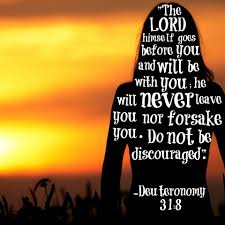
The Lord Himself goes before you and will be with you; He will never leave you nor forsake you. Do not be afraid; do not be discouraged. Deuteronomy 31:8 (NIV)

As 2019 winds down, 2020 prepares to emerge with new opportunities and challenges. In Asian culture these two realities of life—opportunities and challenges—are often combined into one word which is interpreted as “change”.

In our text today, Moses is communicating several key changes for the Israelites. Moses announces that he will not be accompanying them into the Promised Land and that God had chosen a new leader to continue the Exodus journey. It will now be Joshua who must complete the work that Moses began. This announcement, I’m sure, caused great fear and anxiety for the 2+ million people who had put all their trust in Moses.

However, God wanted Joshua and the Israelites to know that they would not be expected to accomplish these new challenges by themselves. God would not send warriors or angels to help them but it would be God Himself Who would assure their success. God would go before them (vv. 3 and 8) and God would be with them (v. 6). To “go before and with them” speaks to God’s omnipresence. He is “everywhere present” in His totality and at the same time. No one but God could make such a promise. To further dispel their fears, God added His promise that He would “never leave nor forsake them”.   Jesus offered similar words of comfort to His disciples prior to His crucifixion (John 14:1-3).

Change comes on many levels in our lives.

Change may occur at a macro-level—that which deals with the events on a broad social, political, or economic level. Look at the affect world events have on the price of gas, or medical discovery has on the availability of adequate healthcare.

Change may surface on a micro-level–up close and personal. We may change our job, relocate to a new city, or introduce new people into our circle of friends. Wherever the point of entry of the change or the size of the challenge, believers must remember we are never left alone to face them.

God’s promise to the Israelites and Joshua should be a source of strength and comfort as believers today experience the enormous changes in the 21st century. God never changes. He is the same yesterday, today, and forever (Hebrew 13:8). All His promises are yes and amen (2 Corinthians 1:20).

Living in this fast paced, ever changing world, we need the Triune God Who will not only go before us but will also never leave us. We can rest assured that not only does God continually goes before us (Ps. 85:13) but we can confidently proclaim that we are never out of the presence of God (Ps. 139:7-10).

Prayers of Invocation

“Seek the LORD and his strength, seek his face continually.”

1 Chronicles 16:11 (KJV)

For my 2019 Advent reading I added several books that focused on worship litanies and prayers. I have especially enjoyed reading prayers of invocation. Prayers of invocation are designed to invite the Presence of God into the time and space we’ve designated for worship. Advent, the beginning of the new Christian year, is a great time to incorporate this type of prayer into our personal spiritual discipline. Why you might ask?

Prayers of invocation cause us to give pause during the busyness of our life and refocus on God. We often forget our true purpose and eternal destiny. As children of God and joint heirs with Christ, we are to no longer live for ourselves but to live for the glory of God and service to mankind (2 Cor. 5:15). Prayers of invocation remind us of the sovereignty of God.

“Lord, into your most holy presence we now come. Calm our anxious spirits. Remove the distractions that would keep us from you here today. Break down the walls of separation that we have built to keep you from our hardened hearts. Lead us in joy and celebration of the only reality worth knowing, that you love us as we are. Free us for joyful obedience to your claim and call on our lives this day and every day.  Amen.”

Prayers of invocation open us to the work of the Spirit and help us to realize the power of God’s love. As we pray in “spirit and truth”, we invite the Holy Spirit to enter those “secret places in our heart and in our mind”—the places where the transforming work of sanctification can begin. As the Holy Spirit works within us, we are set free from the bondage of sin, healed of our brokenness, and conformed into the image of Christ (Rom. 8:29).

“Let us rise and meet our Creator. Let us raise our hands and voices in acknowledgment that God’s Holy Spirit moves among us, calling us to new life in Christ. Let us raise our eyes, knowing that this new life of stewardship for all God’s creation is seen in the life of Jesus the Christ, our Lord and Savior.  Amen.”

Lastly, prayers of invocation reveal our prideful and independent nature. When this happens we relegate God to a subordinate place on our lives. We deny the truth that God is the “Great I AM.” God is and will continue to be whatever we need to navigate in this life. Our Eternal Father is and has all we need for this present life and the life to come (Rev. 1:8).

“Lord, we come before your throne of grace not trusting in ourselves but in your marvelous and gracious love as it seeks expression among us. May we listen for your still, small voice as it speaks to us today and as it boldly proclaims the undeniable reality of your love that will not let us go. Stir our hearts and our imaginations that we may see beyond appearances of what is to the reality of what can be. In the name and spirit of the holy child, Jesus our Lord, we pray.  Amen.”

In 2020, add prayers of invocation to your prayer discipline. Invite God into your time and space in this new way. Your prayer life will be greatly expanded when you do.

Prayers from Advent and Christmas, David N. Mosser

Discovering God in the Psalms: God is Still Doing Wonders

O give thanks to the God of gods, for his steadfast love endures for ever. O give thanks to the Lord of lords, for his steadfast love endures for ever;  to him who alone does great wonders, for his steadfast love endures for ever.  Ps. 136:2-4 (NRS)

Does God still do great wonders today? When we read the Bible, it’s hard to ignore the mighty wonders of God in Creation, The Exodus, and His plan of salvation. His wonders are clearly demonstrated from Genesis to Revelation, as He reveals Himself to His creature, man.

I choose to differentiate between God’s wonders and His miracles. I view miracles as God’s favor demonstrated in a particular incident, circumstance, or time. Wonders, on the other hand, include all the acts of God’s goodness and greatness, transcending time and circumstance.

Psalm 136 is entitled, “A Litany of God’s Wonders”. In each verse, the Psalmist captures the wonders of God in the history of Israel. The Psalmists begins and ends this psalm by declaring the need to give thanks for God’s mercy. Mercy (checed) is translated as “favor and loving kindness.” It is in the context of His mercy that God’s wonders are performed. In verse 4, the Psalmist reminds us of two key facts.

God alone does wonders. It is in the remembrance of God’s wonders that He sought Israel’s faithfulness and trust. That remembrance of God’s wonders is even more critical for us today as we tend to minimize God’s ability and glorify man’s accomplishments.

God’s mercy endures forever. God lives in eternity and therefore, is not limited to the confines of “time”. God’s forever includes both “chronological time” and “the social times” in which we find ourselves. God’s mercy, favor, and loving kindness are always available.

While God has done great wonders in the past, He is still doing wonders today. Perhaps we miss God’s wonders in our lives by crediting them to luck or as happenstance. Perhaps we attribute His wonders to our own abilities or to our social networks and connections. All the above are foolish thinking. It is God alone Who stands ready to “show Himself strong” on behalf of man (2 Chronicles 16:9).

It has been said that we are one generation away from losing our belief in God. The result is a country that minimizes the supernatural power of the Most Holy God. One minister observed, “Man has humanized God and deified himself.” Let us continue to share the many wonders of God–those in the Bible and in our lives. This includes the greatest wonder of all, our salvation.

As I view our nation and the challenges we face, it is evident that our future lies not in political leadership, technological breakthrough, nor financial health. We’ve tried them all. Our future lies with “the God of gods, the Lord of lords; to Him who alone does great wonders” (Ps. 136:4).

Discovering God in the Psalms: Victory over Darkness

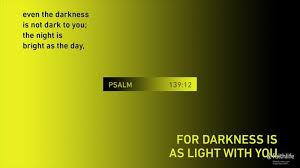
Indeed, the darkness shall not hide from You, but the night shines as the day; The darkness and the light are both alike to You.

Psalm 139:12 (NKJ)

Children are typically afraid of the dark. It is in the dark where “things go bang in the night” and where unseen dangers may lie. Darkness is defined as the absence of visible light. Darkness is changed only by the introduction of light. One can never fully appreciate the value of light until they have experienced the unsettling feeling of being “in the dark.”

Although children fear the darkness, there is one time when they ignore that fear—when it’s time to play “hide and seek.” Darkness provides the “perfect condition” for its execution; it is in the darkness that a person can remain unseen as they blend into the trees’ shadows and the surrounding houses. If, however, this game were to be played with God, one would find themselves at a marked disadvantage. Why? Because darkness and light are alike to Him—the night shines as the day. It is God’s omnipresence that provides the believer the “perfect condition” for victory over darkness.

Light and darkness are a natural phenomenon associated with day and night. People also use the terms metaphorically, especially in Scripture where the two are given theological significance. In the Old Testament, God acted at Creation to separate and distinguish between darkness and light, night and day (Gen. 1:4, 5, 18). Darkness was also associated with judgment and distress (Ex.10:21; Ps. 91:6), God’s hiddenness (Dt. 4:11; 5:23) and divine intervention (Isa. 9:2; Ps. 18:28). Darkness is a powerful New Testament image. While darkness is used as a moral metaphor to describe sinful acts and sinful life style (Rom. 13:12; Eph. 5:11), it also used to describe the evil power, holding people in its dominion (Col. 1:13).

Darkness in our scripture text references the oppressive nature of darkness. “Hide” in Hebrew means to “to crush or bruise.” In the Old Testament it is used only here and in Genesis 3:15 and Job 9:17. Even believers feel spiritual darkness’ crushing power as it attempts to control them through their unredeemed flesh (Rom. 7:17-25). It is here that God’s omnipresence can lead believers to victory through darkness.

Darkness cannot hide. It is God’s presence (through His indwelling Spirit) that exposes and dispels darkness. Believers are rescued from the realm of darkness to become children of the light (Eph. 5:8, 14). They share a place in God’s kingdom of light (Col. 1:12) and even act as light in this dark world (Mat.5:14-16). The believer’s life reflects Jesus’ light and ultimately declare his praises (1 Pet. 2:9). It is in Christ that we have victory over darkness. Jesus Christ was the “change agent” that was introduced into darkness (Mat. 4:16) giving life and light to all who would receive it (Ps. 36:9).

The prophets promised that one day God Himself would live among men to replace the sun as their “everlasting light.” Isaiah 60:19-20 reads:

“The sun shall no longer be your light by day, Nor for brightness shall the moon give light to you; But the LORD will be to you an everlasting light, And your God your glory. Your sun shall no longer go down, Nor shall your moon withdraw itself; For the LORD will be your everlasting light, And the days of your mourning shall be ended.”

Praise God for His Light.

Discovering God in the Psalms: Take Time to Praise

“Oh that men would praise the LORD for his goodness,
and for his wonderful works to the children of men!

Psalm 107:8 (NKJ)

Our text for today’s WordBytes comes from the 107th division of the Psalms. There is nothing more gratifying to the soul than to praise the Lord during private devotions. It is the soul’s release which allows our innermost being to render tokens of gratitude and adoration to the Lord.  That power is multiplied when experienced in corporate worship with other believers.

The psalms found in this fifth division lend themselves to an overall liturgical purpose befitting public worship for the Jewish people of that time and for us today.

Sometimes, however, we become so entangled with the events of our lives that we forget to take time to praise. We overlook the fact that our praise and worship is not only pleasing to God, but it’s also the quickest way to access the power and provision of the Lord. Why is that true? Because the Lord inhabits the praises of His people (Ps. 22:3). This imperative to “praise the LORD” is repeated four times (vv. 8, 15, 21, 31).  In this psalm it is to impress its importance as we journey through this life.

Oh that men would praise the LORD. Men must be reminded to praise God. They become bound to personal agendas and circumstances, leaving little room or time to praise God. Praise is squandered on mortal man with his accomplishments, often forgetting that God created the universe, thrones, principalities and powers. All things were created by Him and for Him (Col. 1:16).  To praise God for His greatness is to acknowledge His authority and sovereign rule. It’s interesting to observe that the angels are not commanded to praise God–they do it willingly (Rev. 5:11-14; 7:11-12).

For His goodness. To say, “God is good”, is to trivialize His true nature and character. Goodness (hesed) in Hebrew means “unfailing, loyal love.” It is often based on a prior relationship, in this case, our covenant relationship with God. As believers, we have entered into an everlasting covenant with God, through His Son and our Lord and Savior Jesus Christ. This New Covenant promises us restoration of our relationship with God (Rom. 5:1), forgiveness of sin (Matt. 26:27-28), sonship (1 John 3:1-2), and an eternal inheritance (Heb. 9:15).

For His wonderful works to the children of men. In reading Psalm 107, God’s “wonderful works” are His acts of mercy to those whom He had entered into covenant relationship with. These wonderful works are amazing and cause us to be astounded as God intervened on behalf of mankind. After men “cried unto the LORD” (vv. 6, 13, 19, 28) and had come to “their wits’ end” (27), it was God who “led them out and brought them forth.” It was God who “healed and restored, delivered and saved.” Then men lifted their voices in worship and praise (vv. 22, 32).

As believers, we have much to praise God for each day. We should praise Him for the “works” He performs on our behalf–for protection and provision and for grace and mercy. God is worthy of our praise for His love, for salvation and for eternal life. We ought to enter into perpetual praise throughout the day, as the angels do in heaven. We have even more reason to praise God than the angels in that He came that we might have life and have it more abundantly. (John 10:10).

Discovering God in the Psalms: The Silence of God


“These things you have done, and I kept silent; You thought that I was altogether like you; But I will rebuke you, And set them in order before your eyes.”  Psalm 50:21 (NKJ)

As I survey current events, my heart weeps. Crime against mankind continues to escalate. Abuse of the poor and defenseless, witness to the selfishness of the society we now live in.  Even the “heavens and the earth” suffer from the blatant disregard of man for God’s creation (Titus 3:3).

As social and religious groups unite in prayer to regain their community and their country, many ask the question, “Where is God?” They want to know if He hears…does He see. Why does God remain silent when there is so much injustice and wrongdoing? God does hear and see. He will not remain silent forever. He will set His house in order.

Of the many attributes of God, the one most misunderstood is His justice. Believers are quick to acknowledge God’s moral attributes–grace, mercy, and love, but His justice seems out of character with who they believe Him to be.

Perhaps these misinformed believers hope that His moral qualities will “ignore or overlook” their obvious disregard for His laws and commandments. God administers His kingdom in accordance with His law and expects His moral agents, believers, to adhere to the standards of justice which He has established. (Micah 6:8)

At times the rule of God does not appear to be “just.” Evil flourishes and everything continues as it always has (2 Pet. 3:4). Sin appears unpunished and righteousness seems to go unrewarded (Psalm 73:3-12). C. S. Lewis, acclaimed novelist and lay theologian, helps us keep God’s justice in perspective:

The justice of God must not be evaluated on a short-term basis. Within this life it will often appear incomplete or imperfect. Earthly life is not all there is, however. There is a life beyond and in the scope of all eternity; God’s justice will be complete.

The religious leaders of Jesus’ day suffered from both hypocrisy and rebellion. They refused the Living Word who lived among them. Today God has given us both His Word and His Holy Spirit to lead us into truth and righteousness. Do not turn Him away. “… the Lord’s hand is not too short to save, nor his ear too dull to hear” (Isaiah 59:1).

In His silence, God is speaking loudly. God’s longsuffering and grace should never be looked upon as indifference (2 Peter 3:3-10).  He has already dealt with sin (2 Cor. 5:21) and He will deal with the last vestiges of rebellion and disobedience. God does hear (Psalm 55:19).

Discovering God in the Psalms: Forget Not God

“Bless the LORD, O my soul, and forget not all his benefits.”
Psalm 103:2 (KJV)

Memories of a person, place, or thing affect our beliefs and habits.  Every aspect of our lives is influenced by our memory. That’s why it’s so important to remember all that God has done, is doing, and will do for us.

The 103rd Psalm is a general praise psalm written to magnify the name of God and boast of His greatness. It is arranged in three parts: (1) call to praise, (2) cause for praise, and (3) conclusion with new exhortation to praise the Lord. In this psalm, readers are told not to forget the benefits God has extended to His covenant people. These same benefits are ours today, in the twenty-first century.

  • Forgiveness of iniquities. Who other than God can forgive sin? Through Christ’s sacrifice and atoning blood, not only are our sins forgiven but our “sin nature” has been rendered “inoperative” (Rom. 6:14; Heb. 2:14-15). If we “fall short”, we need only confess and God faithfully forgives us (1 John 1:9). He then removes remembrance of them to the furthest points of existence-even to the heavens (Ps. 103:11-12). There is no other god or religion that offers such forgiveness.
  • Healing of diseases. Disease is the result of sin’s entrance into the world. It was not part of God’s original plan for His beloved creation. Yet God, within His providential will, provides physical healing-both on this side and the “other side” (2 Cor. 5:1; Rev. 21:4). Spiritual healing is now available to release us from anger, shame, guilt, and unforgiveness. After His temptation in the wilderness, Jesus returned in the power of the Spirit and spoke these words in the synagogue in Nazareth, “The Spirit of the Lord is upon me. He hath sent me to heal the brokenhearted, to preach deliverance to the captives, and recovering of sight to the blind, to set at liberty them that are bruised” (Luke 4:14-19). Jesus is our Healer today.
  • Redemption of life from destruction. In Hebrew, destruction or sahat, is translated pit or dungeon; corruption or decay. Before God’s intervention (through Jesus Christ) we were “in a hole, destined to die.” The sin of one man, Adam, caused death to rule over us, but all who receive God’s wonderful, gracious gift of righteousness will live in triumph over sin and death through this one man, Jesus Christ. (Rom. 5:17) God will continually save us from the world, Satan, and our “old nature.” He is our Preserver (Ps. 145:14-20).
  • Crowning with lovingkindness and tender mercies. God’s lovingkindness and tender mercies are evidenced from Genesis to Revelation, as He provides and protects His covenant people. Through our confession of faith in Christ, lovingkindness was extended to us, as Abraham’s seed and heirs to the promise (Gal. 3:29). The literal translation of tendermercies is “tender and compassion.” It expresses love of a superior for an inferior; this love is seen in the deep feelings that move the superior to help. While we were without strength to save ourselves Christ died for us (Rom. 5:6).
  • Satisfaction with “good things”. The NIV rendering of this verse is “He satisfies your desires with good things.” When we are obedient to God, we are in the center of His will. He will give us what is best for our life-even when we don’t see it. The result is renewal of hope and trust and the ability to continue our walk of faith. “For the LORD God is a sun and shield; the LORD bestows favor and honor. No good thing does he withhold from those who walk uprightly. O LORD of hosts, blessed is the one who trusts in You!” Psalm 84:11-12 (NIV)
Regardless of our schedules and priorities, we must never forget all of God’s benefits. He has given us so much. Who could ever forget?

Discovering God in the Psalms: Desperately Seeking God


0 God, thou art my God; early will I seek thee: my soul thirsteth for thee, my flesh longeth for thee in a dry and thirsty land where no water is.  Psalm 63:1 (KJV)

Recent news featured several individuals who were lost in the wilderness.

One story told of a young boy who became separated from his family when he left them in search of mushrooms. In another story, a hiker who left her team experienced a dangerous fall. With a badly broken leg she crawled miles through the woods until she was discovered. In both stories, their separation from others resulted in fear and despair until they were rescued from their dire situation.

In Psalm 63, its author, David, conveys his feelings of despair as he finds himself separated from the presence of Almighty God. It is in this Psalm that we find David desperately seeking God.

The historical context for this psalm can be found in 2 Samuel 15. David’s despair is the result of his son Absalom’s conspiracy to steal the kingdom from his father. Fearful of the potential shift in power, David vacates his throne in Jerusalem and heads to the wilderness of Judah:

And all the country wept with a loud voice, and all the people passed over: the king also himself passed over the brook Kidron, all the people crossed over toward the way of the wilderness. (2 Sam. 15:23).

While David was in fact, in a physical wilderness, the wilderness he speaks of in Psalm 63 describes metaphorically his desperate longing for God’s presence.  His need to spiritually reconnect with God took on the characteristics of a person physically suffering great thirst in a dry and parched wasteland.

David’s desire for God became the first thing he sought when he rose in the morning. His soul (his mind, will and emotions) thirsted for God. His flesh responded to this insatiable thirst in a strong longing to be with God.  “To long” in Hebrew (kamahn) means “to faint with longing.” David was faint from longing for his God.

David’s emotional response in the wilderness mirrored what he probably heard while worshiping in the sanctuary in Jerusalem:

As the hart panteth after the water brooks, so panteth my soul after thee, 0 God. My soul thirsteth for God, for the living God: when shall I come and appear before God? (Ps. 42:1-2).

David now knew what it felt like to experience thirst for the Living God.

Though David had never seen God physically, he had personally experienced God’s power and glory through His nature and attributes. He knew God’s love and mercy as he tended to his father’s sheep as a young boy (Ps. 23).

David was witness to God’s protection as he faced the giant Goliath (1 Sam. 17:49-51). David knew the source of his success in battle against Israel’s enemies (1 Sam. 18:5, 7). David knew the power of God’s presence.

Remembrance of those times gave David confident assurance that God would graciously hear and answer His call (Isa. 30:19). It was in God’s presence only that David would find spiritual relief for his thirst.

In today’s society people are desperately seeking relief for their spiritual thirst. They are searching for life options they feel will satisfy their needs through hedonistic pursuits, spiritual experimentation, and material gain.

These efforts unfortunately never satisfy and often result in further despair and darkness. God our Father and Creator knows and possesses what is needed for spiritual dryness. Only He can truly satisfy man’s needs. Let us, like David, seek greater intimacy with God, driven by an unquenchable thirst for His presence. Let us desperately seek God!